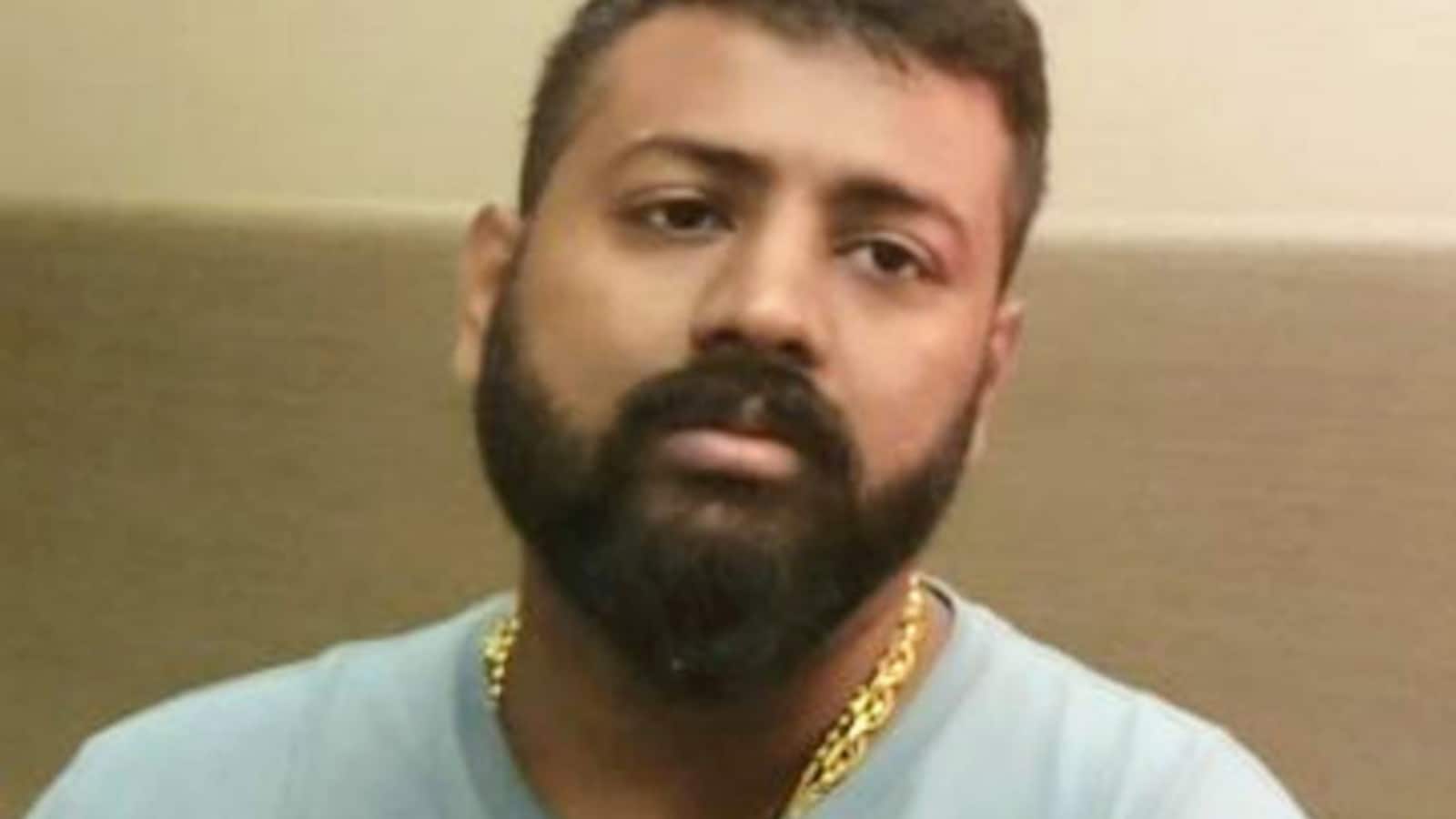
A Delhi court has handed a severe 8-year prison sentence to Sukesh Chandrasekhar for posing as a Supreme Court judge to influence bail proceedings, calling the act a direct attack on the rule of law.
- Sukesh Chandrasekhar received a cumulative 8-year sentence to run consecutively.
- The court labeled the act as 'institutional sacrilege' and a threat to democratic pillars.
- The crime involved intimidating a Special Judge using a police constable's phone.
In a stern judgment, Chief Judicial Magistrate Harshita Mishra has sentenced the notorious conman Sukesh Chandrasekhar to eight years of rigorous imprisonment. The sentencing follows his conviction for impersonating a judge of the Supreme Court of India to illegally influence a judicial proceeding, an act the court described as a "direct affront" to the sanctity of the legal process.
The court broke down the sentencing into three parts: two years for impersonating a public servant, two years for intimidating a public servant, and four years for criminal intimidation via anonymous communication. Crucially, the judge ordered these sentences to run consecutively rather than concurrently, ensuring a total jail term of eight years.
Why This Matters
BozokMedia analysis shows that this ruling transcends a simple case of fraud. By targeting the identity of the highest constitutional court's judge, the convict attempted to weaponize the authority of the judiciary itself. This creates a dangerous precedent where the perceived power of the court is used to bypass the actual legal process, necessitating a deterrent sentence.
"The deliberate, calculated and deceptive manner in which the offences were committed warrants a sentence commensurate with the gravity of the attack upon the rule of law."
A particularly modern aspect of the judgment was the court's observation on technological threats. Magistrate Mishra highlighted the rising danger of Deepfakes and Artificial Intelligence (AI), noting that fabricated voices and videos could soon make it nearly impossible to distinguish genuine judicial communications from criminal forgeries. The court emphasized that the judiciary must remain "one step ahead" of such technological exploits.
The incident dates back to April 28, 2017. While in custody for a corruption case, Chandrasekhar accessed a police constable's mobile phone to call Poonam Chaudhary, then a special judge. He first posed as the private secretary of a sitting SC judge and subsequently as the judge himself, attempting to coerce her into granting him bail through threats of professional repercussions.
Frequently Asked Questions
1. Why did the court refuse to reduce the sentence because the deception failed?
The court ruled that the failure to deceive the judge was merely fortuitous and did not erase the criminality of the attempt to manipulate the law.
2. Which sections of the IPC were applied in this case?
The convict was found guilty under sections 170 (personating a public servant), 189 (threat of injury to a public servant), and 507 (criminal intimidation by anonymous communication).