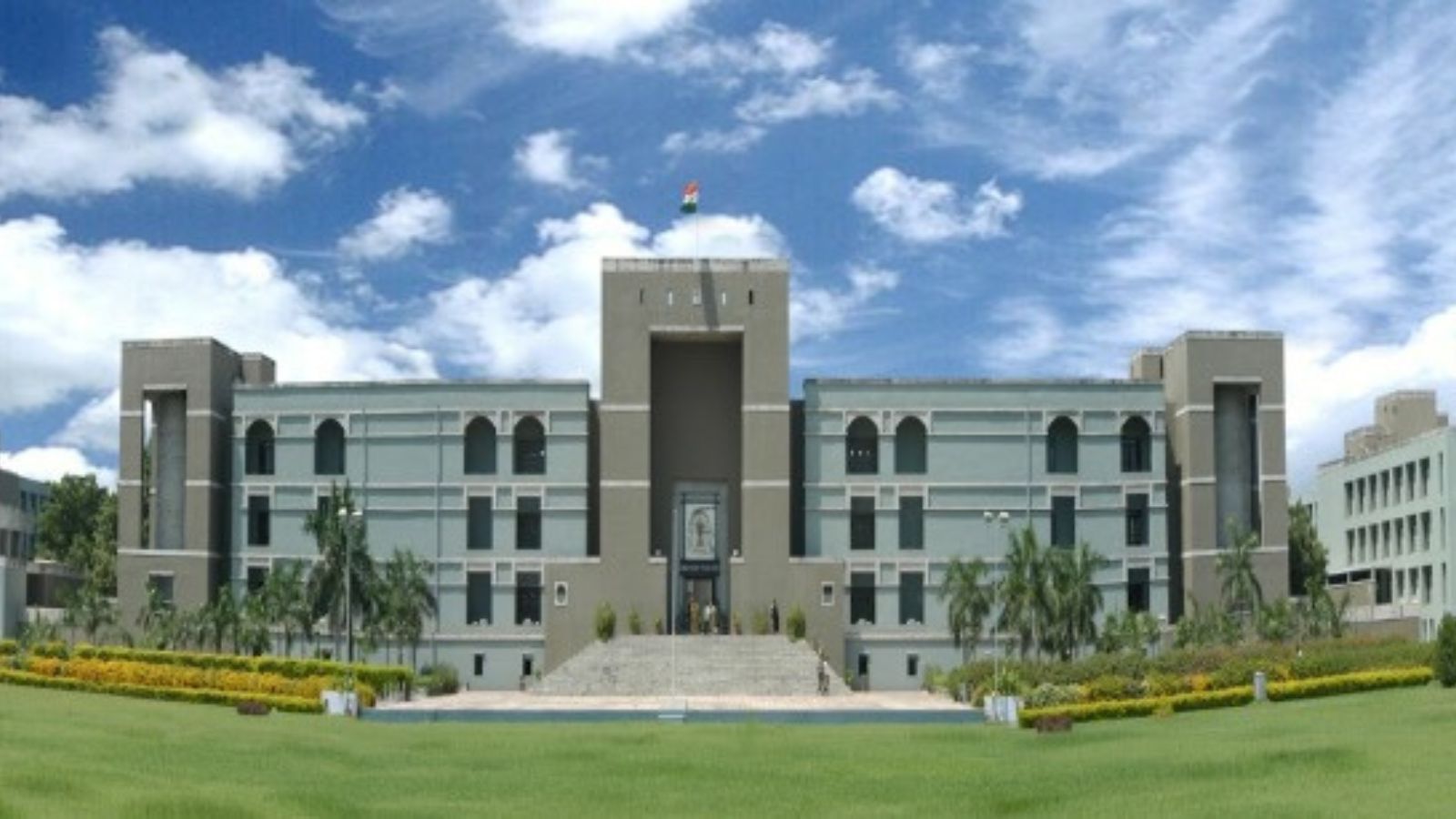
The Gujarat High Court has granted interim relief to a woman convicted of an acid attack, noting significant gaps in the prosecution's ability to identify her.
- The Gujarat High Court suspended the 10-year rigorous imprisonment of Mahezbinbanu Chhuvara.
- The court noted that the prosecution failed to establish the identity of the assailant beyond reasonable doubt.
- Critical physical evidence, including clothing and gloves, was not seized by the police.
- The accused has been granted bail on a bond of Rs 15,000.
In a significant legal development, the Gujarat High Court has granted interim relief to Mahezbinbanu Chhuvara, a 42-year-old woman previously convicted for an acid attack. Justice Vimal K. Vyas suspended her 10-year sentence, observing that the prosecution's evidence regarding her identity was insufficient and lacked conclusive proof.
Case Background
In July, the Ahmedabad City Civil & Sessions Court had convicted Chhuvara for attacking bus conductor Rakesh Brahmbhatt. The lower court ruled that the attack was motivated by "malice and jealousy" following the end of a relationship. Chhuvara was sentenced to 10 years of rigorous imprisonment and fined Rs 1 lakh.
Critical Gaps in Investigation
During the hearing of the criminal appeal, the High Court identified several prima facie lapses in the investigation. Most notably, the CCTV footage from the scene failed to clearly identify the assailant. The victim himself admitted in court that the person seen in the footage, clad in a burqa, could not be definitively identified as a man or a woman due to the obscured face.
Why This Matters
BozokMedia analysis shows that this case highlights the critical necessity of forensic integrity in criminal investigations. The failure to seize physical evidence, such as the clothes and gloves allegedly worn during the crime, creates a vacuum that makes a conviction difficult to sustain during the appellate stage.
When identification is not established beyond reasonable doubt, the judicial system must prioritize the principle of innocence until proven guilty.
Furthermore, the defense highlighted the absence of digital evidence, such as WhatsApp messages or call records, to substantiate the alleged motive of a prior relationship. The court also noted contradictions in eyewitness testimonies regarding the victim's immediate medical treatment and the sequence of events at the Kalupur Railway Station.
Frequently Asked Questions
1. What was the basis for the High Court's decision?
The court found that the prosecution could not conclusively prove the identity of the person fleeing the scene through CCTV or eyewitness accounts.
2. Is the conviction overturned?
No, the sentence is only suspended 'interimly' pending the final hearing of the criminal appeal.