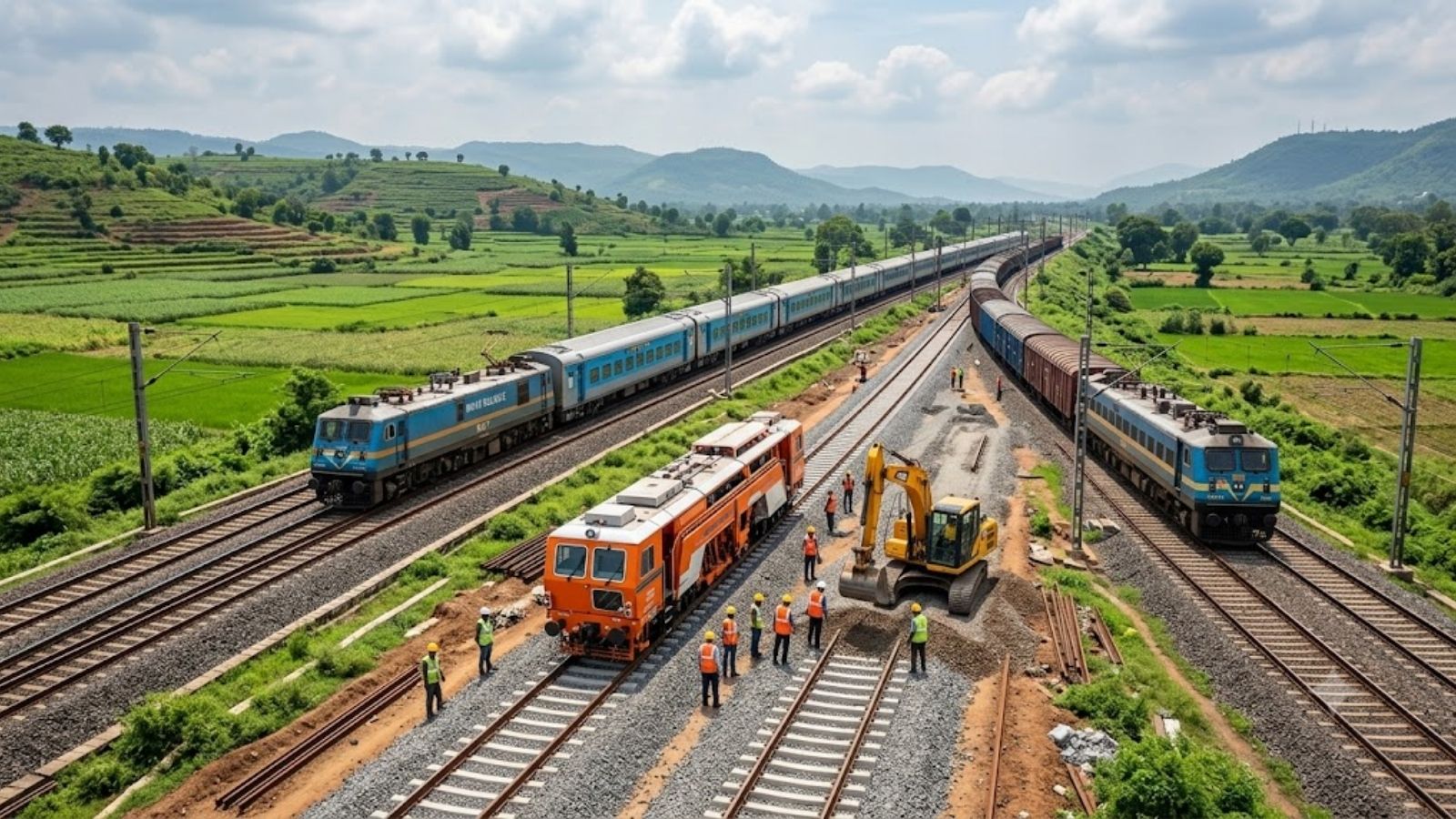
In a major move to enhance connectivity and safety, the Ministry of Railways has greenlit projects totaling Rs 675 crore. The upgrades focus on freight efficiency in West Bengal and advanced safety systems in Bihar and Uttar Pradesh.
- Construction of an 11-km bypass in West Bengal costing Rs 272 crore.
- Electronic Interlocking (EI) at 21 stations in Bihar's Samastipur Division for Rs 233 crore.
- Deployment of Kavach 4.0 across 712 Rkm in UP's Moradabad Division for Rs 170 crore.
The Ministry of Railways has announced a strategic investment of Rs 675 crore aimed at modernizing infrastructure across three key states: West Bengal, Bihar, and Uttar Pradesh. These projects are designed to eliminate operational bottlenecks, integrate cutting-edge safety technology, and support the surging demand for industrial freight movement.
West Bengal: Streamlining Industrial Logistics
Under the South Eastern Railway zone, a new 11-km bypass line will be constructed between Adra and Joychandipahar at a cost of Rs 272 crore. This project is a critical response to the high utilization rate (71%) of the existing network, which has led to frequent congestion and delays.
The bypass is specifically engineered to support the massive iron ore requirements of SAIL (23.40 MTPA) and the logistics of BCCL, which expects a movement of 45 rakes per day. By providing a dedicated route for freight, the railways aim to handle approximately 6.065 freight rakes daily, significantly boosting regional industrial output.
Why This Matters
BozokMedia analysis shows that this targeted investment in bypass lines is a blueprint for reducing the 'cost of logistics' in India. By separating freight from passenger traffic, the railways are optimizing throughput, which directly impacts the ease of doing business in the industrial belt of West Bengal.
"The transition from legacy relay systems to Electronic Interlocking is not just an upgrade; it is a necessity for the high-density traffic patterns of modern India."
Bihar and Uttar Pradesh: The Safety Revolution
In Bihar, the Samastipur Division of the East Central Railway will undergo a digital transformation. With an investment of Rs 233 crore, 21 stations will be upgraded with Electronic Interlocking (EI). This computer-based system offers superior reliability, faster fault detection, and is a prerequisite for the wider implementation of the 'Kavach' system.
Simultaneously, in Uttar Pradesh, the Moradabad Division of the Northern Railway will see the rollout of Kavach Version 4.0 across 712 Route Kilometres. Costing Rs 170 crore, this indigenous Automatic Train Protection (ATP) system serves as a fail-safe mechanism to prevent collisions, ensuring a safer journey for millions of passengers.
| State | Core Project | Budget (Cr ₹) | Primary Objective |
|---|---|---|---|
| West Bengal | Adra-Joychandipahar Bypass | 272 | Freight Efficiency |
| Bihar | Electronic Interlocking (EI) | 233 | Signaling Modernization |
| Uttar Pradesh | Kavach 4.0 Implementation | 170 | Passenger Safety |
Frequently Asked Questions
1. What is Electronic Interlocking (EI)?
EI is a modern, computer-based signaling system that replaces older mechanical or relay-based systems, providing higher reliability and easier maintenance.
2. How does the new bypass in West Bengal benefit the economy?
It reduces delays for industrial giants like SAIL and BCCL, ensuring a steady flow of raw materials and finished goods, thereby reducing operational costs.