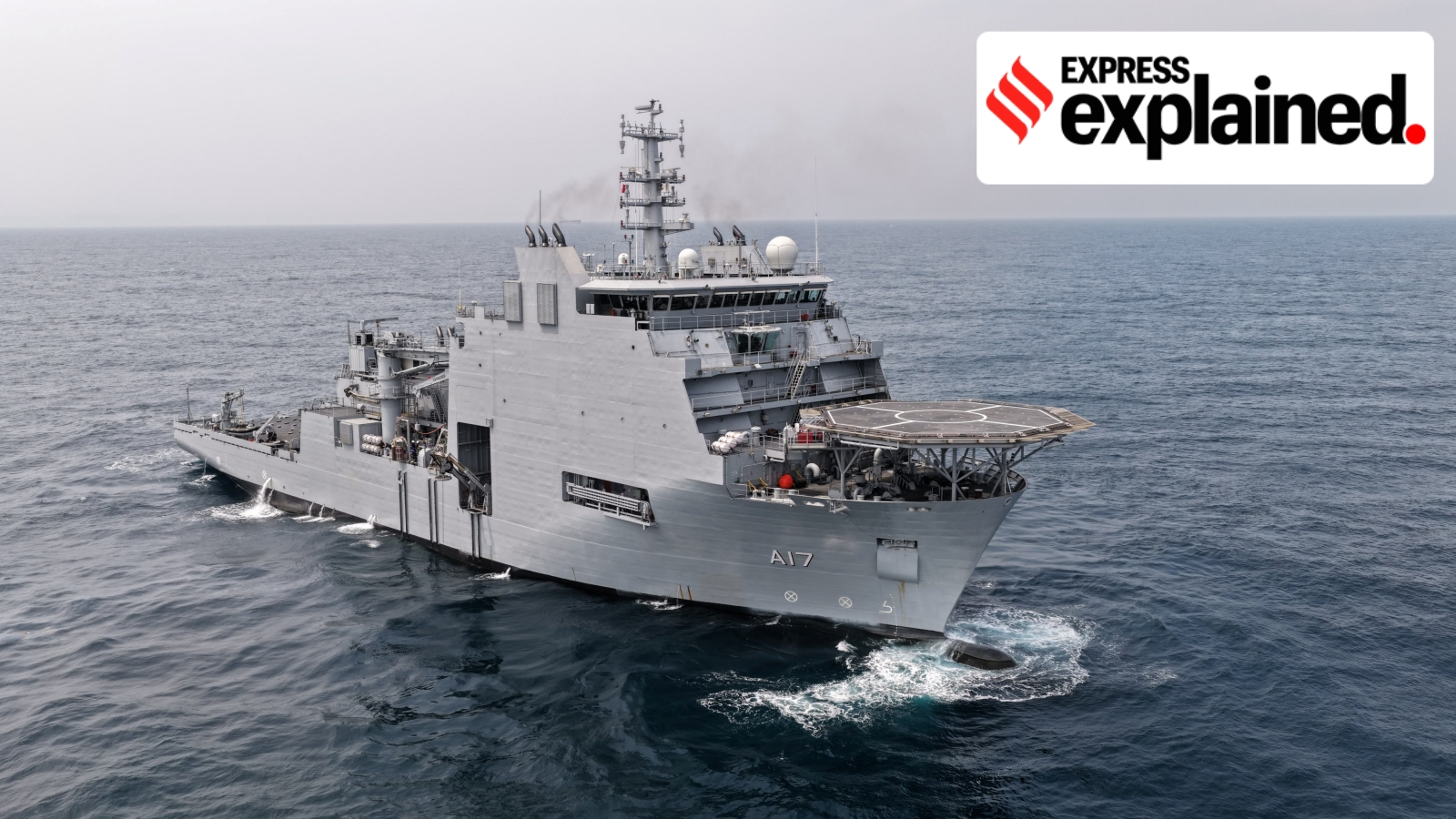
The Indian Navy has commissioned INS Nipun, a sophisticated Nistar-class diving support vessel designed to revolutionize deep-sea intervention and submarine rescue operations in the Indian Ocean Region.
- INS Nipun is the second Nistar-class Diving Support Vessel (DSV) commissioned in Mumbai.
- Equipped for deep-sea saturation diving and serves as a mothership for Deep Submergence Rescue Vessels (DSRV).
- Significantly reduces dependence on foreign assets for underwater salvage and emergency submarine evacuations.
The Indian Navy has officially bolstered its underwater warfare and rescue framework with the commissioning of INS Nipun at the Naval Dockyard in Mumbai. This 9,000-tonne vessel, the second of the Nistar-class, is engineered to provide sustained operational support for complex underwater missions, ensuring that the Western Naval Command can respond with precision to maritime contingencies.
A Diving Support Vessel (DSV) is far more than a transport ship; it is a floating command center for underwater intervention. INS Nipun provides the essential infrastructure for divers to conduct inspections, repairs, and recoveries of sunken aircraft or vessels. By integrating medical facilities and advanced diving systems, the ship allows the Navy to maintain a persistent presence in deep waters without relying on shore-based support.
Why This Matters
BozokMedia analysis shows that the induction of INS Nipun signals India's transition toward complete strategic autonomy in the underwater domain. Historically, India relied on Russian-origin rescue vessels that lacked the multi-domain capabilities required for modern maritime security. By deploying indigenous DSVs, India can now safeguard its submarine fleet more effectively, turning a potential rescue crisis into a manageable operation.
"The ability to sustain specialized underwater operations at sea is an indispensable part of maritime preparedness, especially when dealing with the time-critical nature of submarine emergencies."
One of the most critical features of INS Nipun is its capacity for saturation diving. This allows divers to live under pressure for extended periods, enabling them to work at extreme depths that would otherwise be impossible. Furthermore, the ship is equipped with Remotely Operated Vehicles (ROVs) for diver monitoring and salvage operations, adding a layer of safety and efficiency to high-risk missions.
The vessel also serves as the essential "Mother Ship" for the Deep Submergence Rescue Vessel (DSRV), procured from James Fisher Defence, UK. These DSRVs are capable of rescuing personnel from submarines at depths of up to 650 meters, providing a critical lifeline for submariners in distress.
| Feature | Traditional Rescue Vessels | INS Nipun (Nistar-class) |
|---|---|---|
| Operational Depth | Limited/Moderate | Deep-sea Saturation Diving |
| Endurance | Short-term/Shore dependent | Long-term sea deployment |
| Tech Integration | Basic Salvage | ROVs & DSRV Mothership |
Beyond rescue, the ship features a self-propelled hyperbaric lifeboat, ensuring that divers in compression chambers can be evacuated safely during emergencies. This level of sophistication places the Indian Navy among a select few global navies possessing such integrated underwater capabilities.
Frequently Asked Questions
Q1: What is the role of a DSRV in relation to INS Nipun?
The DSRV is a specialized rescue submersible that INS Nipun carries and deploys to evacuate crews from distressed submarines at depths up to 650 meters.
Q2: What is saturation diving?
It is a technique where divers live in a pressurized environment for days or weeks, allowing their body tissues to absorb the inert gas, thus eliminating the need for decompression after every single dive.