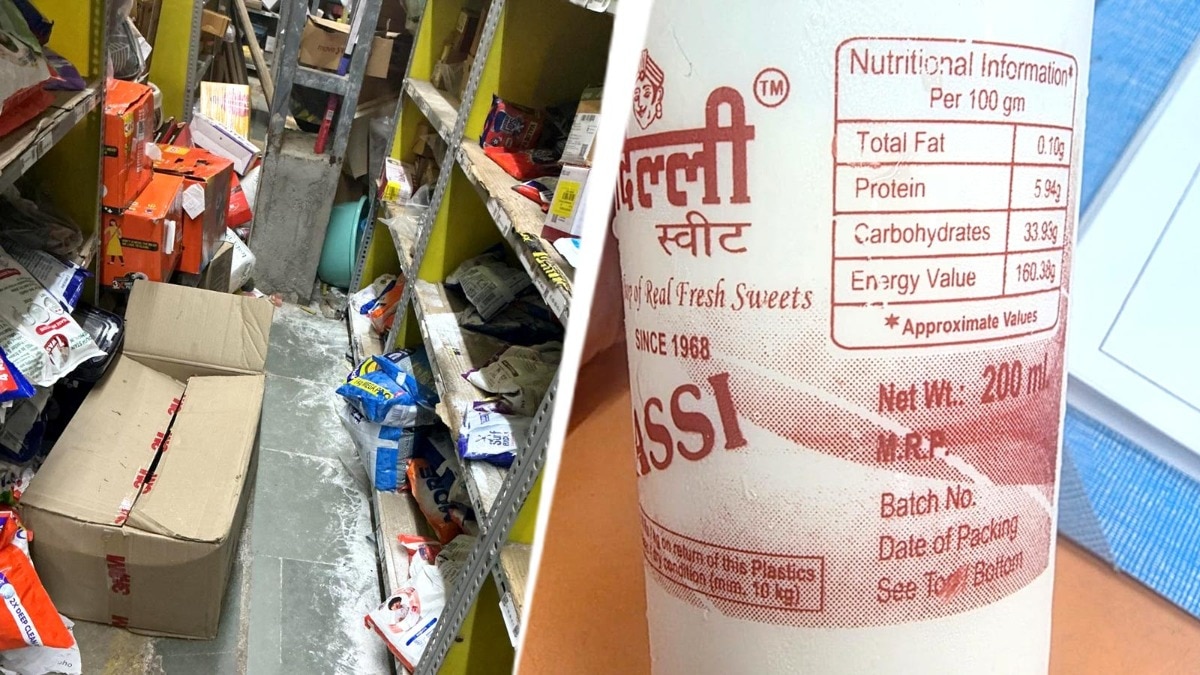
The Maharashtra Food and Drug Administration (FDA) has launched a massive crackdown on food safety, suspending licenses for a Blinkit store and two Mumbai eateries while destroying 165 litres of contaminated milk.
- Three food licenses suspended across Mumbai and Akola for severe hygiene violations.
- Blinkit store in Akola penalized after failing to rectify previous safety warnings.
- 165 litres of milk destroyed in Sangli due to improper temperature storage.
- Severe failures in pest control, employee hygiene, and documentation recorded.
The Maharashtra Food and Drug Administration (FDA) has intensified its campaign against food safety negligence, taking decisive action against establishments in Mumbai, Akola, and Sangli. In a series of raids, the authority suspended the licenses of three prominent food entities after inspections revealed systemic failures in hygiene, storage, and regulatory compliance.
Mumbai Eateries Face Severe Penalties
In Malad West, the Delhi Sweet & Bhelpuri House saw its license suspended immediately. Inspectors were appalled to find raw eggs stored alongside other food items in a shared freezer. The facility lacked basic sanitation, with food stored directly on the floor and contaminated water being utilized in food preparation. Furthermore, the establishment failed to provide mandatory health check-ups or training records for its staff.
Similarly, the Gulzar Mohammedi Hotel in Kurla West suffered a devastating inspection result, scoring only 28% on the FDA's assessment criteria. The report detailed a kitchen plagued by grime, grease-covered ceilings, and peeling plaster. The lack of gloves and headgear among staff, combined with delayed garbage disposal, led to the immediate prohibition of all food production and sales at the premises.
Blinkit's Operational Failure in Akola
The crackdown extended to the quick-commerce sector, where Blink Commerce Pvt Ltd (Blinkit) had its license suspended in Akola. This action followed a prior warning issued on August 12. A follow-up inspection revealed that the company had ignored directives; food and non-food items were stored on the same racks, and damaged plastic curtains in the walk-in chillers compromised temperature control.
Milk Contamination in Sangli
Turning to the dairy sector, FDA officials raided the Mayakka Milk Collection Centre in Sangli's Miraj taluka. The operation resulted in the seizure and immediate destruction of 165 litres of raw cow and buffalo milk, which had been left at room temperature for over four hours. Officials also discovered that a government seal on a cream separator, placed on August 11, had been illegally broken.
BozokMedia analysis shows that this crackdown signals a shift toward zero tolerance for 'quick-commerce' and street-food hygiene. The suspension of a major player like Blinkit suggests that the FDA is no longer granting leniency to corporate entities over local vendors, emphasizing that food safety is non-negotiable regardless of the business model.
The transition from warnings to immediate suspensions indicates a strategic move by the FDA to prevent large-scale foodborne illness outbreaks in densely populated urban hubs.
| Establishment | Location | Primary Violation | Outcome |
|---|---|---|---|
| Delhi Sweet & Bhelpuri | Mumbai | Cross-contamination & Poor Hygiene | License Suspended |
| Gulzar Mohammedi Hotel | Mumbai | 28% Hygiene Score & Dirty Drains | Registration Cancelled |
| Blinkit Store | Akola | Improper Storage & Ignored Notices | License Suspended |
| Mayakka Milk Centre | Sangli | Temperature Abuse & Seal Breaking | 165L Milk Destroyed |
Q1: Why was the Blinkit license suspended despite being a corporate entity?
A1: The license was suspended because the establishment failed to rectify hygiene and storage deficiencies after a formal improvement notice was issued.
Q2: What are the risks of storing milk at room temperature?
A2: Milk is highly perishable; storing it above 4°C for extended periods allows rapid bacterial growth, rendering it unsafe for human consumption.

