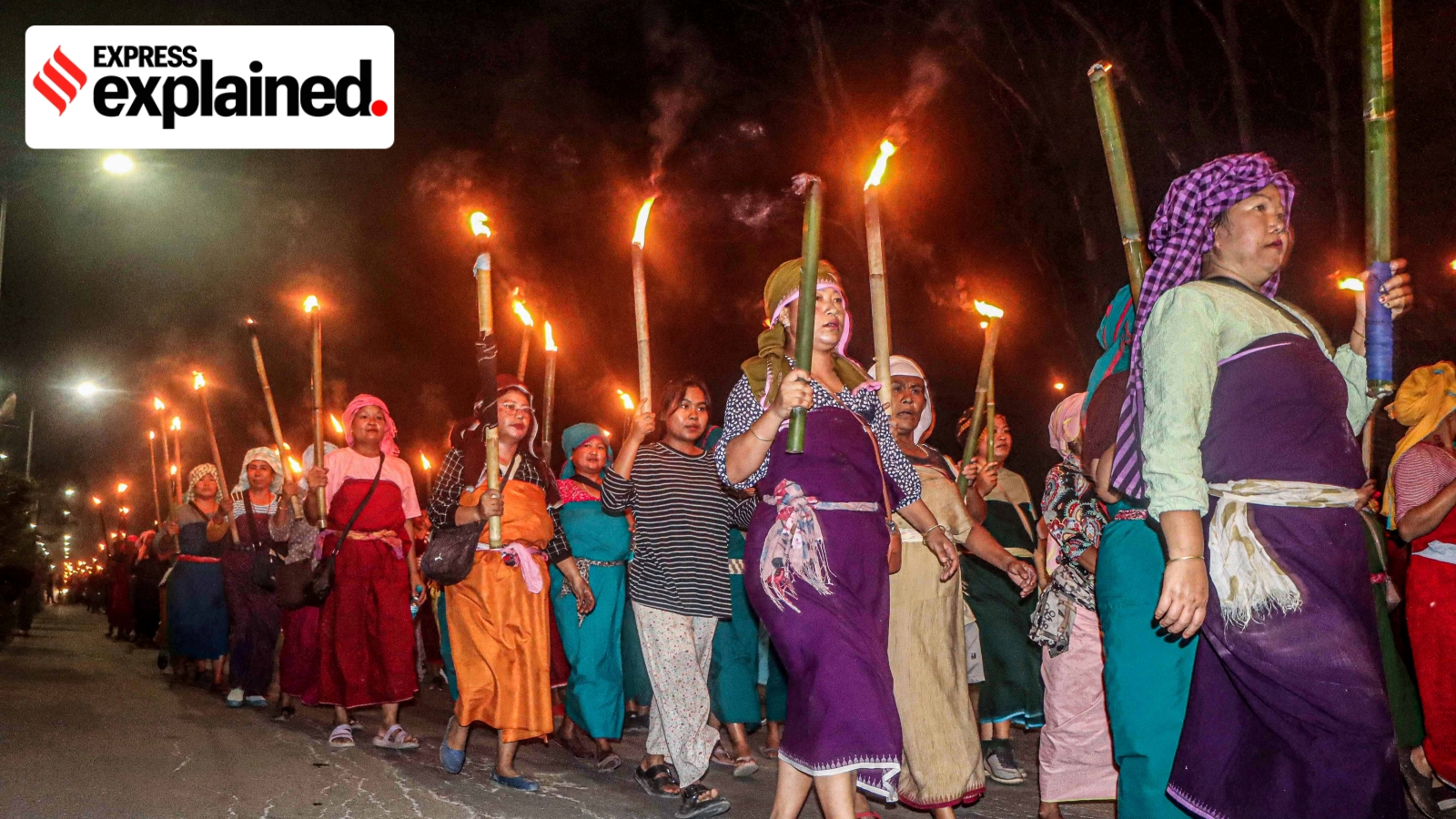
The Union government has postponed the 2027 Census in Manipur following intense demands from Meitei and Naga groups to implement the National Register of Citizens (NRC) first.
- The 2027 Census in Manipur is deferred after high-level meetings involving Home Minister Amit Shah.
- Meitei and Naga groups demand NRC to identify illegal immigrants before recording population data.
- Concerns over displacement and political delimitation are driving the conflict.
In a significant administrative move, the Union government has decided to defer the 2027 Census in Manipur. This decision follows a high-stakes meeting between Union Home Minister Amit Shah, Manipur Governor Ajay Kumar Bhalla, Chief Minister Yumnam Khemchand Singh, and Union Home Secretary Govind Mohan. The core of the dispute lies in the demand that the Census should only proceed after the implementation of the National Register of Citizens (NRC).
The Triple Crisis Driving the NRC Demand
There are three overlapping concerns fueling the opposition to the Census. First is citizenship and demographic change. Civil society groups in the valley and Naga-dominated hill districts allege that migration from Myanmar has fundamentally altered the state's demographic composition. They argue that an NRC exercise is necessary to distinguish legitimate Indian citizens from illegal immigrants.
Second is the mass displacement caused by the ethnic violence that erupted in May 2023. With thousands still living in relief camps, Meitei groups argue that a Census conducted now would record the consequences of displacement rather than the actual population distribution of the state.
Third is the critical issue of political representation. Census data serves as the foundation for delimitation—the redrawing of electoral boundaries. Since Manipur has not seen a fresh delimitation since the 1970s, new data could drastically shift the power dynamics within the Manipur Assembly.
Why This Matters
BozokMedia analysis shows that the demand for NRC is a calculated effort to weaponize demographics. By ensuring an NRC happens first, dominant ethnic groups aim to 'cleanse' the voter list of suspected immigrants, thereby ensuring that the subsequent delimitation process does not dilute their political influence in the state legislature.
"The Census in Manipur has transitioned from a routine administrative task to a geopolitical battleground over identity and power."
This demand is not new. As early as June 2022, the Coordinating Committee on Manipur Integrity (COCOMI) and the United Naga Council (UNC) sought an NRC. The Manipur Assembly even adopted a resolution in August 2022 to this effect. The crisis in Myanmar following the 2021 military coup further intensified these fears, as thousands of Chin and related communities crossed the border into India.
Conversely, Kuki-Zo groups have vehemently opposed this sequence. The Kuki-Zo Council argues that NRC is a national exercise and cannot be unilaterally initiated by a state government or a specific community to target particular groups.
| Stakeholder | Primary Demand/Stance | Core Concern |
|---|---|---|
| Meitei/Naga Groups | NRC before Census | Illegal immigration & demographic shift |
| Kuki-Zo Groups | Oppose NRC before Census | Targeting of legitimate citizens |
Frequently Asked Questions
1. Why was the Manipur Census postponed?
It was deferred because several ethnic groups insist on an NRC exercise first to ensure illegal immigrants are not counted as citizens.
2. How does the Census affect delimitation?
The Census provides the population numbers used to redraw constituency boundaries, which can change the number of seats assigned to different regions.