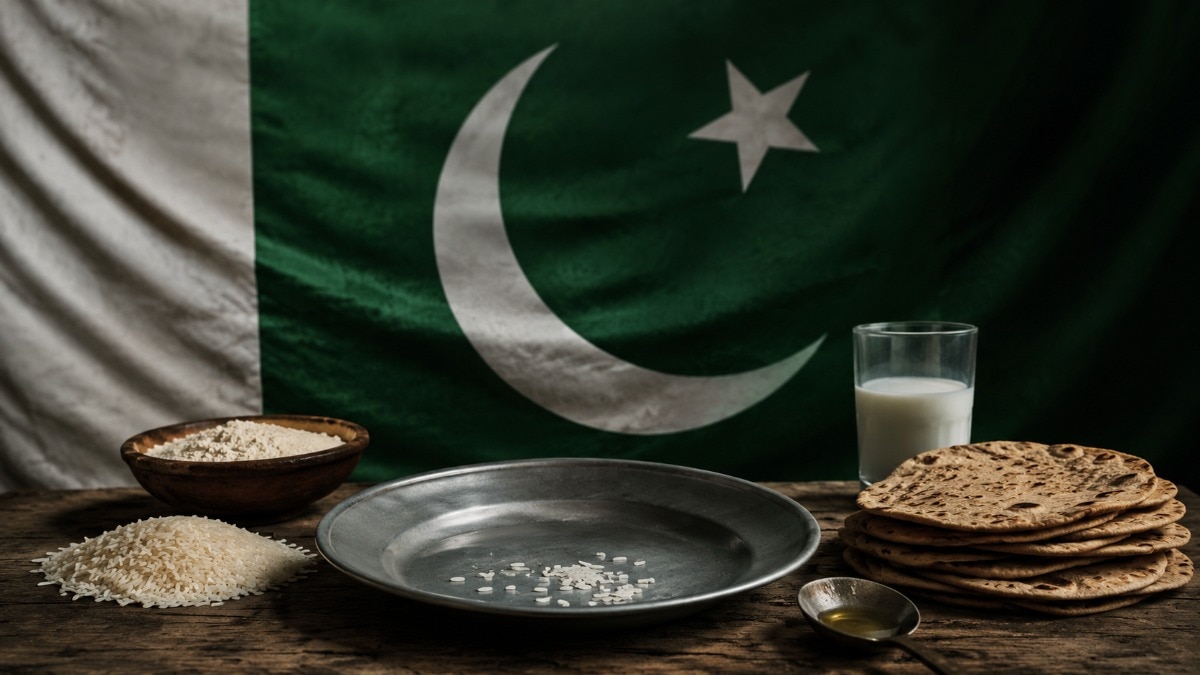
Rising inflation and economic instability in Pakistan have forced households to slash consumption of basic nutrients. New data reveals a frightening surge in food insecurity across both urban and rural landscapes.
- Consumption of wheat, rice, meat, and milk has declined significantly over the last 6 years.
- Severe food insecurity has more than doubled, rising from 2.37% to 5.04%.
- Pakistan has transitioned into a net importer of food since 2021 despite its agricultural roots.
Pakistan is currently grappling with a systemic crisis where the issue is no longer just food availability, but affordability. According to data from the Pakistan Bureau of Statistics (PBS), households across the country have been forced to reduce the quantity and variety of their food intake over the past six years.
The report highlights a disturbing trend: the share of households classified as "moderate to severely food insecure" jumped from 15.92% in 2019 to 24.35% in 2025. This implies that more than a quarter of the population is now battling hunger and malnutrition.
The Erosion of Basic Nutrition
The impact is visible in the daily habits of millions. Families are preparing smaller rotis, cooking meat less frequently, and reducing the amount of milk provided to children. Even tea, a cultural staple, has seen a decline in consumption as budgets tighten.
Paradoxically, the consumption of vanaspati ghee has surged by 81%, increasing from 690 grams to 1.25 kg per month. This shift indicates a dangerous transition where families are replacing nutrient-dense foods with cheaper, calorie-heavy fats just to stave off hunger.
Why This Matters
BozokMedia analysis shows that this crisis exposes a fundamental failure in Pakistan's agricultural strategy. For a nation that prides itself on being an agrarian economy, the reliance on food imports since 2021 is a red flag. It proves that producing food is irrelevant if the citizens cannot afford to buy it from their own markets.
"The transition from food security to food insecurity in an agricultural hub is a symptom of a collapsed purchasing power and systemic economic mismanagement."
Rural Despair and Urban Pressure
While the crisis is most acute in rural areas, urban centers are not immune. The shrinking purchasing power has created a cross-demographic trend of dietary decline. This widespread malnutrition threatens to create a permanent health deficit in the next generation.
| Category | 2019 Status | 2025 Status |
|---|---|---|
| Food Insecure Households | 15.92% | 24.35% |
| Severe Food Insecurity | 2.37% | 5.04% |
Frequently Asked Questions
Q1: What is the primary driver of food insecurity in Pakistan?
The primary driver is hyper-inflation in food prices coupled with a drastic decline in the real income and purchasing power of the average citizen.
Q2: How does the increase in vanaspati ghee consumption relate to the crisis?
It shows a 'survival shift' where families swap expensive proteins (meat, milk) for cheap, calorie-dense fats to avoid starvation.