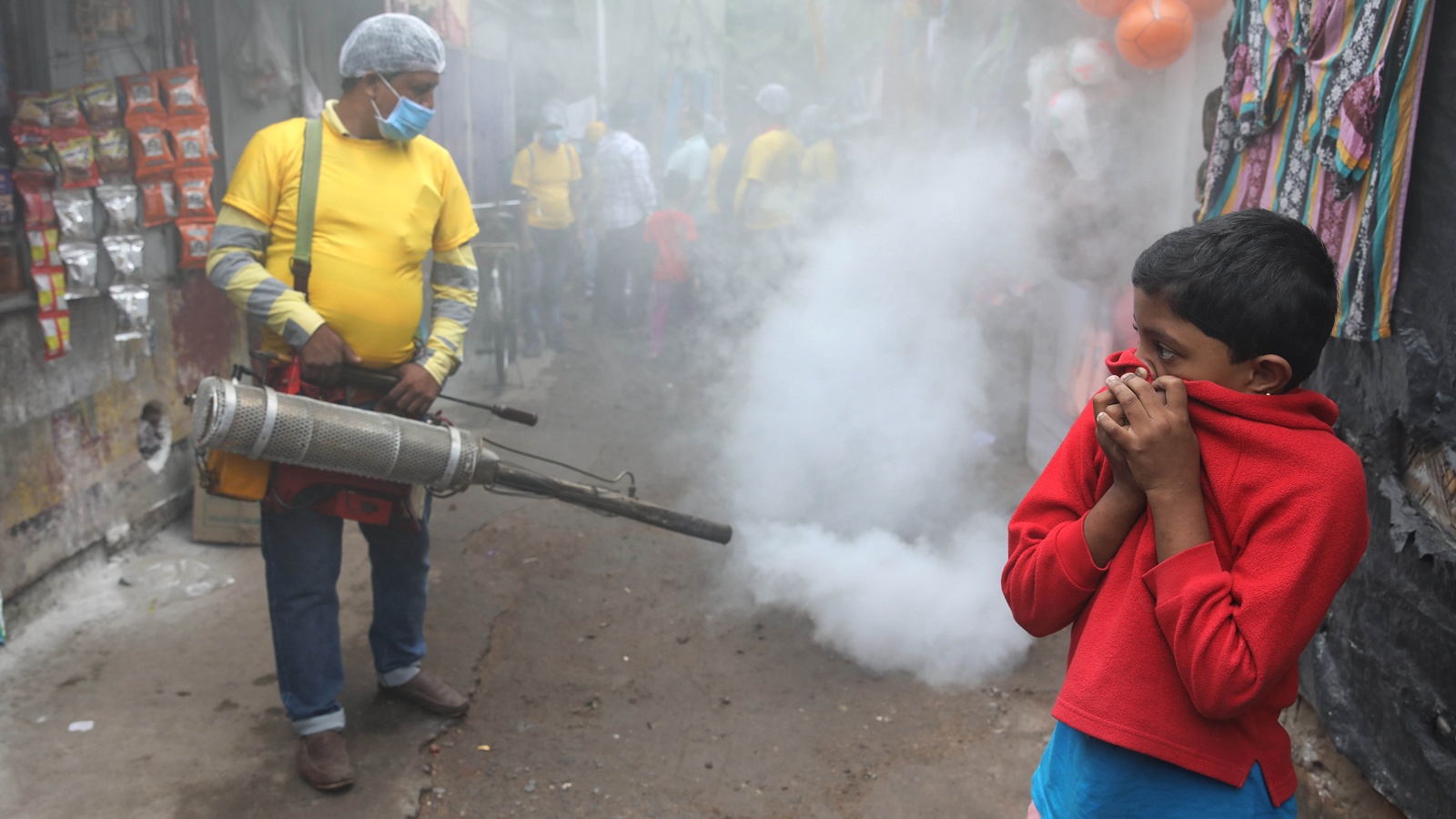
Pune Municipal Corporation (PMC) has taken strict action against four laboratories for providing incomplete patient data amid a sharp rise in dengue cases. August has seen a significant spike with 484 suspected cases reported.
- Dengue cases surged to 484 in August, up from 323 in July and 175 in June.
- PMC issued notices to four laboratories for failing to provide complete patient addresses and names.
- Kothrud and Wagholi-Nagar Road are the hardest-hit areas with 121 and 102 cases respectively.
- Authorities are investigating two suspected deaths due to dengue.
Pune: The civic health department in Pune is on high alert as dengue cases continue to climb steadily. According to the latest data from the Pune Municipal Corporation (PMC), there were 484 suspected dengue cases in August alone. This marks a concerning upward trend compared to the 323 cases reported in July and 175 in June.
In a decisive move to ensure better disease tracking, the civic body has issued formal notices to four diagnostic laboratories. These establishments were found guilty of failing to report complete patient information, including names and addresses, for those tested for dengue and chikungunya. Since dengue is a notifiable disease, accurate reporting is critical for public health surveillance.
Why This Matters
BozokMedia analysis shows that incomplete medical data creates blind spots in epidemic management. When laboratories bypass mandatory reporting protocols, it hinders the ability of municipal authorities to deploy rapid response teams to specific infection clusters, potentially leading to uncontrolled outbreaks.
Pavneet Kaur, Additional Municipal Commissioner (Gen.) of PMC, has directed all departments to aggressively identify and eliminate mosquito breeding sites. The focus is not only on dengue but also on preventing the spread of Chikungunya and Zika, which are also prevalent in the region due to current weather conditions.
Effective vector control requires a seamless synergy between laboratory reporting accuracy and municipal ground action.
A comparative review conducted on August 31 revealed that certain wards are significantly more vulnerable. Dr. Rajesh Dighe, Assistant Health Officer, presented a ward-wise mapping which identified Kothrud (121 cases) and Nagar Road-Wagholi (102 cases) as the primary hotspots. The administration is now focusing its resources on these high-density areas.
Historical Background
The scale of the current outbreak is being measured against previous years. In 2024, Pune recorded a staggering 4,958 dengue cases. While the number saw a significant decline in 2025 to 2,391 cases, the rapid escalation in the middle of 2026 suggests that environmental factors and mosquito breeding cycles are becoming more aggressive.
| Month (2026) | Suspected Dengue Cases |
|---|---|
| June | 175 |
| July | 323 |
| August | 484 |
Frequently Asked Questions
1. Why did the PMC penalize the laboratories?
The labs were penalized for failing to provide mandatory complete patient details, which is essential for tracking notifiable diseases.
2. Which areas in Pune are most affected by dengue?
Kothrud and the Wagholi-Nagar Road area have reported the highest number of cases.