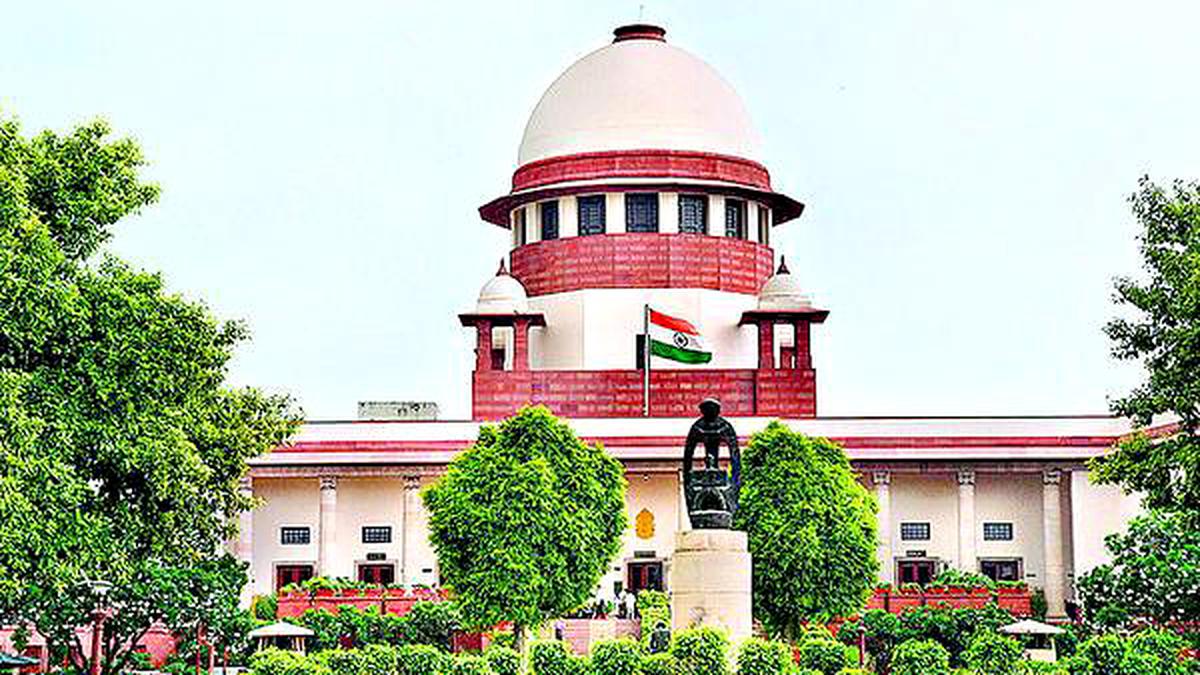
The Supreme Court has demanded an explanation from the Union Home Ministry regarding the implementation of orders to reduce IPS officer deputations in CAPFs. Justice Ujjal Bhuyan noted that cadre officers are being 'completely stifled'.
- The Supreme Court questioned the implementation of its May 2025 judgment regarding IPS officer deputations in CAPFs.
- Justice Ujjal Bhuyan observed that a 'strong lobby' is preventing CAPF cadre officers from accessing senior positions.
- The Home Ministry stated that cadre reviews and statutory changes are underway across all CAPFs.
- The CAPFs (General Administration) Act, 2026, is currently facing legal challenges in court.
New Delhi: In a significant legal development, the Supreme Court of India on Wednesday sought a detailed explanation from Union Home Secretary Govind Mohan regarding the implementation of its May 2025 directive. The court had ordered the progressive reduction of Indian Police Service (IPS) officers on deputation to senior-level posts within the Central Armed Police Forces (CAPFs).
During the hearing of a contempt petition filed by retired CAPF officers, Justice Ujjal Bhuyan expressed strong dissatisfaction with the current status quo. He observed that the cadre officers of the CAPFs are being "completely stifled" by a "strong lobby." The bench questioned why competent CAPF officers, many of whom have served for over 25 years and defended India's borders, are being bypassed for leadership roles.
Why This Matters
BozokMedia analysis shows that this conflict represents a fundamental struggle between the centralized control of the IPS and the professional autonomy of specialized paramilitary forces. The ability of CAPF officers to rise through their own ranks is crucial for maintaining institutional morale and specialized operational expertise.
"The systematic bypassing of seasoned CAPF officers in favor of IPS deputation undermines the very structure of organized paramilitary services."
In an affidavit submitted to the court, the Union Home Ministry revealed that 46 IPS officers have been brought on deputation to SAG-level posts in CAPFs following the 2025 judgment. The Ministry maintained that it has initiated cadre reviews across all forces, including the BSF, CISF, CRPF, SSB, and ITBP, and has forwarded proposals to the Department of Personnel and Training (DoPT).
Distribution of IPS Officers in CAPFs
| Force Name | Number of IPS Officers on Deputation |
|---|---|
| Border Security Force (BSF) | 13 |
| Central Industrial Security Force (CISF) | 11 |
| Central Reserve Police Force (CRPF) | 09 |
| Sashastra Seema Bal (SSB) | 07 |
| Indo-Tibetan Border Police (ITBP) | 06 |
The tension escalated with the enactment of the CAPFs (General Administration) Act, 2026. This legislation, passed by Parliament, effectively mandates specific quotas for IPS officers in top ranks, including 50% of Inspector General posts and 67% of Additional Director General posts. This Act is currently being challenged by five writ petitions in the Supreme Court, scheduled for hearing on November 18.
Historically, CAPF officers have fought for recognition as an "Organised Group A Service" (OGAS), which entitles them to structured promotion pathways. The court's previous ruling affirmed this status, demanding a time-bound review of service rules to ensure fairness.
Frequently Asked Questions
1. What was the Supreme Court's original directive?
The Court directed the Centre to progressively reduce the number of IPS officers in senior administrative grades within CAPFs over a two-year period.
2. Why is the CAPFs Act, 2026 controversial?
Critics argue the Act was designed to circumvent the Supreme Court's judgment by legally mandating higher percentages of IPS officers in senior leadership roles.