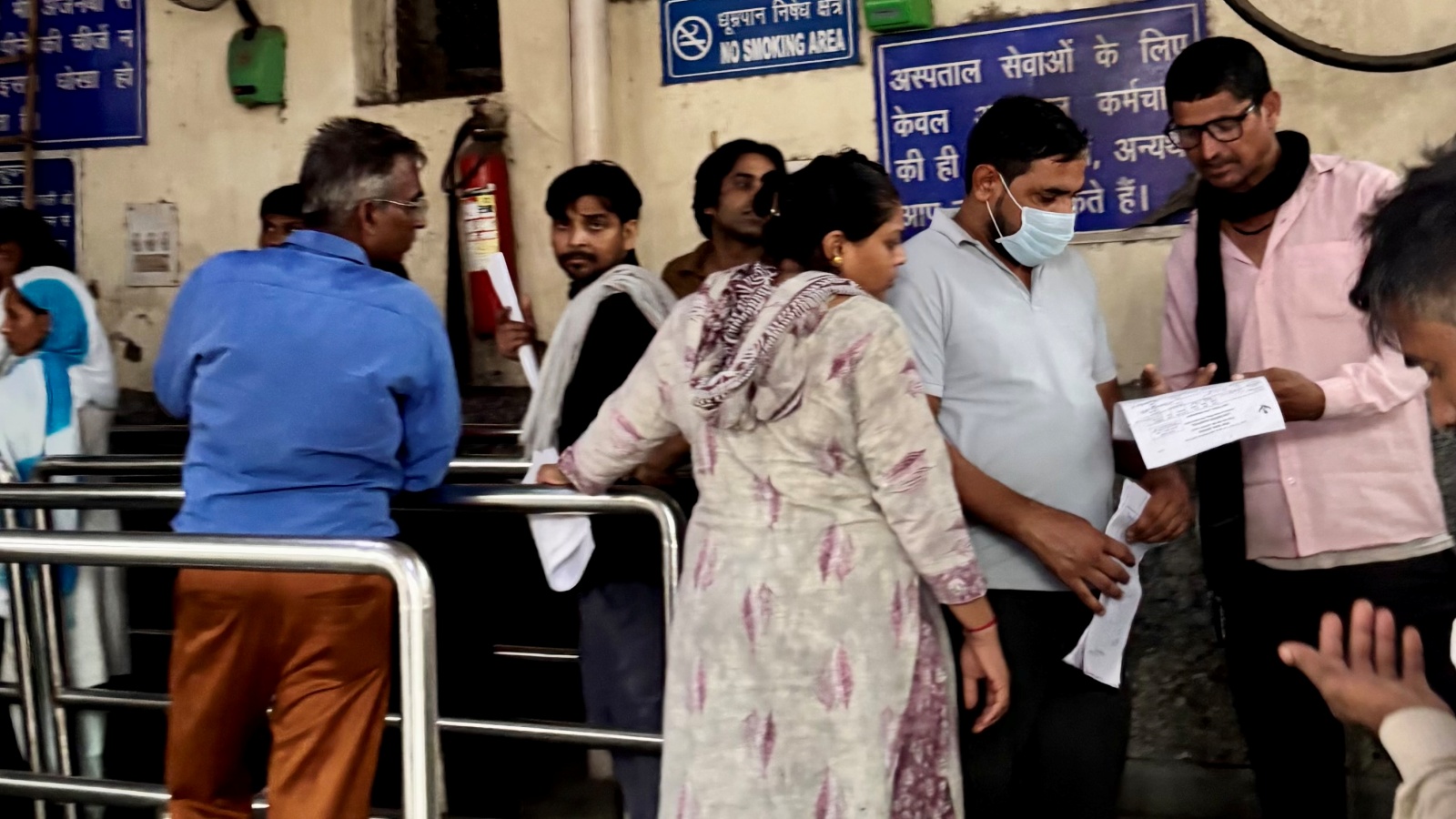
A massive shortage of medical machinery and staff at Delhi's LNJP Hospital has forced patients to wait years for essential diagnostic tests like MRIs.
- LNJP Hospital operates with only one functional MRI machine for 5,000+ daily OPD patients.
- Patients are being issued appointment dates as far as December 2028.
- The hospital relies heavily on the Delhi Arogya Kosh scheme to refer patients to private centers.
In a harrowing revelation of the state of public healthcare in the national capital, patients at Lok Nayak Jai Prakash (LNJP) Hospital are being asked to wait years for critical diagnostic procedures. Shahjad, a 46-year-old driver from Saharanpur, was recently handed a slip for a follow-up head MRI that scheduled his appointment for December 21, 2028. For Shahjad, who has been unable to work for 18 months due to a pituitary tumor, this delay is not just a number—it is a denial of timely medical care.
The crisis at LNJP, Delhi's largest government hospital, stems from a severe mismatch between patient volume and available resources. While the Outpatient Department (OPD) handles upwards of 5,000 patients every day, the facility currently possesses only one functional MRI machine and one functional CT scanner.
Why This Matters
BozokMedia analysis shows that this systemic bottleneck creates a dangerous reliance on private providers. While the government attempts to mitigate the crisis through financial aid, the fundamental infrastructure—the machines and the specialists to operate them—remains woefully inadequate for a metropolis like Delhi.
The shortage of radiologists and the limited capacity of existing machines have turned a public health necessity into a years-long waiting game.
Radiology specialists at the hospital explained that the process is labor-intensive. A single MRI session involves registration, metal screening, the scan itself (taking 40-60 minutes), and image review. Even with a 12-hour operational window, a single machine can only conduct approximately 10 successful scans per day. This mathematical impossibility ensures that the queue will continue to grow indefinitely.
Delhi Health Minister Pankaj Singh stated that new machinery has been procured through a Corporate Social Responsibility (CSR) initiative from Indian Oil Corporation Limited (IOCL). While a new MRI and CT machine are currently under trial, medical professionals warn that a single additional unit will not suffice to clear a backlog that stretches into years.
To manage the overflow, the hospital utilizes the Delhi Arogya Kosh (DAK) scheme, which provides up to Rs 5 lakh for diagnostics and treatment. Records show that hundreds of patients are referred to private centers every month under this scheme. While this acts as an 'unofficial pressure valve' for the overburdened public system, critics argue it essentially privatizes the demand created by public sector inadequacy.
Frequently Asked Questions
1. Why is the waiting period for an MRI so long at LNJP?
The primary reason is the extreme shortage of equipment; the hospital has only one functional MRI machine for thousands of daily patients.
2. Can patients get tests done for free elsewhere?
Under the Delhi Arogya Kosh scheme, eligible patients can be referred to private centers with government financial assistance.
| Resource | Current Status | Impact |
|---|---|---|
| MRI Machines | 1 Functional | Extremely long waiting lists |
| Daily OPD Load | 5,000+ Patients | Overwhelming demand |
| Staffing | Critical Shortage | Reduced diagnostic throughput |