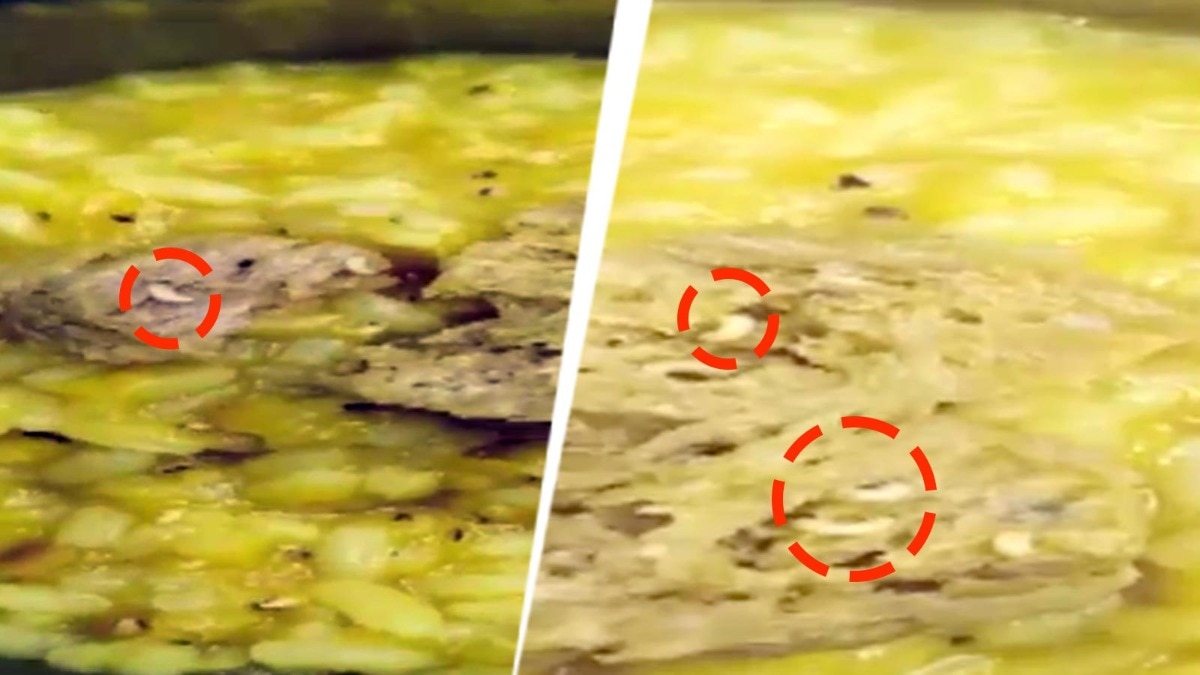
A disturbing incident has been reported from Cooch Behar, West Bengal, where white worms were found in the khichuri served at an Anganwadi center, leaving two children ill.
- White worms were discovered in khichuri at an Anganwadi center in Dinhata, Cooch Behar.
- Two local children reportedly fell ill after consuming the contaminated food.
- Angry villagers protested by locking the Anganwadi center.
- Similar food safety lapses have been reported in Bihar recently.
In a deeply concerning development from West Bengal, white worms were found crawling in the khichuri prepared for young children at an Anganwadi center in the Kuthibari area of Dinhata, Cooch Behar. The incident, which came to light on Wednesday morning, has sent shockwaves through the local community, as the contaminated meal reportedly caused two children to fall ill shortly after consumption.
Mass Protest by Local Villagers
The discovery of the infestation triggered immediate outrage among the residents of the Putimari-2 Gram Panchayat. As news of the unhygienic food spread, villagers gathered at the Anganwadi center to voice their anger against the negligence of the authorities. In a show of protest, the community members locked the doors of the center, demanding accountability and immediate action to ensure the safety of the children in their care.
Why This Matters
BozokMedia analysis shows that nutritional schemes like Anganwadi and Mid-Day Meals are critical pillars of India's social safety net. Any compromise in food hygiene or quality doesn't just pose an immediate health risk to vulnerable children but also undermines the entire framework of national nutrition security and public trust in government-led welfare programs.
Food safety in institutional feeding programs is non-negotiable; even a minor lapse can lead to widespread health crises among children.
This is not an isolated case of mismanagement. Similar alarming incidents have been recorded in Bihar. In the Nalanda district, at least 40 students had to be hospitalized after detergent powder was mistakenly served instead of salt in their mid-day meals at Parasi Middle School. Furthermore, in Arwal district, worms were discovered in soybean dishes supplied by an NGO to multiple schools, prompting investigations by the District Education Officer.
Historical Context of Nutritional Programs
Since their inception, government nutritional programs in India have aimed to combat malnutrition among school-aged children. While these programs have reached millions, they frequently face challenges related to supply chain management, storage conditions, and the oversight of third-party vendors or NGOs, leading to recurring issues of food contamination.
Frequently Asked Questions
Question 1: What happened in the Cooch Behar incident?
Answer: White worms were found in the khichuri served at an Anganwadi center in Dinhata, leading to two children falling ill and local protests.
Question 2: Have there been similar incidents in other states?
Answer: Yes, Bihar has seen similar cases involving detergent being served as salt and worms being found in NGO-supplied meals.

