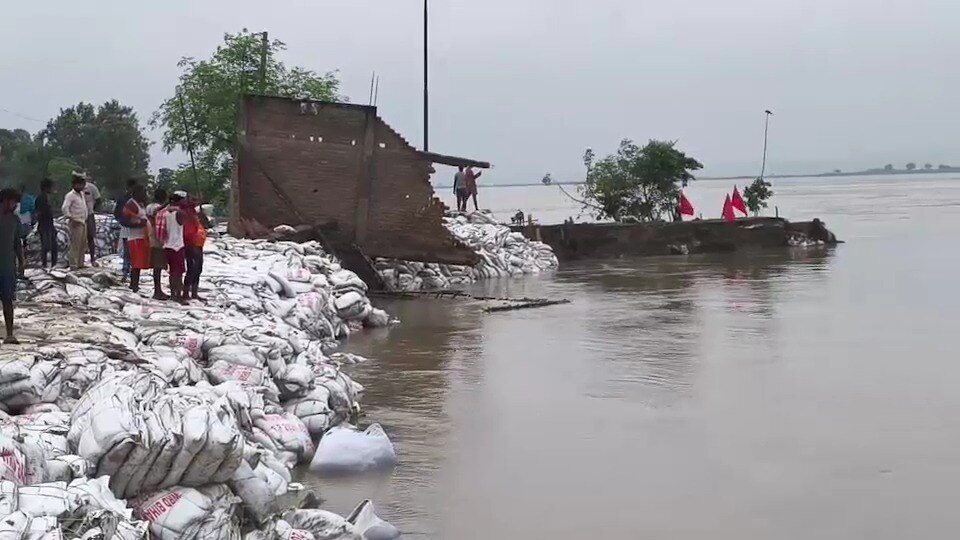
The rising water levels of the Ganges have triggered a high alert across 8 districts in Bihar, including Patna. With the river flowing 2 feet above the danger mark, several low-lying areas face imminent flooding.
- Ganges river is flowing 2 feet above the critical danger mark.
- High alert issued for 8 districts including Patna, Danapur, and Mokama.
- Water has already entered low-lying areas like Digha in Patna.
- Disaster management teams and NDRF are on standby.
The state of Bihar is grappling with a severe flood threat as the Ganges river continues to swell due to heavy rainfall in the catchment areas. The water level has breached the danger mark by approximately 2 feet, putting Patna and seven other surrounding districts under immediate threat. The situation is particularly dire in the floodplains of Danapur and Mokama.
In Patna, the onset of flooding is already visible. In the Digha locality, floodwaters have begun encroaching into residential areas, submerging several homes and disrupting daily life. The pressure from the Gandak river on the Ganges is further complicating the hydrological situation, effectively surrounding the state capital with rising waters from multiple fronts.
Why This Matters
BozokMedia analysis shows that the increasing frequency of such extreme flooding events in Bihar is a direct consequence of both intense monsoon patterns and inadequate urban drainage systems. The inundation of key districts like Patna poses a significant threat to the state's economic stability and public health infrastructure.
The convergence of rising river levels and urban encroachment creates a high-risk zone for catastrophic flooding in Bihar's capital.
Chief Minister Nitish Kumar has conducted visits to flood-prone areas, including Raghopur, to assess the damage and oversee relief operations. The Disaster Management Department has issued a high alert, mobilizing resources to assist the thousands of families who have already been forced to evacuate their homes in various districts.
Historical Background
Bihar has a long-standing history of devastating floods caused by the Ganges and its tributaries. While seasonal flooding is expected, the scale of inundation in urban centers like Patna has grown more severe due to climate change and the loss of natural water absorption zones through rapid urbanization.
Frequently Asked Questions
Question 1: Which areas are most at risk?
Answer: The districts of Patna, Danapur, and Mokama are currently facing the highest flood risk.
Question 2: What is the government doing?
Answer: The state government has issued a high alert and deployed disaster management teams to assist affected citizens.