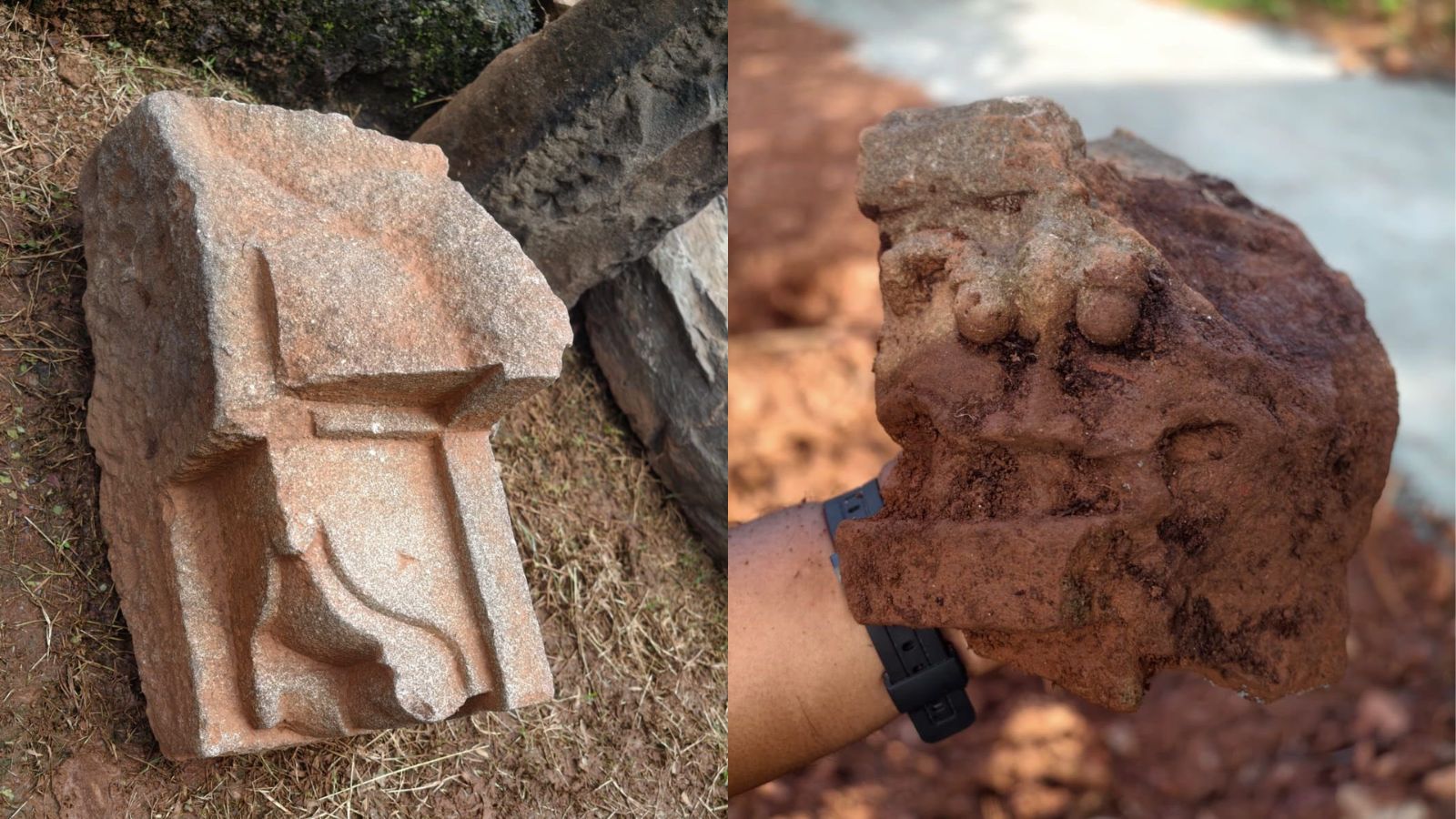
During restoration of the historic Shree Saptakoteshwar Temple on Divar Island, archaeologists uncovered artifacts dating from the 14th to 16th centuries, including a traditional Kirtimukh motif and a carved pillar capital. Chief Minister Pramod Sawant hailed the finds as a vital reinforcement of Goa’s sacred legacy and chronological history.
- Artifacts from the 14th‑16th centuries confirm continuous temple activity.
- Key finds include a Kirtimukh doorway motif and a carved pillar capital.
- Evidence points to successive reconstructions during Kadamba, Vijayanagar and Portuguese periods.
Restoration work at the ancient Shree Saptakoteshwar Temple on Goa’s Divar Island has yielded a trove of relics dating between the 14th and 16th centuries. Chief Minister Pramod Sawant described the discoveries as a pivotal archaeological breakthrough that strengthens the historical chronology and sacred legacy of the site.
The most notable finds are a ‘Kirtimukh’ motif—traditionally carved above temple doorways—and a finely carved capital of a temple pillar. Additional fragments of a Dev Khostam, used for placing idols, were also recovered, indicating a sophisticated ritual complex.
Historical records show that the original temple was erected during the Kadamba dynasty (10th‑14th century). It was later destroyed under Bahmani rule, rebuilt in 1391 by a minister of the Vijayanagar kingdom, and finally razed by the Portuguese in the 16th century. The deity’s idol was subsequently moved across the river to Bicholim, where Chhatrapati Shivaji Maharaj commissioned a new shrine in 1668.
The state’s “Kotiteerth Corridor Development Project” aims to revive this sacred pathway, linking Koti Tirth and Madhavachi Talli. A program titled “Udakshanti and Ganga Pujan” was launched to commemorate the reconstruction of temples destroyed during Portuguese rule, of which an estimated 1,000 were lost.
Why This Matters
BozokMedia analysis shows that these layered archaeological layers not only confirm the temple’s continuous religious significance but also provide tangible proof of Goa’s syncretic cultural evolution—from Kadamba to Vijayanagar to Portuguese influences.
“The stratified artifacts illustrate a resilient spiritual landscape that survived successive conquests and reconstructions.”
Experts argue that the findings will refine the timeline of Goa’s pre‑colonial architecture and guide future restoration of other lost temples across the state.
Frequently Asked Questions
Q1: Do the artifacts reveal the original architectural style of the temple?
A: Yes, the Kirtimukh motif and carved capital are characteristic of Vijayanagar architecture, while stone typologies also reflect Kadamba craftsmanship.
Q2: How is the government planning to preserve these discoveries?
A: A high‑level committee has been formed to oversee conservation, documentation, and integration of the site into a heritage tourism corridor.