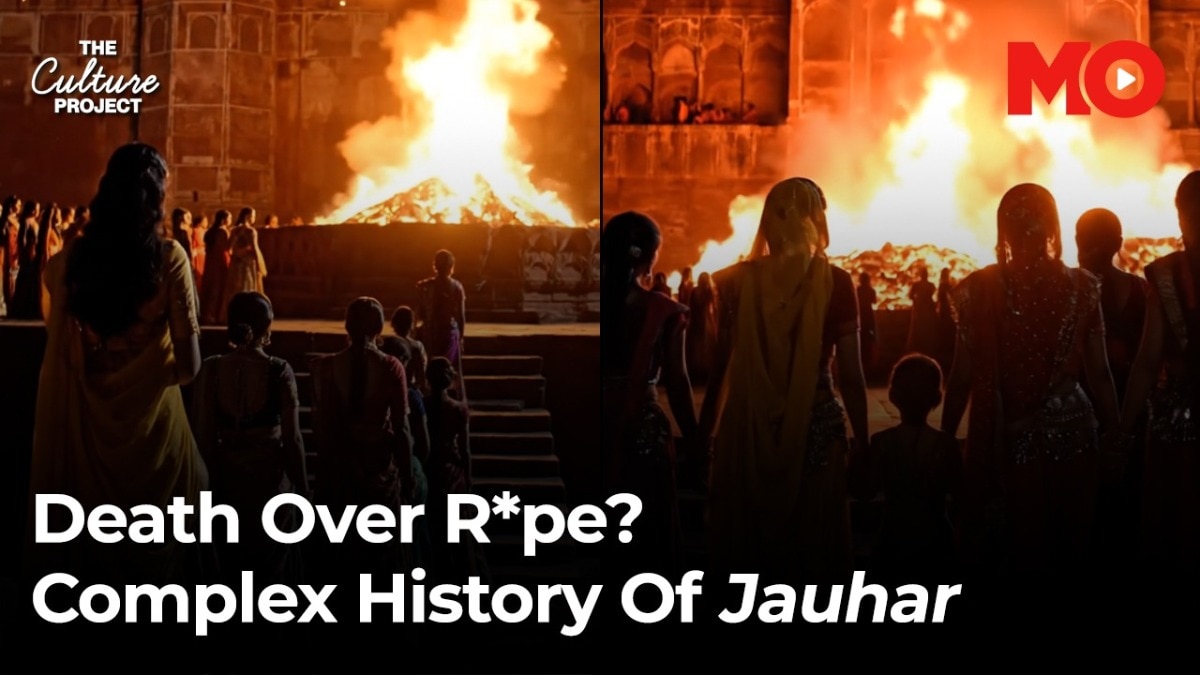
An in-depth examination of 'Jauhar,' one of the most controversial rituals in Indian history. This piece explores the thin line between honor and tragedy.
- Jauhar was a practice of mass self-immolation performed by women during imminent defeat in war.
- The primary objective was to protect women from capture, enslavement, and sexual violence.
- Historians view it as a complex intersection of bravery and social desperation.
In the annals of Indian history, the term 'Jauhar' is etched with both reverence and profound sorrow. It was not merely a ritual but a final, drastic recourse chosen by women when faced with the certainty of defeat in battle. Historically, while Rajput warriors would engage in 'Shaka'—a final, suicidal charge in battle—women would undergo Jauhar to preserve their dignity.
The fundamental driver behind Jauhar was the protection of women from the perceived dishonor of capture, enslavement, and sexual exploitation by invading forces. In the brutal landscape of medieval warfare, victorious rulers often viewed the women of defeated kingdoms as spoils of war. To prevent this, the path of collective self-immolation was chosen as a means of preserving honor above life itself.
Why This Matters
BozokMedia analysis shows that viewing Jauhar solely through the lens of superstition misses the broader socio-political context. It was a response to the extreme violence and the specific gendered consequences of warfare during that era, highlighting a period where honor was considered a higher commodity than physical existence.
Jauhar stands as both a symbol of unparalleled courage and a tragic testament to the limited agency of women in medieval warfare.
Historical records, particularly concerning the fort of Chittorgarh, provide numerous accounts of these events. From the legendary tales of Rani Padmini to various other Rajputana chronicles, Jauhar has left an indelible mark on the Indian psyche. However, modern historians also analyze it as a symptom of a patriarchal structure that offered women no other way to escape systemic violence.
Understanding the psychological complexity of this practice is essential. It was not a simple choice of death, but a reaction to a reality where survival was synonymous with loss of identity and dignity. It reflects the terrifying stakes of medieval conflicts, where defeat meant the total annihilation of a community's social fabric.
Frequently Asked Questions
1. What is the difference between Jauhar and Shaka?
Jauhar refers to the mass self-immolation of women, whereas Shaka refers to the final suicidal charge taken by men in battle.
2. Was Jauhar practiced only by Rajputs?
While most famously associated with Rajput history, similar practices of self-sacrifice to avoid capture have been noted in various historical warrior cultures.
