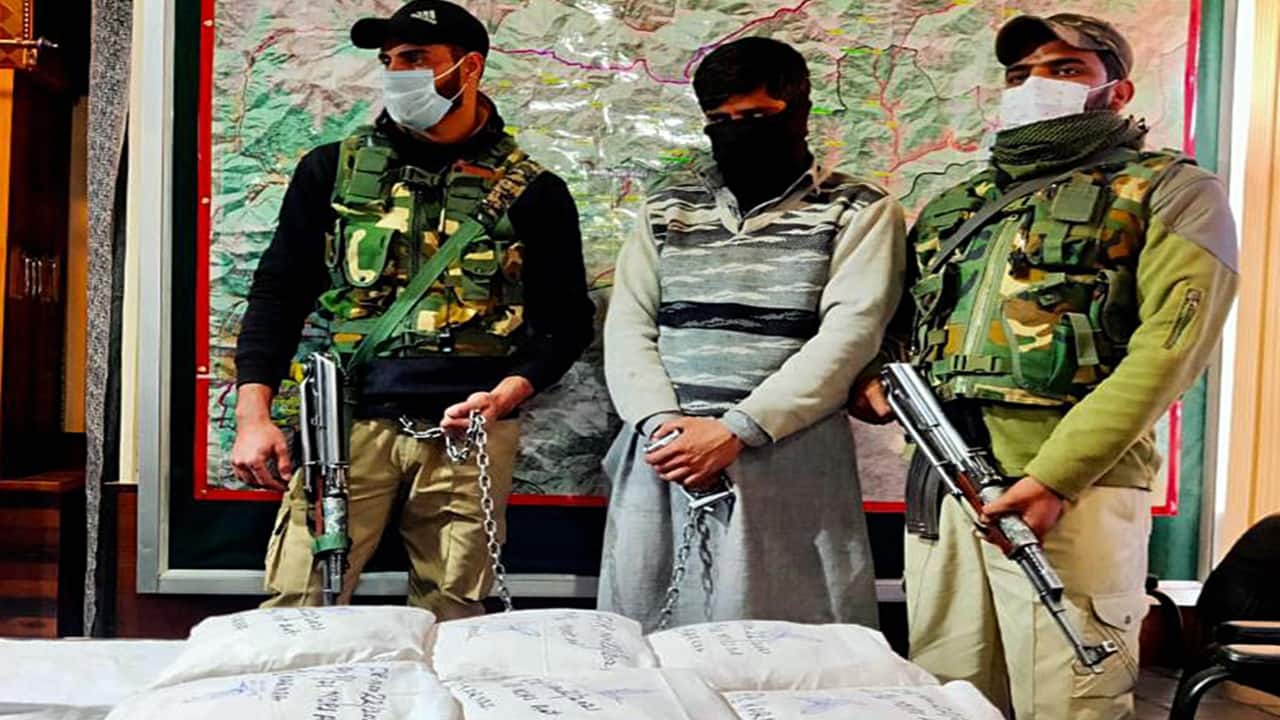
A significant breakthrough in the fight against terrorism as a special NIA court frames charges in a major narco-terror case involving a Pakistan-backed LeT syndicate in Jammu and Kashmir.
Key Takeaways
- A Special NIA Court has framed charges against a Pakistan-backed Lashkar-e-Taiba (LeT) narco-terror syndicate.
- SIA Kashmir investigations revealed narcotics smuggling was used to fund terror infrastructure in J&K.
- The case involves 16 accused individuals, including handlers operating from Pakistan and PoJK.
- Charges include violations of the UAPA, NDPS Act, and IPC for waging war against the state.
In a landmark judicial development, a Special NIA Court has framed charges in a high-stakes narco-terror case, marking a decisive blow against the financial machinery of terrorism in Jammu and Kashmir. The case, investigated by the State Investigation Agency (SIA) Kashmir, exposes a sophisticated cross-border conspiracy orchestrated by handlers of the proscribed terrorist outfit Lashkar-e-Taiba (LeT) based in Pakistan and Pakistan-Occupied Jammu and Kashmir (PoJK).
The Narcotics-Terrorism Nexus
The investigation (FIR No. 19/2022) has unraveled a chilling reality: the use of narcotics smuggling as a primary engine for terror financing. According to the SIA, the syndicate utilized the Line of Control (LoC) to smuggle illicit substances, diverting the massive proceeds to sustain terror infrastructure and strengthen the broader terrorist ecosystem within the Union Territory. This strategic shift from traditional funding to drug-based revenue generation highlights the evolving tactics of proxy warfare employed by Pakistan-backed elements.
Profile of the Accused and Legal Escalation
The SIA identified 16 individuals involved in this sprawling conspiracy. Among them, 10 individuals have been arrested and are now facing trial under stringent laws, including the Unlawful Activities (Prevention) Act (UAPA), the Narcotic Drugs and Psychotropic Substances (NDPS) Act, and the Indian Penal Code (IPC). The charges encompass waging war against the Government of India, criminal conspiracy, and raising funds for terrorist organizations. While several accused are in custody, others, including handlers like Tariq Ahmad Malik and Mushtaq Ahmad Naik, remain absconding in PoJK.
Strategic Implications for National Security
The framing of these charges is a crucial milestone that validates the robust evidence gathered by intelligence and investigative agencies. Beyond the immediate criminal trial, the SIA is aggressively pursuing the attachment and forfeiture of properties linked to these terrorists under the UAPA. By targeting the economic roots of terrorism, Indian security agencies aim to dismantle the very foundation that allows terror modules to operate, signaling a zero-tolerance policy toward the narco-terror nexus.