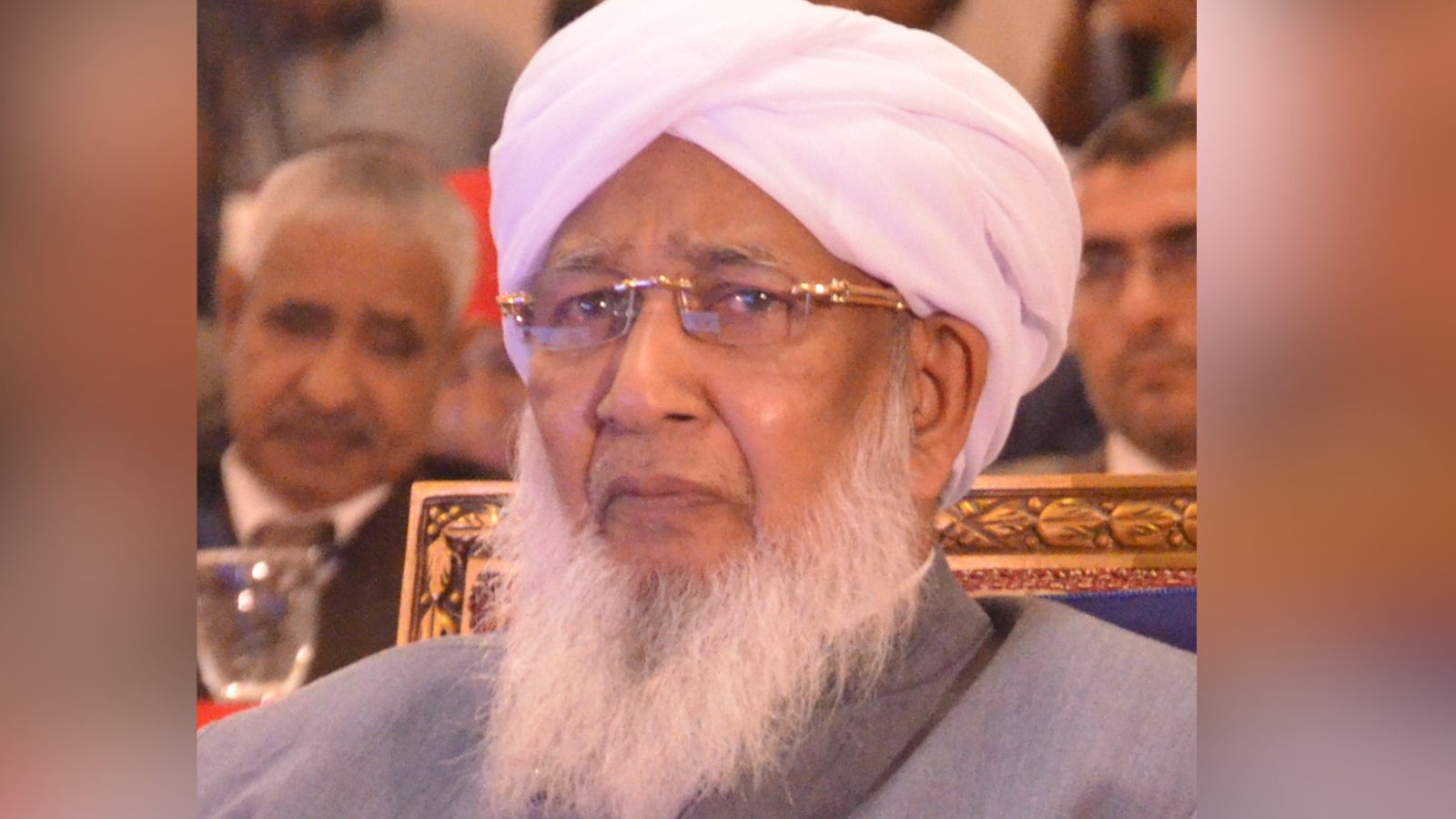
Prominent Kerala cleric A.P. Aboobacker Musliyar has expressed regret over his controversial statements regarding women in the public sphere. While he called for calm among his followers, political leaders from CPI(M) and others have slammed his orthodox views.
- Prominent Sunni cleric A.P. Aboobacker Musliyar expressed regret over recent controversial remarks regarding women's roles.
- The cleric urged his followers to maintain restraint and avoid being provoked by controversies.
- Political leaders, including the Kerala CM and CPI(M) members, condemned his views on women's public participation.
- The controversy stemmed from his claim that women should remain confined to homes to avoid 'destruction.'
In a significant turn of events, the influential 94-year-old Muslim cleric A.P. Aboobacker Musliyar, popularly known as 'Kanthapuram,' has expressed regret over the storm stirred by his recent comments regarding women in the public arena. On Friday, the General Secretary of Samastha Kerala Jamiyyathul Ulema called for restraint among his followers, suggesting that discussions should remain healthy forums for learning rather than becoming flashpoints for controversy.
The controversy ignited following the Eid Milad-un-Nabi and Onam festivities, where Muslim women were seen participating in public celebrations. Musliyar had issued a directive to mosque committees and madrasas, stating that exhibiting women in public places amidst unrelated men was 'undesirable.' He further escalated the tension by stating, "What the Quran teaches is that women should remain quietly confined to their homes. If women enter the public arena in this manner, there will be great destruction."
Political Backlash and Social Debate
Musliyar's remarks drew immediate condemnation from Kerala Chief Minister V.D. Satheesan. While the Indian Union Muslim League (IUML), a key ally of the Congress, initially attempted to navigate the controversy carefully, the CPI(M) took a firm stand against the cleric's views. P.K. Sainaba, a prominent CPI(M) leader, pointed out the evolving nature of the community, noting that Muslim women are increasingly liberal in their thoughts and eager to lead social lives.
Sainaba drew a powerful historical parallel, invoking the legacy of Aisha, the wife of the Prophet, to argue that if she could lead troops, modern Muslim women should certainly be allowed to enjoy the rights enshrined in the Indian Constitution. Similarly, Noorbeena Rasheed, a senior IUML leader, expressed unease, emphasizing that the party must support women's participation in public and political life while remaining rooted in Islamic values.
Historical Context and the Influence of 'Kanthapuram'
To understand the weight of this controversy, one must look at the stature of A.P. Aboobacker Musliyar. As the head of a powerful body of Sunni scholars, his influence extends through hundreds of madrasas across the state. He has long been a figure of orthodox thought, having previously voiced opposition to co-education and women contesting elections.
Despite his conservative religious stance, Musliyar has demonstrated significant entrepreneurial acumen, spearheading massive projects like the Markaz Knowledge City in Kozhikode. This duality of being a traditional religious leader and a modern business visionary adds a complex layer to his public persona.
Why This Matters
BozokMedia analysis shows that this incident is more than just a religious dispute; it is a litmus test for the social fabric of Kerala. The tension between traditionalist interpretations of faith and the constitutional rights of women highlights a growing struggle for gender equality within religious communities in India.
The clash between orthodox religious directives and the constitutional mandate of gender equality is reshaping the political discourse in Kerala.
Frequently Asked Questions
1. What exactly did the cleric say that caused controversy?
He suggested that women should remain confined to their homes and that their presence in the public sphere could lead to social destruction.
2. How did the political parties respond?
The CPI(M) and the Kerala Chief Minister condemned the remarks, while IUML leaders emphasized the need for women's empowerment within Islamic values.