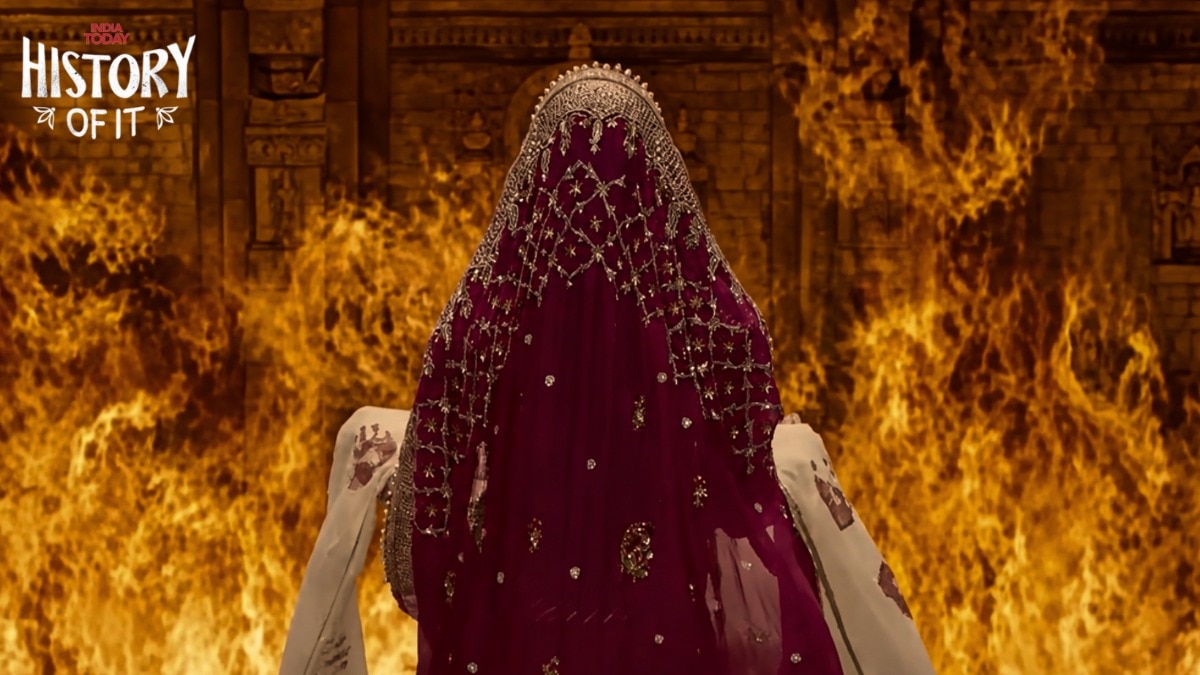
In 712 AD, as Muhammad bin Qasim invaded Sindh, the women of Raja Dahir's kingdom faced a harrowing choice between captivity and fire. This deep dive explores the medieval accounts behind their decision.
- In 712 AD, the fall of Sindh occurred during the Arab invasion led by Muhammad bin Qasim.
- The women of Raja Dahir's family chose self-immolation to avoid capture.
- Historical chronicles like the Chachnama provide grim details of this era.
- Modern debates on 'Jauhar' are contextualized by these 13th-century realities.
When the walls of a kingdom fall, history typically remembers the men—the king who perished, the army that fell, and the conqueror who stormed the gates. Yet, there exists a parallel history: the history of the women left in the wake of destruction.
In 712 AD, when Raja Dahir, the last Hindu King of Sindh, succumbed to the forces of Muhammad bin Qasim, the tragedy did not end with his death. For the women of his household, a far more terrifying reality was unfolding. Their protectors were gone, their sovereignty was shattered, and the victorious army was approaching the survivors.
Why This Matters
BozokMedia analysis shows that understanding historical trauma requires looking beyond modern political lenses. The decision made by the women of Sindh was not merely an act of ritual, but a response to the extreme vulnerability and the perceived horrors of medieval warfare and captivity.
Medieval chronicles, most notably the Chachnama, preserve these accounts with brutal honesty. Some women chose the fire, while others were taken into captivity. This stark contrast raises a fundamental question that transcends modern cinematic debates: why did they believe death was preferable to surrender?
History teaches us that in eras of total war, the choice between death and dishonor was often the only agency women possessed.
This historical inquiry has gained renewed traction following actor Swara Bhasker's critique of the portrayal of Jauhar in the film Padmaavat. While Bhasker raised valid points regarding how such portrayals affect survivors of sexual violence today, historians argue that we must judge the women of 712 AD through the lens of their own time and the records they left behind.
Historical Background: The Stand of Raja Dahir
Raja Dahir was a ruler who refused to flee. According to the Chachnama, when his vizier suggested sending his family to safety, Dahir refused, stating he would not protect his own kin while his nobles' families remained exposed. He chose to fight an honorable battle to the end.
The battle reached its peak at the fort of Rawar. As the fighting intensified, the cries of his women being captured reached the king. This news drove Dahir to a final, desperate charge against the Arab forces, leading to his death when naphtha-tipped arrows set his elephant's howda ablaze.
Frequently Asked Questions
1. What is the Chachnama?
The Chachnama is a medieval Persian chronicle that details the history of Sindh and the Arab conquest of the region.
2. Who was Muhammad bin Qasim?
He was the Umayyad commander responsible for the conquest of Sindh in the early 8th century.