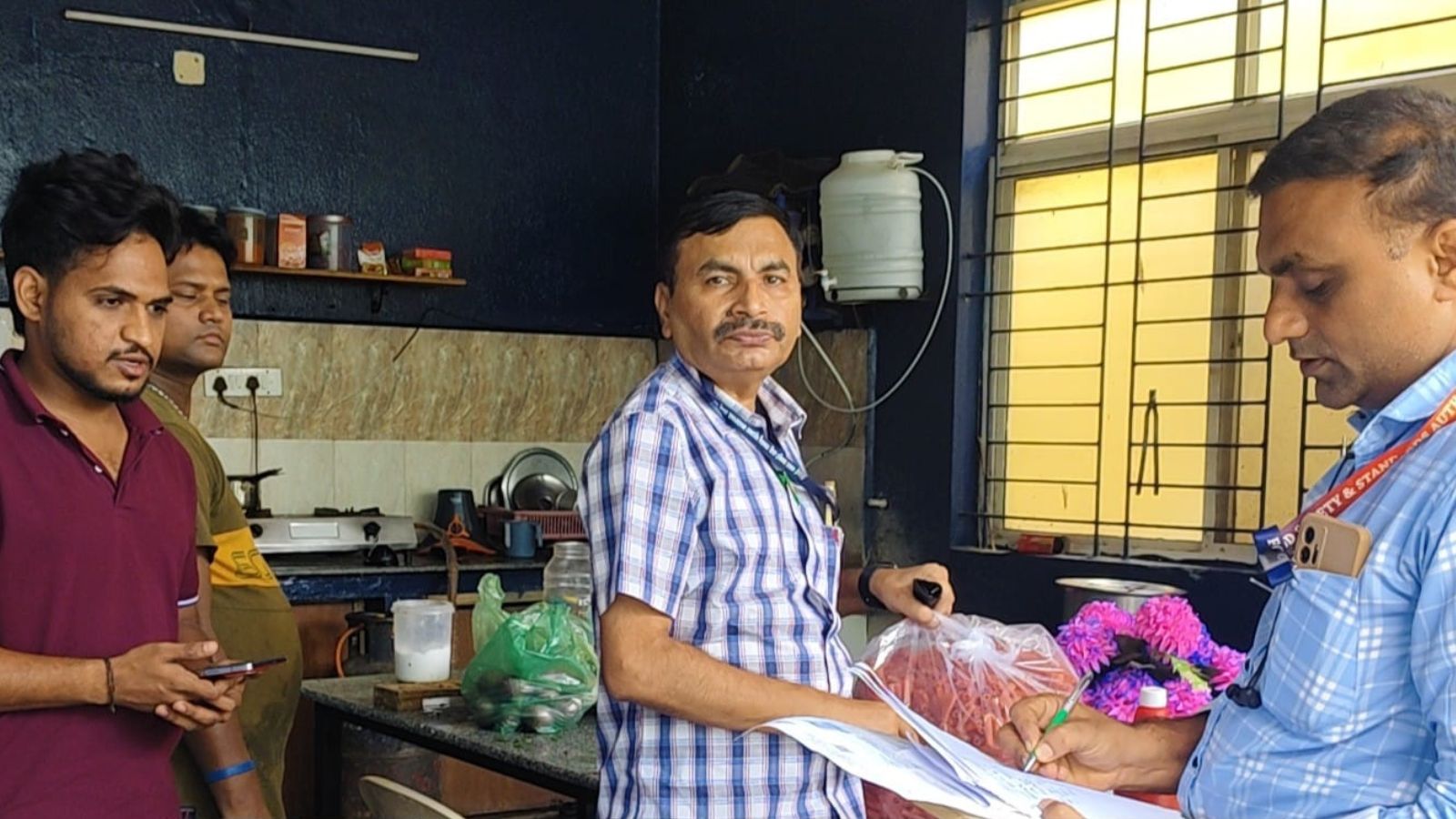
A massive crackdown by the Karnataka Food Safety and Drug Administration (FSDA) in Bengaluru revealed alarming hygiene violations in PG accommodations, including expired dairy and toxic pesticides near food.
- The FSDA inspected 64 PG accommodations in Bengaluru, issuing notices to 23 facilities for violations.
- Seized items included expired curd, synthetic food colors, and misbranded mixtures.
- In one instance, bed bug repellent was found on a dining table alongside food, leading to the sealing of the area.
The Karnataka Food Safety and Drug Administration (FSDA) significantly expanded its inspection sweep on Friday, targeting paying guest (PG) accommodations across Bengaluru. The crackdown aimed to ensure that the large population of students and working professionals residing in these facilities are not being served substandard or hazardous food.
During the intensive inspections, officials scrutinized food preparation methods, storage hygiene, shelf life, and the quality of raw materials. The findings were deeply concerning, with many facilities failing to meet even the most basic safety standards. According to the FSDA commissioner, several PGs were found stocking expired curd, Swastik Bisibele Bath powder, rice flour, and even synthetic food colors.
The Bed Bug Spray Scandal
One of the most alarming discoveries occurred at Nandana Elite PG in Bommasandra. Inspectors found bed bug repellent sitting directly on a dining table amidst food items. Furthermore, non-food materials were being stored dangerously close to drinking water facilities. Due to these egregious violations, the food safety officials took immediate action to seal the dining area of the facility.
The presence of pesticides in dining areas highlights a catastrophic failure in basic hygiene protocols within urban PG accommodations.
BozokMedia analysis shows that as the demand for affordable housing in tech hubs like Bengaluru grows, the oversight of food quality in informal dining setups like PGs has lagged behind, creating a massive public health risk.
Wider Inspection Sweep
This operation is part of a larger, three-week-long crackdown by the FSDA, mirroring recent enforcement actions in cities like Mumbai. The department has not limited itself to PGs; it has also inspected five-star hotels, prominent clubs, and high-end restaurants. For instance, the Chairman’s Club in Dollars Colony was found to have 40 kg of expired chili and improper labeling of food products.
In contrast to the chaos found in PGs, the inspection of the Vidhana Soudha cabinet hall kitchen yielded positive results. The officials reported that the kitchen was well-maintained, and all food items were clearly labeled with manufacturing and expiry dates, setting a benchmark for food safety standards.
Historical Background
Over the last decade, India has seen a surge in food-related health complaints linked to unregulated food vendors and hostels. This has prompted the Food Safety and Standards Authority of India (FSSAI) and state-level agencies like the FSDA to implement more rigorous, surprise-based inspection models to combat the growing menace of adulteration and unhygienic food handling.
Frequently Asked Questions
1. What happens to PGs that fail food safety inspections?
The FSDA issues formal notices, seizes contaminated products, and can seal dining areas or kitchens until compliance is met.
2. How can citizens report unhygienic food conditions?
Citizens can report such incidents directly to the local Food Safety and Drug Administration office or through their official grievance portals.