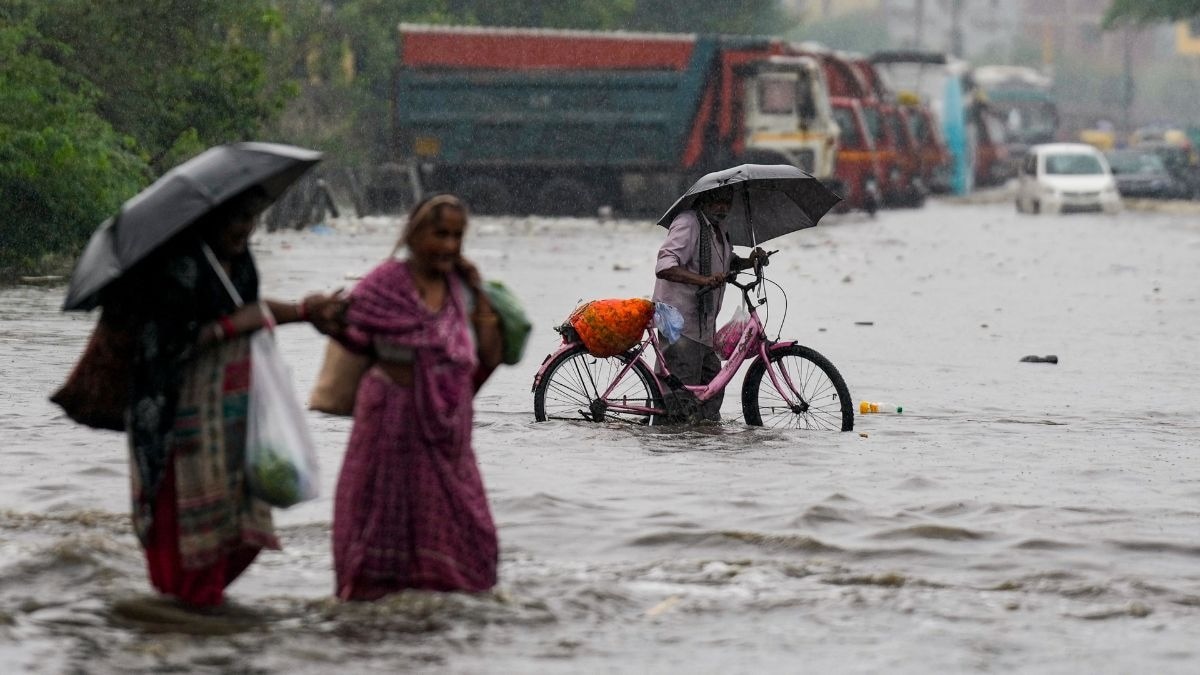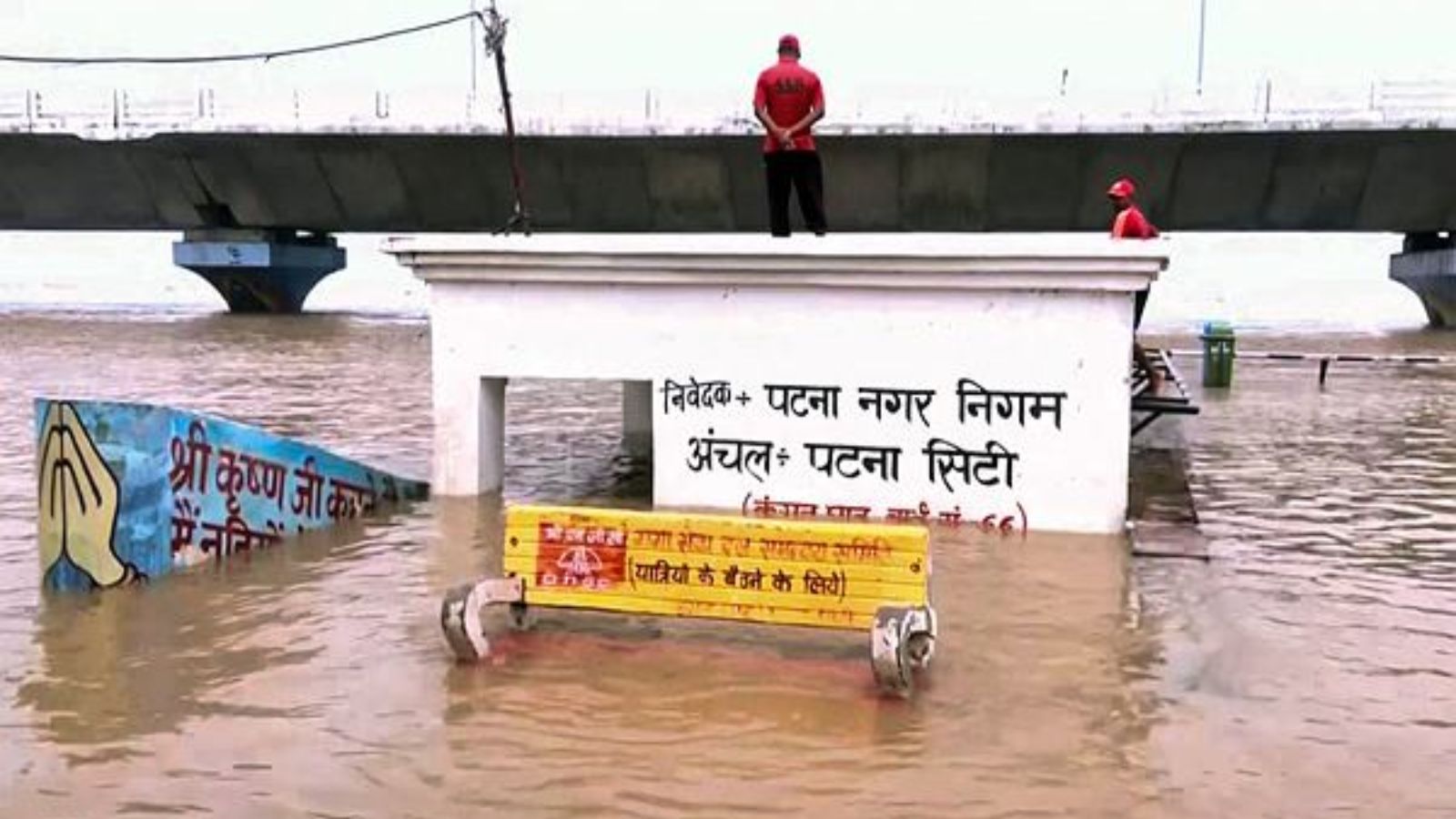
Massive flooding in Bihar has impacted over 22 lakh people across 12 districts. The state government has ramped up relief efforts, deploying NDRF teams and community kitchens.
- Over 22 lakh people across 12 districts in Bihar are affected by floods.
- Community kitchens have been increased from 80 to 190 in a single day.
- 10 NDRF and 27 SDRF teams are actively engaged in rescue operations.
- Vigilance is heightened along Ganga embankments due to rising water levels.
The flood situation in Bihar has escalated into a massive humanitarian crisis, affecting more than 22 lakh people across 12 districts. The disaster has spread across 70 blocks and 368 gram panchayats, including high-impact areas like Patna, Bhojpur, Saran, Vaishali, Bhagalpur, and Begusarai. As water levels continue to rise, the state's Disaster Management Department has significantly expanded its relief operations.
Massive Relief Operations: Boat Ambulances and Community Kitchens
In response to the growing crisis, the state government has drastically increased the number of community kitchens from 80 to 190 in just 24 hours, currently serving approximately 2.51 lakh people. To facilitate movement in submerged areas, 1,429 boats have been deployed. In severely hit districts like Saran, 'boat ambulances' have become a critical lifeline, transporting patients to 171 established medical camps. The administration is also working on a war footing to repair temporary cracks in embankments at Dighwara and Dariyapur.
Why This Matters
BozokMedia analysis shows that the scale of this flooding poses a severe threat to the socio-economic stability of Bihar. The loss of livestock and destruction of public infrastructure worth thousands of crores could lead to a protracted economic downturn for the rural population, necessitating not just immediate relief but massive long-term reconstruction.
The sheer scale of displacement in Bihar highlights the urgent need for more robust flood-control infrastructure and early warning systems.
Deployment of Rescue Forces: To manage the evacuations, 10 teams of the National Disaster Response Force (NDRF) and 27 teams of the State Disaster Response Force (SDRF) have been stationed across various districts. In Patna, 25 community kitchens are serving over 70,000 people, while 166 boats are being utilized for safe movement and evacuation.
Rising Danger Along the Ganga
The Water Resources Department has issued a high-alert for the Ganga embankments in Begusarai, Lakhisarai, Munger, Bhagalpur, and Katihar. The Ganga at Hathidah has breached its Highest Flood Level (HFL), recording 43.62 metres. Furthermore, rivers like the Kosi, Budhi Gandak, Punpun, and Bagmati are flowing above danger levels in several locations, increasing the risk of downstream flooding.
Historical Background
Bihar has a long and tragic history of seasonal flooding, primarily driven by the heavy monsoon rains and the volatile nature of the Himalayan rivers. The Kosi River, often termed the 'Sorrow of Bihar,' is notorious for its frequent course changes, which have historically caused massive displacement and destruction in the region.
Frequently Asked Questions
Question 1: Which districts are most affected by the Bihar floods?
Answer: The most affected districts include Patna, Bhojpur, Saran, Vaishali, Bhagalpur, Begusarai, Buxar, Samastipur, Munger, Katihar, Lakhisarai, and Arwal.
Question 2: What measures is the government taking for food security?
Answer: The government has rapidly expanded community kitchens to 190 locations to provide meals to hundreds of thousands of displaced people.