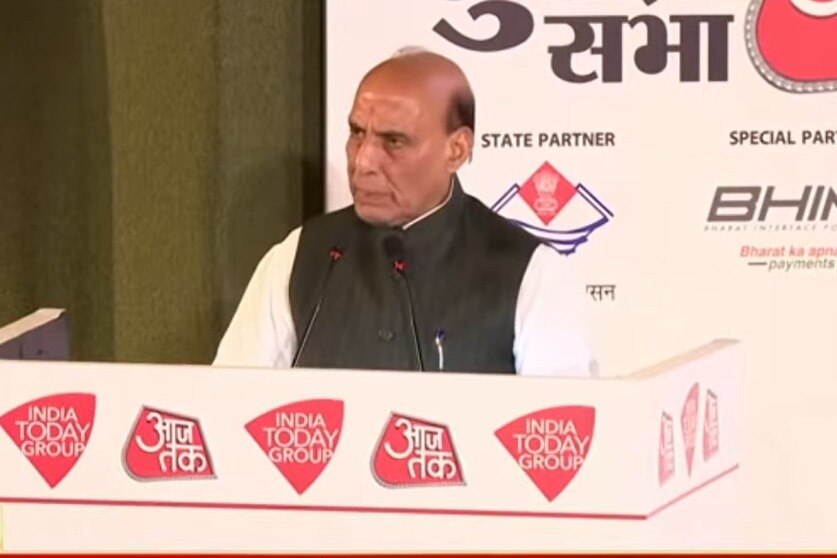
Defence Minister Rajnath Singh has highlighted a paradigm shift in India's security doctrine, stating that the nation now adopts a proactive approach to neutralize threats before they escalate, crediting the Modi administration's reforms.
- India's defence posture has shifted from 'Reactive' to 'Proactive'.
- Significant emphasis on 'Atmanirbhar Bharat' for indigenous weapon production.
- Modernization of military infrastructure under the leadership of PM Narendra Modi.
India's Defence Minister, Rajnath Singh, has articulated a bold new direction for the nation's security apparatus. In a recent address, he emphasized that India is no longer content with merely reacting to external threats. Instead, the country has developed the capability and the political will to strike preemptively when threats are detected, ensuring that dangers are neutralized before they can manifest into full-scale crises.
According to the Defence Minister, this transformation is a direct result of the systemic overhauls implemented by the Narendra Modi government. By integrating advanced technology and streamlining procurement processes, India has significantly reduced its turnaround time in responding to security breaches. The focus on 'Make in India' has further empowered the armed forces with cutting-edge, indigenous hardware.
Why This Matters
BozokMedia analysis shows that this rhetoric signifies a departure from the traditional 'Strategic Restraint' that defined Indian foreign policy for decades. By signaling a willingness to act proactively, India is establishing a new deterrent in the Indo-Pacific region. This shift warns adversaries that the cost of aggression will be immediate and severe, fundamentally altering the regional balance of power.
"The transition from a defensive shell to a proactive shield marks India's emergence as a decisive global military power."
Historical Background
For years, India's military doctrine was characterized by a cautious approach, often waiting for a provocation to occur before responding. However, the geopolitical landscape shifted post-2014. The 2016 surgical strikes and the 2019 Balakot air strikes served as turning points, proving that India could and would cross borders to protect its national interests, paving the way for the current 'strike-first' philosophy.
| Feature | Legacy Defence Policy | Current Policy (Modi Govt) |
|---|---|---|
| Approach | Reactive/Defensive | Proactive/Preemptive |
| Procurement | Heavy Import Reliance | Indigenous/Self-Reliant |
| Strategic Tone | Strategic Restraint | Decisive Deterrence |
Frequently Asked Questions
1. What does a 'proactive defence strategy' imply?
It means India will use intelligence and precision capabilities to neutralize threats in their infancy rather than waiting for an attack to happen.
2. How does 'Atmanirbhar Bharat' impact national security?
It ensures that India is not vulnerable to foreign supply chain disruptions or diplomatic sanctions during times of conflict.


