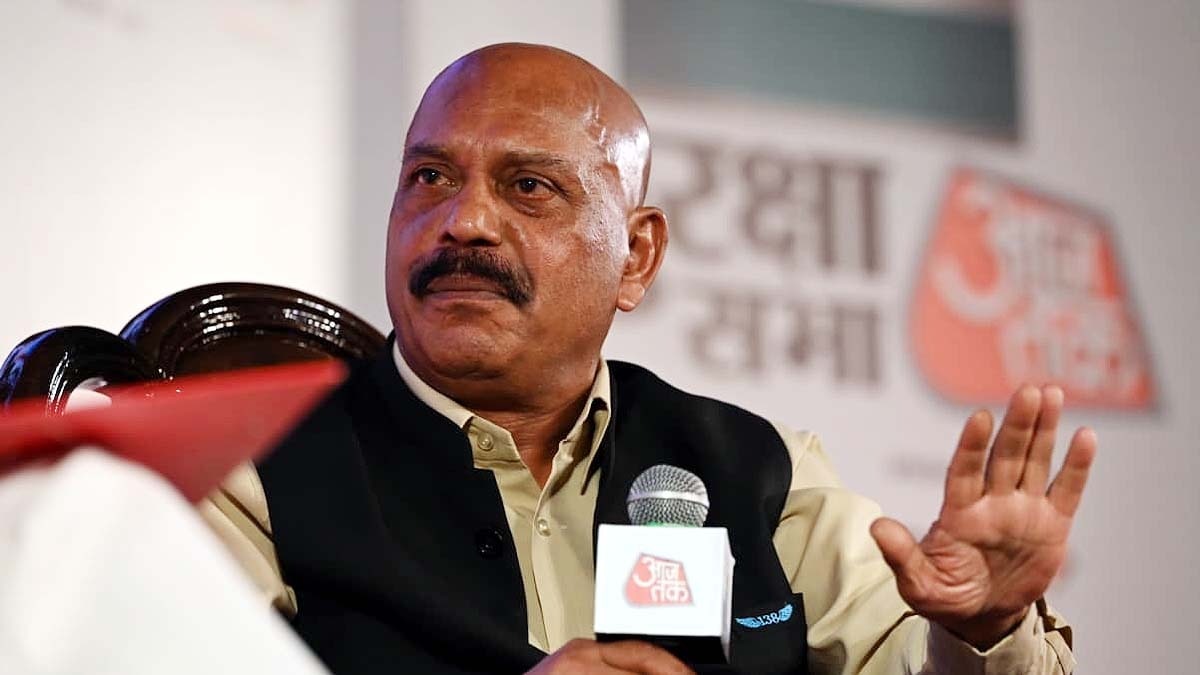
Following the arrest of influencer Swatantra Bhardwaj, legal experts debate whether self-proclaimed confessions on digital podcasts hold weight in a court of law. Under the Bharatiya Sakshya Adhiniyam, 2023, electronic evidence faces strict judicial scrutiny before proving guilt.
- Influencer Swatantra Bhardwaj was remanded to one-day police custody over an alleged clash at Jantar Mantar.
- A viral podcast where Bhardwaj claimed to have hit a student's father sparked massive public debate.
- Under the Bharatiya Sakshya Adhiniyam (BSA), 2023, social media admissions are treated as electronic evidence, not automatic confessions of guilt.
In the age of digital media, an accused person's podcast, video, Instagram post, or statement on X (formerly Twitter) can go viral within hours, reaching millions. In the case of influencer Swatantra Bhardwaj, a boastful statement allegedly made during a podcast has significantly influenced police action and public discourse. Although Bhardwaj later claimed self-defense, explaining his statement in a different context, the core legal question under Indian evidence law remains: Is a statement made in front of a camera a confession, or merely electronic evidence that the court must test against various legal standards?
According to a report by Bar and Bench, a Delhi court has granted one-day police custody of Swatantra Bhardwaj in connection with the alleged Jantar Mantar assault case. Initially, a case was registered against him under Sections 115(2) and 126(2) of the Bharatiya Nyaya Sanhita (BNS). However, provisions related to the SC/ST Act and POCSO Act were subsequently added. Currently, the investigation is ongoing, and no final judicial conclusion has been reached. Therefore, treating Bhardwaj's podcast remarks as an ultimate admission of guilt is legally premature.
Who is Swatantra Bhardwaj and What is the Case?
Swatantra Bhardwaj is a social media influencer who came into the spotlight following a dispute at Delhi's Jantar Mantar in September 2026 and the subsequent viral statements on social media. During a protest by the 'Cockroach Janta Party' at Jantar Mantar, an altercation and physical fight broke out between Bhardwaj and a student's father. Later, a video podcast of Bhardwaj went viral on social media, where he allegedly claimed that he had cracked open the student's father's head. This admission quickly drew public ire and prompted law enforcement to step in.
Why This Matters
BozokMedia analysis shows that in the digital era, statements made on social media often complicate legal processes. Boastful claims made on public platforms for popularity or 'views' can serve as initial leads for investigative agencies, but they cannot directly form the sole basis of a conviction. This case serves as a crucial precedent for understanding the legal credibility of digital evidence and how it is evaluated under India's modernized criminal laws.
"A digital confession on a public platform is a double-edged sword; while it provides a starting point for investigators, it rarely satisfies the high threshold of proof beyond reasonable doubt without independent corroboration."
Can a Podcast Statement Be Considered a 'Confession'?
Under the Bharatiya Sakshya Adhiniyam (BSA), 2023, there are distinct provisions for confessions and admissions in court. Section 22 of the Act makes confessions obtained through coercion, threat, promise, or pressure irrelevant in criminal proceedings. The claims made in a podcast can be presented before the court as electronic evidence, but they cannot be automatically accepted as a 'final confession of crime.' The court will meticulously examine the full context of the statement, its authenticity, voluntariness, and how well it aligns with other available evidence.
Social Media Claims vs. Legal Proof
A crucial turn in this case occurred when another video of Bhardwaj surfaced, in which he claimed he acted in self-defense because he was surrounded by a hostile crowd. Consequently, the prosecution cannot merely rely on his initial statement of committing the assault. It must establish, through other evidence—such as medical reports, eyewitness testimonies, circumstantial evidence, and other digital records—whether his actions legally constitute a punishable offense.
| Feature | Podcast/Social Media Admission | Judicial Confession (Before Magistrate) |
|---|---|---|
| Legal Status | Electronic evidence (requires verification & context) | Direct, highly admissible evidence of guilt |
| Voluntariness | Often driven by clout, performance, or lack of caution | Strictly verified by the magistrate to ensure no coercion |
| Corroboration | Mandatorily requires corroborating physical/forensic evidence | Can sometimes form the sole basis of conviction if found true |
Frequently Asked Questions
Q1: Can someone be convicted solely based on a podcast confession?
A1: No, a podcast statement is treated as electronic evidence. The prosecution must prove its authenticity, context, and back it up with physical, medical, or eyewitness evidence to secure a conviction.
Q2: What is the impact of BSA 2023 on digital admissions?
A2: The Bharatiya Sakshya Adhiniyam, 2023, modernizes the acceptance of electronic records, but maintains strict safeguards under Section 22 to ensure statements are voluntary and not coerced or fabricated.