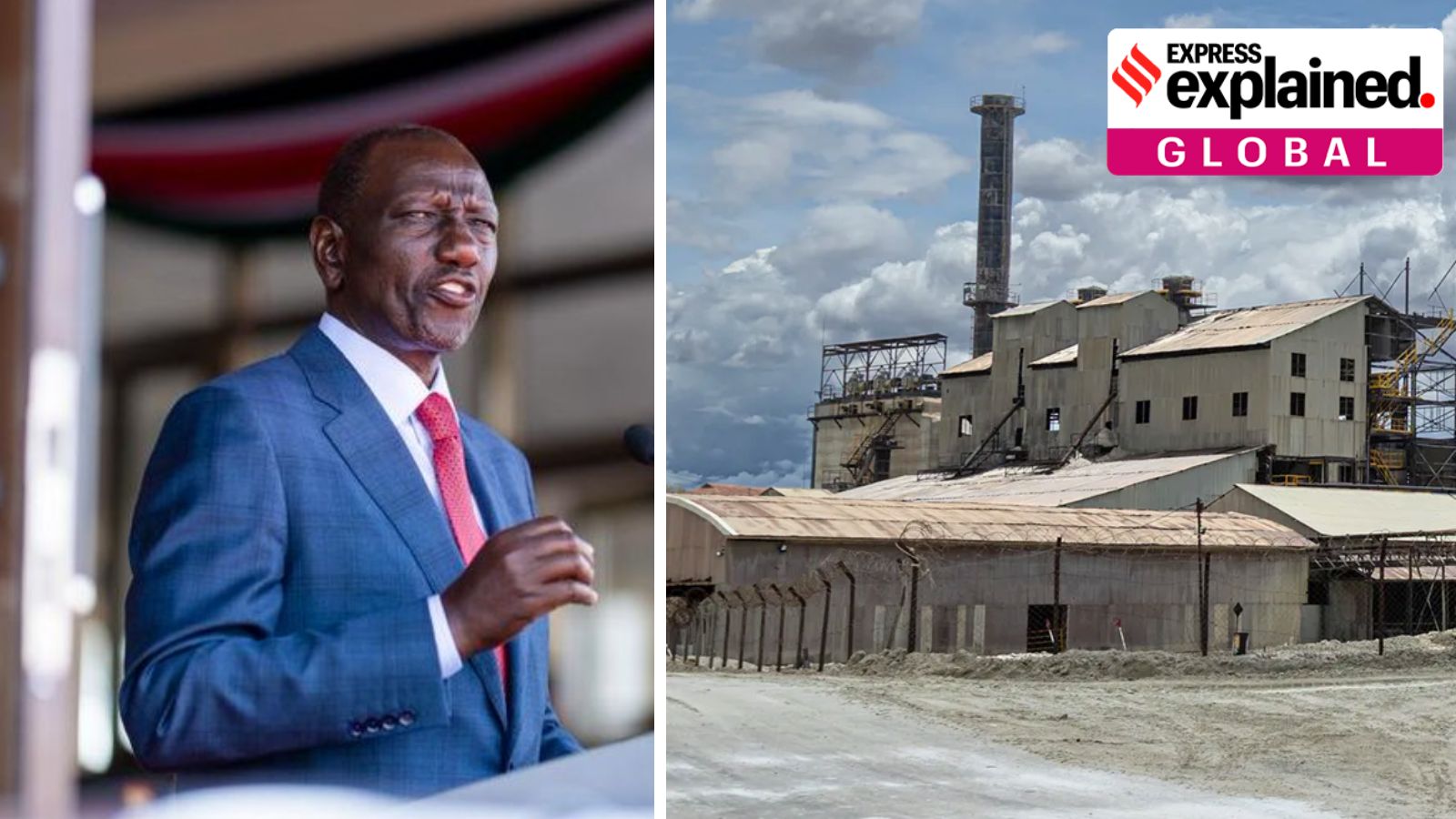
Kenyan President William Ruto's recent move to order Tata Chemicals out of its soda ash operations marks a growing trend of economic nationalism in Africa. Following the cancellation of an Adani Group deal, the focus shifts to Kenya's demand for local value addition over raw resource extraction.
- President William Ruto has ordered Tata Chemicals to exit its Lake Magadi soda ash operations.
- This follows the 2024 cancellation of a $2.5 billion airport upgrade deal with the Adani Group.
- The core conflict stems from Kenya's shift toward 'economic nationalism' and a demand for downstream industrialization.
- Tata Chemicals argues the dispute is regulatory, while Ruto frames it as a matter of national sovereignty.
The recent diplomatic and corporate friction between Kenya and major Indian conglomerates has sent ripples through the international business community. President William Ruto's public directive for Tata Chemicals to vacate its Lake Magadi soda ash operation is not an isolated incident, but rather the second major blow to Indian corporate interests in Kenya within two years. This follows the high-profile cancellation of the Adani Group's proposed concession to upgrade Nairobi's Jomo Kenyatta International Airport in 2024.
At the heart of the Tata dispute is the extraction of soda ash (sodium carbonate), a critical component for glass manufacturing. The plant at Lake Magadi is the largest of its kind in Africa. President Ruto contends that for nearly a century, Kenya has allowed foreign entities to exploit this natural resource without establishing sufficient local factories or processing plants. He argues that the current model—extracting raw materials and exporting them—benefits the foreign investor far more than the Kenyan economy.
Why This Matters
BozokMedia analysis shows that this is not necessarily a targeted campaign against India, but a broader manifestation of African Economic Nationalism. Kenya is transitioning from a 'resource-export' economy to a 'value-addition' economy. By demanding that investors build downstream industries (like glass and chemical plants) within Kenyan borders, Ruto is attempting to create local jobs and industrialize the Kajiado County region. The 'Indian' element is a byproduct of these companies holding legacy concessions that no longer align with Kenya's current national vision.
Historically, the Magadi operation's roots go back to 1911. While Tata Chemicals acquired the site in 2005 from Brunner Mond Ltd., the Kenyan government views the continuity of the lease as a relic of an era where foreign companies held disproportionate power. Tata, however, maintains that they have been fully compliant with regulations and have invested in community programs and green energy, including a 5-MW solar plant.
"The shift in Kenya reflects a continental trend where African nations are no longer content with being mere raw material providers; they are now demanding the industrial infrastructure to process those materials locally."
The contrast with the Adani case is telling. While the Adani deal was scrapped due to controversy over concession terms and later replaced by a more expensive contract with China Communications Construction Co. (CCCC), the Tata case is about the very nature of resource ownership. This puts India in a delicate position, as President Ruto had previously expressed strong friendship and a desire for increased Indian Foreign Direct Investment (FDI) during his 2023 state visit.
| Company | Project/Resource | Core Issue | Outcome/Status |
|---|---|---|---|
| Adani Group | JKIA Airport Upgrade | Concession Terms/Controversy | Contract Cancelled (2024) |
| Tata Chemicals | Lake Magadi Soda Ash | Lack of Local Value Addition | Ordered to Exit/Bidding Process |
Frequently Asked Questions
Is Kenya turning against India as a whole?
There is no evidence of a policy to replace Indian firms specifically. Rather, Kenya is applying a stricter 'local value' requirement to all foreign investors regardless of nationality.
President Ruto has announced a bidding process to bring in new investors who are willing to establish glass and chemical-processing factories in the region.