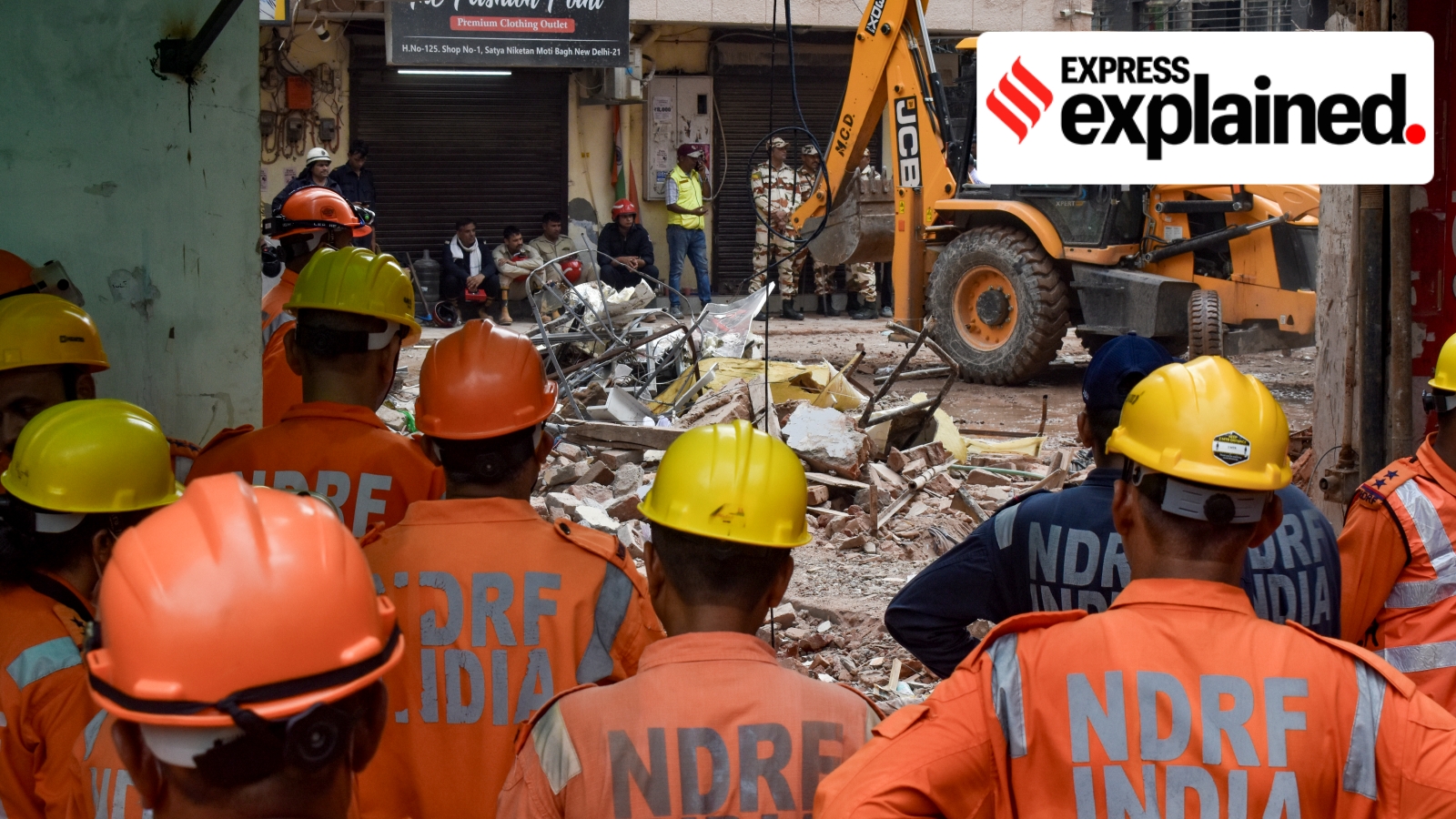
Following the tragic collapse of a five-storey building in Delhi's Satya Niketan, NDRF concluded a grueling 27-hour rescue operation. Discover the complex protocols and technology used by India's premier disaster response force.
- A five-storey private hostel collapsed in Satya Niketan, Delhi, resulting in at least seven deaths.
- NDRF conducted a 27-hour 'Collapse Structure Search and Rescue' (CSSR) operation.
- The NDRF operates under the Ministry of Home Affairs with 16 specialized battalions.
The sudden collapse of a five-storey building in Satya Niketan, South-West Delhi, on Sunday has sent shockwaves through the capital. The building, a private hostel dating back to the 1990s located near Delhi University's South Campus, housed numerous students. As of Monday evening, at least seven fatalities have been reported, with several others injured in the wreckage.
The National Disaster Response Force (NDRF), working in tandem with the Delhi Police, Delhi Fire Service, and the Delhi Disaster Management Authority, spearheaded a massive 27-hour relief operation. The NDRF classifies such incidents as 'Collapse Structure Search and Rescue' (CSSR), a specialized protocol designed to locate, extricate, and stabilize victims trapped within the voids of a collapsed structure.
The Anatomy of a Rescue Operation
NDRF's response is governed by strict Standard Operating Procedures (SOPs). Upon notification—whether via formal requisition or proactive observation—the 'On Wheel' teams are mandated to move within 30 minutes of deployment. This rapid response is critical in the 'golden hour' where the chances of survival are highest.
Once on-site, the first priority is a comprehensive hazard assessment. This involves identifying immediate threats such as gas leaks, live electrical wires, or further structural instability. Structural engineers play a pivotal role in 'structural triage,' assessing whether the remaining debris is safe enough for rescuers to enter. If the structure is deemed unstable, 'shoring'—the process of reinforcing the structure with supports—is performed before any personnel enter the danger zone.
Former NDRF DG Atul Karwal noted, 'We don't even wait for formal requisition; we immediately set out because we realize the earlier we reach, the more lives we'll save.'
Why This Matters
BozokMedia analysis shows that as urban density increases in cities like Delhi, the vulnerability to structural failures rises exponentially. The Satya Niketan tragedy highlights a growing need for more robust state-level disaster response units and stricter enforcement of building safety codes for older residential structures.
Frequently Asked Questions
Q1: What is the primary role of NDRF in building collapses?
A: Their primary role is CSSR (Collapse Structure Search and Rescue), using advanced tools to find and extract victims from complex debris.
Q2: How does NDRF coordinate with local authorities?
A: NDRF operates within an Incident Command System, reporting to senior local authorities while providing specialized technical expertise and equipment.