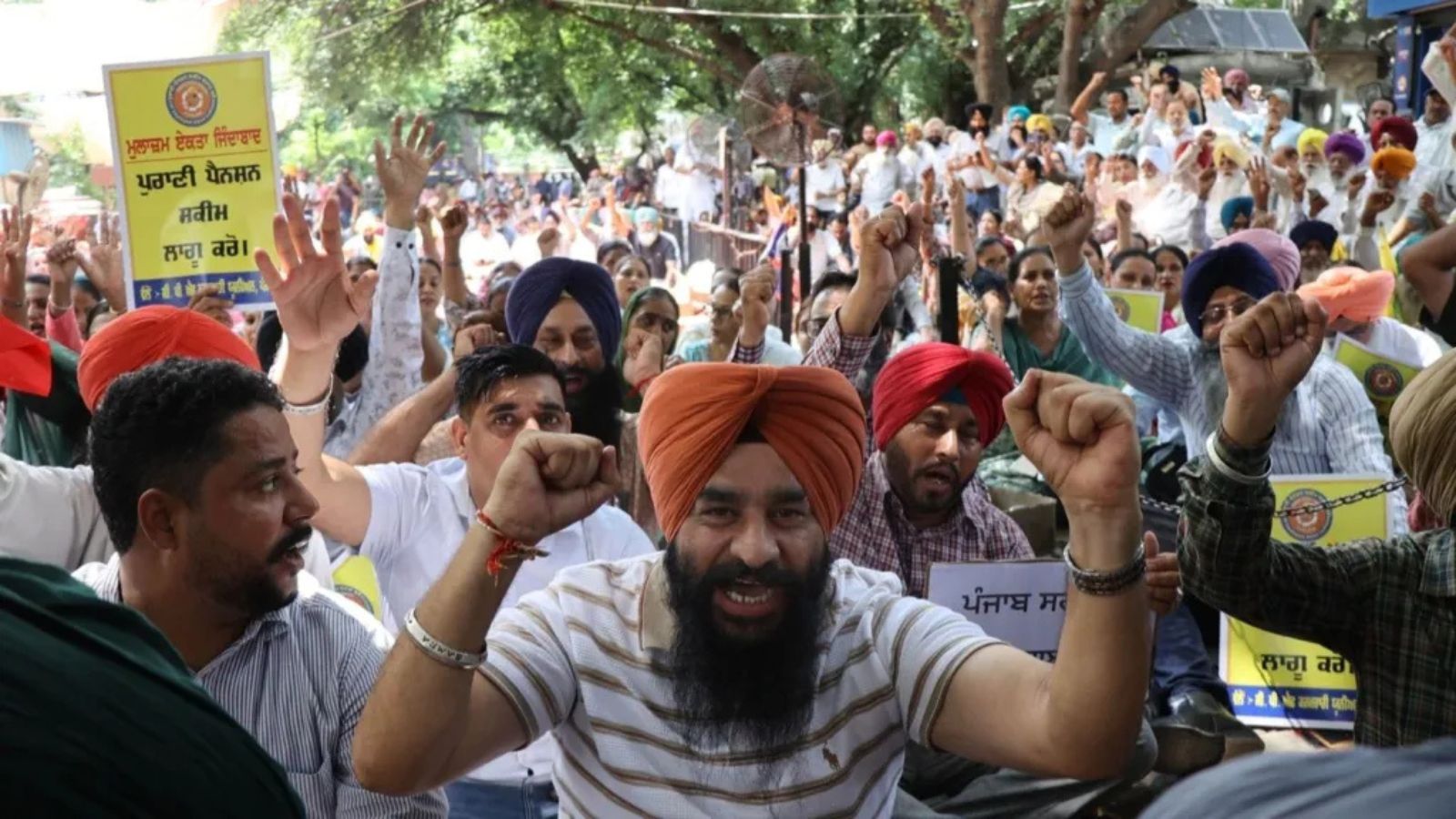
The Punjab government has adopted a hardline stance against protesting employees, ordering salary deductions as the pen-down strike over DA dues extends to September 11.
- Punjab government orders 'No Work, No Pay' for employees abstaining from duty.
- Pen-down strike extended by unions until September 11.
- Core demands include pending Dearness Allowance (DA) and withdrawal of disciplinary notices.
- Government cites Supreme Court litigation and financial constraints as reasons for delay.
The standoff between the Punjab Government and its workforce has reached a critical juncture. On Tuesday, the state administration officially invoked the 'no work, no pay' principle, directing that salaries be deducted for employees participating in the ongoing agitation. Chief Secretary KAP Sinha issued the directive to all administrative secretaries, signaling a shift from dialogue to disciplinary action.
Across the state, government offices, including the Civil and Mini Secretariats in Chandigarh, remained largely deserted. While essential services like healthcare and education continued to function, administrative work has come to a grinding halt. The Sanjha Mulazam Manch and other employee fronts have extended their strike, asserting that they will not be silenced until their financial dues are cleared.
Why This Matters
BozokMedia analysis shows that this confrontation highlights a systemic failure in labor-government relations in Punjab. The government is trapped between a judicial mandate to pay arrears and a precarious fiscal position. By implementing salary deductions, the administration is attempting to break the morale of the unions, but this could potentially alienate a massive section of the state's administrative machinery, leading to long-term governance paralysis.
"The use of financial penalties during a labor dispute often acts as a catalyst for further escalation rather than a solution for resolution."
At the heart of the dispute is a pending Dearness Allowance (DA) claim totaling approximately Rs 14,191 crore. While the Punjab and Haryana High Court ordered the payment, the state government has challenged this in the Supreme Court. In a partial attempt to quell the unrest, the government raised the DA from 42% to 60% for 85,000 employees recruited after July 2020, but this left older employees feeling marginalized.
The unrest has spread to districts like Hoshiarpur and Ferozepur, where union leaders have alleged that the government is backtracking on its election manifesto promise to restore the Old Pension Scheme (OPS). Protesters have now threatened to 'gherao' (surround) state ministers starting September 12.
| Issue | Government Position | Employees' Demand |
|---|---|---|
| DA Arrears | Pending in Supreme Court | Immediate full disbursement |
| Disciplinary Action | Necessary for illegal strikes | Withdrawal of all show-cause notices |
| Pension Scheme | Notification issued, process ongoing | Full implementation of OPS |
Frequently Asked Questions
1. What does 'No Work, No Pay' entail in this context?
It means that any employee who remains absent from their official duties to participate in the strike will face a proportional deduction in their monthly salary.
2. Why is the government refusing to pay the DA arrears immediately?
The state government cites its current financial constraints and the fact that the matter is currently being contested in the Supreme Court.