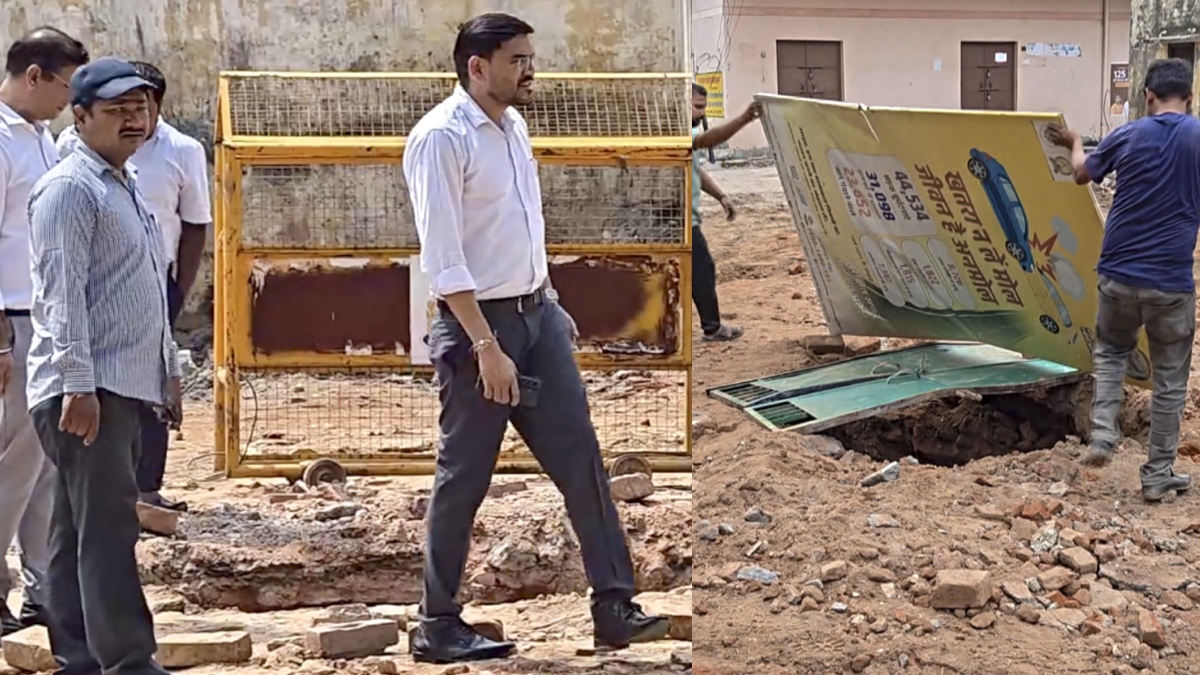
An ancient well was discovered following the demolition of an illegal mosque in the Saharanpur Collectorate complex. The Archaeological Survey of India (ASI) suggests the structure predates the mosque by centuries.
- An ancient well was discovered after the demolition of an illegal mosque in Saharanpur.
- ASI preliminary findings date the structure to be 200-300 years old.
- Experts state the well existed before the construction of the mosque.
- The structure is linked to the late medieval civilization.
In the Saharanpur district of Uttar Pradesh, a routine administrative action has led to a significant archaeological discovery. Following the demolition of an illegal mosque located within the Collectorate office premises, an ancient well was unearthed, sparking widespread curiosity and debate across the region.
To resolve the mystery regarding the age and origin of the structure, a team from the Archaeological Survey of India (ASI) arrived on site this Monday. ASI official Manoj Kumar Yadav personally descended into the well to conduct a primary structural analysis. Following the inspection, the ASI team revealed that the well appears to be between 200 and 300 years old, effectively predating the mosque that stood above it.
Why This Matters
BozokMedia analysis shows that such discoveries often ignite socio-religious tensions in sensitive regions. While the ASI has maintained that such structures are not uncommon in old urban settlements, the timing of this discovery—amidst a demolition drive—adds a layer of complexity. It highlights the intersection of urban governance and heritage preservation in India.
"This structure appears to belong to the late medieval era, and comprehensive excavation is required to determine its exact purpose and history."
Contradicting the ASI's preliminary findings, the Mutawalli of the mosque committee claimed that the well was used for 'Wudu' (ablution) by the mosque's congregants for a long time and was an integral part of the mosque's facilities. However, the structural evidence suggests a timeline that contradicts this claim.
The ASI has emphasized that the current findings are based on a surface-level inspection. A full-scale excavation, subject to administrative approval, would be necessary to uncover the deeper history of the site and the civilization it represents.
Frequently Asked Questions
Q1: How old is the well according to the ASI?
A: According to preliminary investigations, the well is estimated to be 200 to 300 years old.
Q2: Did the well exist before the mosque?
A: Yes, ASI officials stated that the structure predates the construction of the mosque.