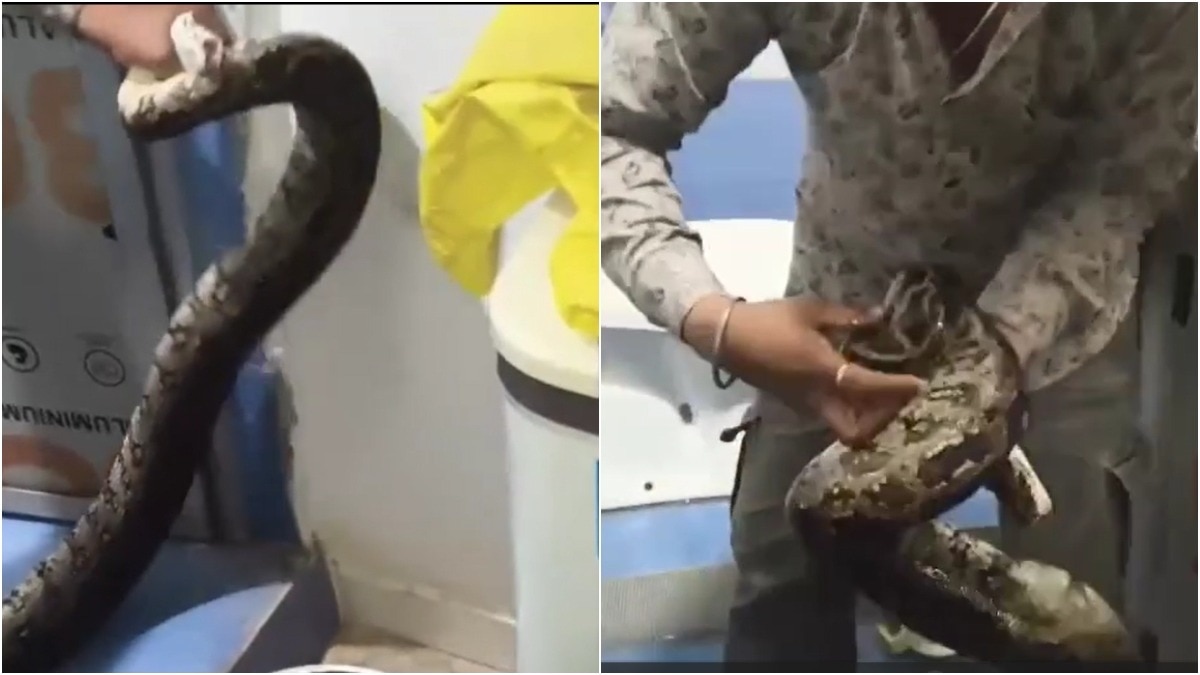
A family in Madhya Pradesh experienced a terrifying encounter when a 10-foot-long python was discovered inside their bathroom, leading to a complex rescue operation by wildlife experts.
- A 10-foot python was discovered inside a residential bathroom in Madhya Pradesh.
- Forest Department officials conducted a high-risk rescue operation to secure the reptile.
- The incident highlights the increasing overlap between urban settlements and wildlife habitats.
In a startling incident that has left residents of Madhya Pradesh on edge, a family discovered a massive 10-foot python coiled inside their bathroom. The discovery occurred during a routine morning, turning a domestic space into a scene of panic and chaos as the family realized the scale of the intruder.
Upon receiving the emergency call, the local Forest Department dispatched a specialized rescue team. The operation proved to be exceptionally challenging due to the confined space of the bathroom and the sheer size of the snake, which had wedged itself into a corner, making it difficult for rescuers to gain a secure grip without harming the animal.
For several hours, wildlife experts used specialized hooks and bags to carefully maneuver the python. The rescue was conducted with extreme caution to ensure the safety of both the human residents and the reptile, which is a protected species under Indian wildlife laws.
Why This Matters
BozokMedia analysis shows that such incidents are becoming more frequent as urban sprawl encroaches upon natural forest boundaries. When natural corridors are destroyed, reptiles like pythons seek shelter in cool, damp environments—such as bathrooms and drains—which mimic their natural habitats.
"The increasing frequency of human-wildlife conflict in semi-urban areas is a direct result of habitat fragmentation and the loss of natural prey for large reptiles."
Following the successful capture, the python was transported to a nearby forest reserve for a health check-up before being released back into the wild. Local authorities have advised residents to keep their surroundings clean and seal potential entry points to prevent future intrusions.
Historical Background
Madhya Pradesh is known for its diverse biodiversity and vast forest cover. The Indian Python (Python molurus) is native to the region and plays a critical role in controlling rodent populations. However, as cities expand, these apex predators are increasingly found in residential colonies, leading to high-stress encounters for both humans and animals.
Frequently Asked Questions
Q1: Is the Indian Python dangerous to humans?
While they are non-venomous, their size and strength can make them dangerous if they feel threatened or attempt to constrict.
Q2: What should one do if a snake enters the house?
Keep a safe distance, keep an eye on the snake's location, and immediately contact the local Forest Department or a certified snake rescuer.