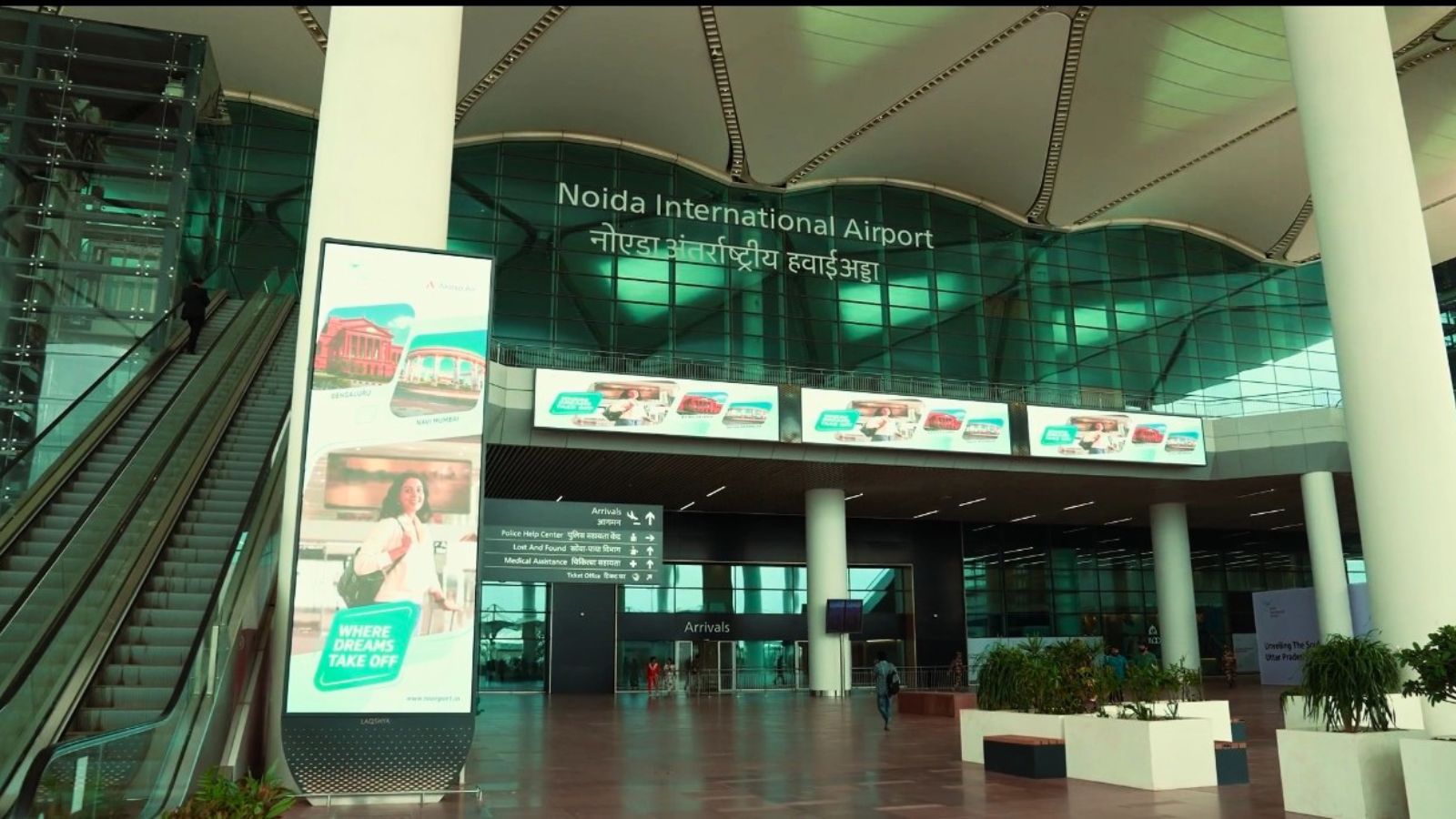
To tackle the traffic surge following the opening of Noida International Airport, GNIDA is revising its Master Plan 2041 to introduce dedicated elevated routes for freight movement.
- Separation of freight and passenger traffic to prevent urban congestion.
- Proposed 6-lane elevated road linking Multi-Modal Logistics Hub (MMLH) to Jewar Airport.
- 15 km extension to enhance connectivity with the Ganga Expressway.
The Noida International Airport at Jewar has officially commenced operations, triggering a massive expected surge in both passenger volumes and cargo movement across the Noida-Greater Noida region. To preempt potential gridlock, the Greater Noida Industrial Development Authority (GNIDA) is now strategizing significant amendments to its Master Plan 2041.
The core philosophy of this urban planning shift is the segregation of traffic. By ensuring that heavy-duty freight vehicles and private passenger cars utilize distinct corridors, the authority aims to maintain seamless mobility as the region evolves into a global industrial powerhouse. A detailed presentation on these changes was recently submitted to Industrial Development Minister Nand Gopal Gupta Nandi in Lucknow.
Strategic Infrastructure Expansion
At the heart of the proposal is the construction of a 105-metre-wide road connecting to the Hapur bypass. Furthermore, GNIDA plans to extend this connectivity by approximately 15 km to link the region with the Ganga Expressway. This strategic link is expected to slash travel time between Noida-Greater Noida and the expressway to a mere 30 to 45 minutes.
To facilitate the movement of goods, a six-lane elevated road is proposed to connect the Multi-Modal Logistics Hub (MMLH) directly to the cargo terminal of the Jewar airport. This road will run parallel to the Western Dedicated Freight Corridor, ensuring that industrial logistics do not compete for space with daily commuters.
Why This Matters
BozokMedia analysis shows that this infrastructure decoupling is a critical prerequisite for the region's economic scalability. By isolating heavy freight, GNIDA is effectively reducing the risk of road degradation and accidents associated with mixed-traffic flows. This move transforms Greater Noida from a mere satellite city into a sophisticated logistics node for Northern India.
"The integration of dedicated freight corridors with airport cargo terminals is a gold standard in global logistics hubs, ensuring maximum throughput with minimum urban disruption."
The region is currently developing two massive pillars of transport: the 849-acre Multi-Modal Logistics Hub (MMLH), which will serve as a dry port, and the 360-acre Multi-Modal Transport Hub (MMTH) near Boraki Railway Station, focused on passenger transit including interstate buses and MRTS.
| Feature | Multi-Modal Logistics Hub (MMLH) | Multi-Modal Transport Hub (MMTH) |
|---|---|---|
| Primary Focus | Freight/Cargo | Passengers |
| Scale | 849 Acres | 360 Acres |
| Key Links | Cargo Terminal, Freight Corridor | Bus, Rail, MRTS |
Frequently Asked Questions
Q1: How will separate freight routes benefit the average citizen?
A: It will significantly reduce traffic congestion on main roads, leading to shorter commute times and safer roads for light vehicles.
Q2: What is the expected travel time to the Ganga Expressway after the upgrade?
A: The proposed connectivity extension aims to bring the travel time down to between 30 and 45 minutes.


