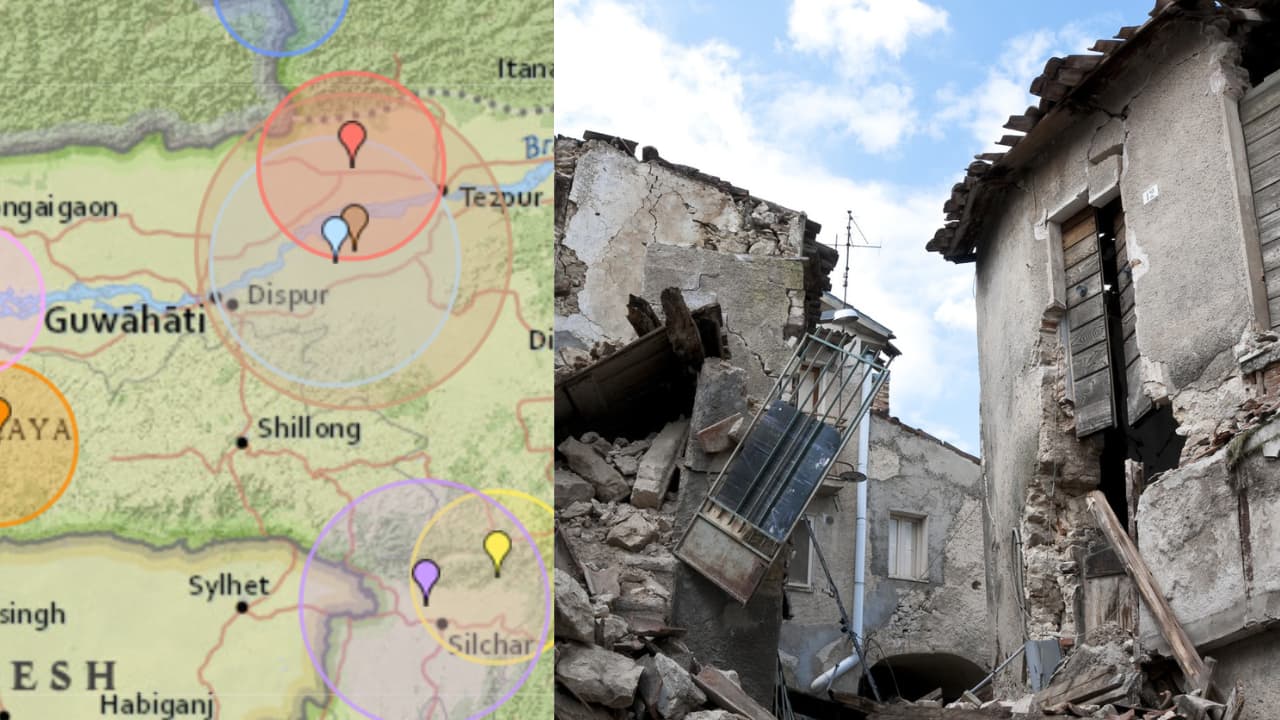
A 4.1-magnitude earthquake struck near Guwahati, Assam on September 8, 2026. Experts explain the geological reasons why Northeast India remains one of the most seismically active regions in the world.
- A 4.1-magnitude earthquake hit Assam near Guwahati on September 8, 2026.
- The epicentre was located in Goalpara at a shallow depth of 10 km.
- Northeast India's vulnerability is linked to the collision of the Indian and Eurasian plates.
On Tuesday, September 8, 2026, a 4.1-magnitude earthquake jolted the region near Guwahati, Assam. The tremor, which was felt across several districts, originated from Goalpara, with the epicentre situated at a depth of only 10 kilometres. While no major casualties were immediately reported, the event sparked widespread anxiety among the local population.
Geologists explain that Northeast India is situated in a highly volatile seismic zone. The region is the site of a continuous collision between the Indian Plate and the Eurasian Plate. This tectonic interaction creates immense pressure beneath the Earth's crust; when this stress exceeds the strength of the rocks, it is released as seismic energy, resulting in earthquakes.
Why This Matters
BozokMedia analysis shows that shallow-focus earthquakes, like the one in Goalpara, are particularly concerning. Even a moderate magnitude can cause significant surface shaking because the energy has less distance to travel and dissipate before reaching the surface. For a rapidly urbanizing city like Guwahati, this highlights a critical need for strict adherence to earthquake-resistant construction protocols.
"The seismic instability of Northeast India is a direct consequence of the ongoing Himalayan orogeny, making the region a permanent hotspot for tectonic activity."
Historically, the Northeast has been prone to devastating seismic events. The region is classified under Seismic Zone V, the highest risk category in India. Beyond the plate movements, the alluvial soil of the Brahmaputra valley can amplify seismic waves, increasing the risk of structural failure during a quake.
Frequently Asked Questions
Q1: Is a 4.1 magnitude earthquake considered dangerous?
A: It is classified as 'light to moderate.' While it rarely causes widespread destruction, it can damage fragile structures and cause significant panic.
Q2: Why does depth matter in an earthquake?
A: The shallower the focus (hypocentre), the more intense the shaking felt at the surface, regardless of the overall magnitude.