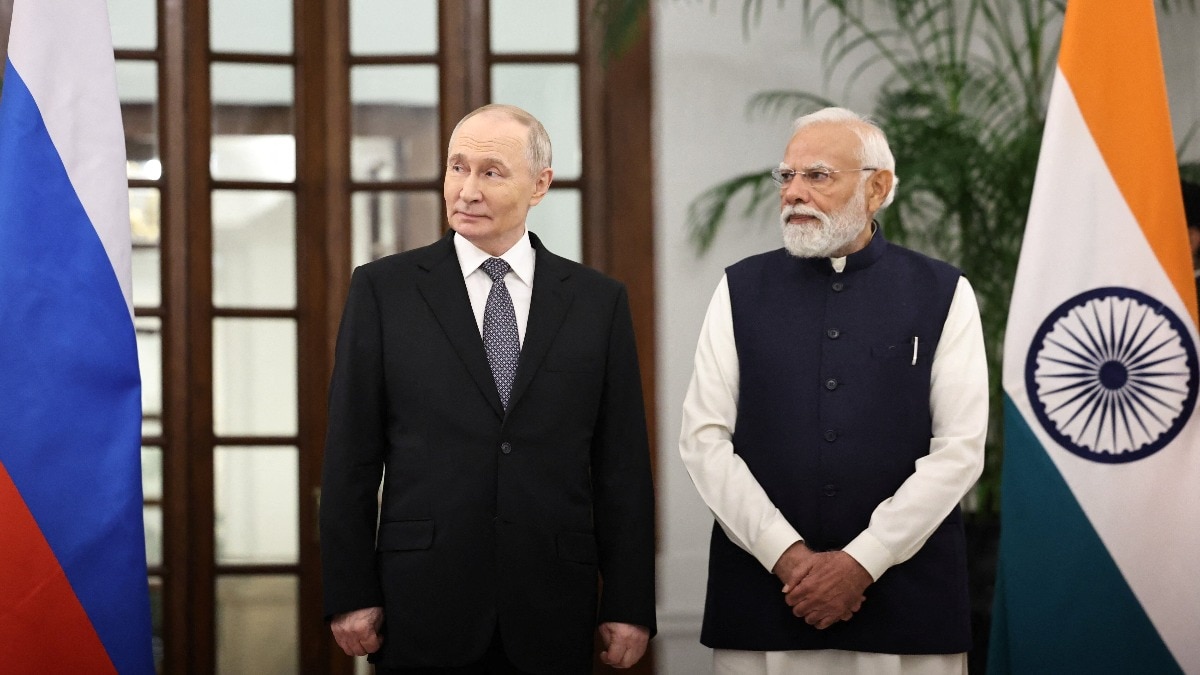
Prime Minister Narendra Modi and President Vladimir Putin are set to meet in New Delhi to finalize the delivery of the last S-400 unit and strategize the deployment of the lightweight BrahMos-NG missiles.
- Final S-400 Triumf regiment delivery confirmed by November 2026.
- Focus on BrahMos-NG: A lighter, more versatile missile for Tejas and MiG-29 jets.
- Shift from a 'buyer-seller' relationship to joint R&D and global exports.
In a high-stakes diplomatic encounter ahead of the BRICS Summit, Prime Minister Narendra Modi and Russian President Vladimir Putin will convene in New Delhi on September 11. The primary agenda centers on resolving the delay of the fifth S-400 Triumf unit and accelerating the development of the next-generation BrahMos missile system, marking a pivotal moment in Indo-Russian defense ties.
The S-400 delivery has faced headwinds due to the ongoing Russia-Ukraine conflict. However, Kremlin spokesperson Dmitry Peskov has formally assured that Russia will fulfill its obligations. India's initial $5.43 billion deal from 2018 for five regiments has already seen four units become operational, providing critical air defense coverage across Punjab, Rajasthan, and the Jammu sector against Pakistan, as well as the northern borders facing China.
Why This Matters
BozokMedia analysis shows that India is strategically pivoting its defense procurement. While Russia still accounts for 40% of India's arms imports, the relationship is evolving. By moving toward joint production and third-country exports—such as the recent sale of BrahMos to the Philippines—India is transforming from a mere importer into a global defense hub, reducing its strategic vulnerability.
The operational success of Russian systems during Operation Sindoor in May 2025 has reaffirmed the reliability of these platforms. Specifically, the S-400's record-breaking 300+ km intercept of a Pakistani AEW&C aircraft demonstrated unparalleled air dominance, cementing the necessity of the final unit.
The transition to the BrahMos-NG represents a paradigm shift in aerial warfare, allowing smaller fighter jets to carry multiple supersonic cruise missiles, thereby exponentially increasing strike capacity.
The BrahMos-NG is a technological leap, weighing only 1.3 tonnes compared to the original 2.9 tonnes. With a speed of Mach 3.5 and a range currently at 450 km (with plans to reach 800 km), it can be integrated into Tejas and MiG-29 fighters. This allows a single aircraft to carry up to seven missiles, a massive upgrade from the single-missile capacity of the Su-30MKI.
| Feature | Standard BrahMos | BrahMos-NG |
|---|---|---|
| Weight | 2.9 Tonnes | 1.3 Tonnes |
| Speed | Mach 2.8-3.0 | Mach 3.5 |
| Platform | Su-30MKI (1 missile) | Tejas/MiG-29 (6-7 missiles) |
| Current Range | 290-450 km | 450 km (Target 800 km) |
Frequently Asked Questions
When will the final S-400 unit be delivered?
The fifth and final squadron is assured for delivery by November 2026.
What makes BrahMos-NG different from the current version?
It is significantly lighter, faster, and can be carried in larger quantities by smaller fighter jets like the Tejas.