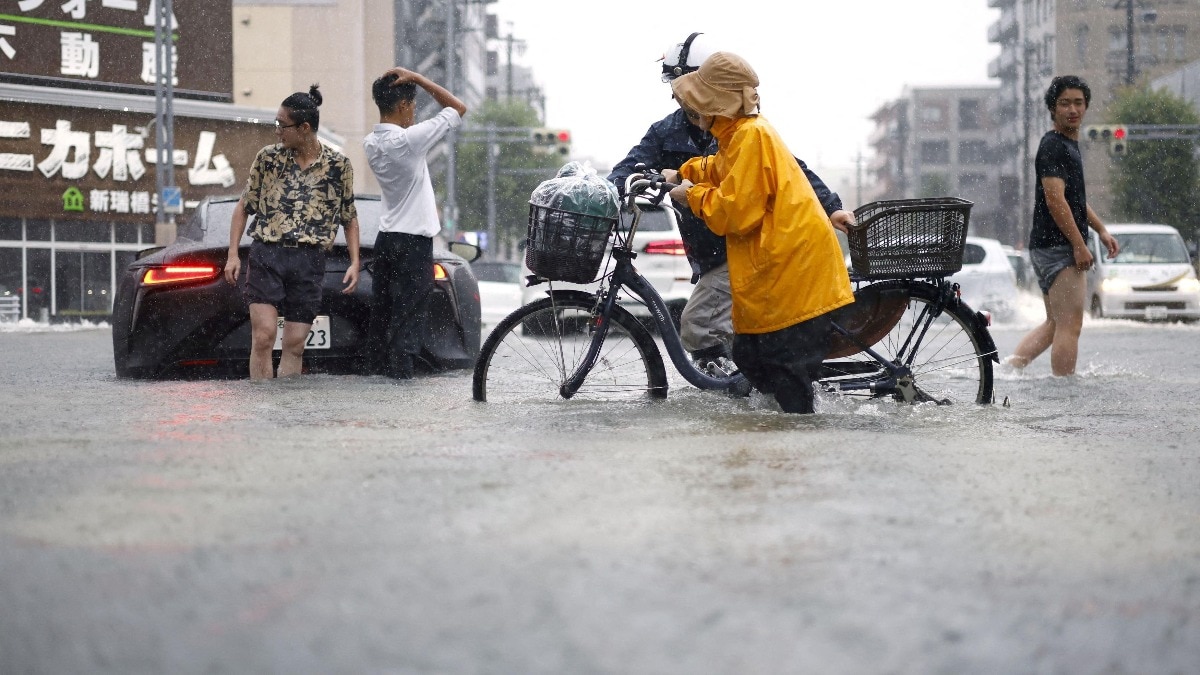
Nagoya, Japan, has been devastated by record-breaking September rainfall, causing widespread flooding, transport shutdowns, and mass evacuations just ahead of the 2026 Asian Games.
- Nagoya recorded its third-highest September daily rainfall at 219.5 mm.
- An intense burst of 101.5 mm of rain fell within a single hour, overwhelming city drains.
- Level 5 special flood warnings were issued for the Shonai River.
Central Japan's industrial hub, Nagoya, was hit by torrential rainfall on Tuesday, September 8, triggering widespread flooding that paralyzed public transport and forced thousands of residents to seek emergency shelter. According to the Japan Meteorological Agency (JMA), the city witnessed 219.5 mm of rain, marking the third-highest daily rainfall ever recorded for September at the city's observation station. The sheer intensity of the downpour was evident as 101.5 mm of rain fell in just one hour, creating a flash flood scenario across the urban landscape.
The meteorological catalyst for this disaster was an extremely active autumn weather front positioned over central Japan. This front generated a concentrated band of thunderstorms and intense precipitation across the Aichi Prefecture and surrounding regions. In response to the rapidly rising water levels, authorities issued a Level 5 special flood warning for the Shonai River, which traverses Aichi and Gifu prefectures, warning that disasters had likely already occurred in inundation zones.
Why This Matters
BozokMedia analysis shows that the Nagoya floods are a stark illustration of the 'new normal' in global weather patterns. When a city of 2.5 million people is brought to a standstill by a single hour of rain, it indicates a critical gap between historical urban planning and the current reality of climate-induced extreme weather events.
"The concentration of rainfall into such narrow time windows makes traditional drainage systems obsolete, requiring a total rethink of urban water management."
The timing of the floods is particularly critical as Nagoya prepares to host the 2026 Asian Games, scheduled to begin on September 19. Nagoya Mayor Ichiro Hirosawa reported that approximately 400 athletes and staff members staying in temporary accommodations had to be evacuated to higher ground. Additionally, around 3,500 residents sought refuge in emergency evacuation centers as their homes became unreachable.
Official damage reports from Aichi Prefecture indicate that 23 people sustained minor injuries. The flooding caused significant property damage, with 25 homes in Nagoya flooded above floor level and 13 below. Across the wider prefecture, the toll rose to 45 homes flooded above floor level. Transport was severely impacted, with roughly 200 vehicles stranded and both bus and subway services temporarily suspended.
| Metric | Nagoya City | Aichi Prefecture (Total) |
|---|---|---|
| Daily Rainfall | 219.5 mm | Varies (Extreme) |
| Injuries | 21 | 23 |
| Homes Flooded (Above Floor) | 25 | 45 |
Frequently Asked Questions
Question 1: What caused the extreme flooding in Nagoya?
Answer: An active autumn weather front caused concentrated thunderstorms, delivering over 100mm of rain in a single hour.
Question 2: How has this affected the upcoming Asian Games?
Answer: While athletes were safely evacuated to higher ground, the city is currently assessing infrastructure damage before the games begin on September 19.