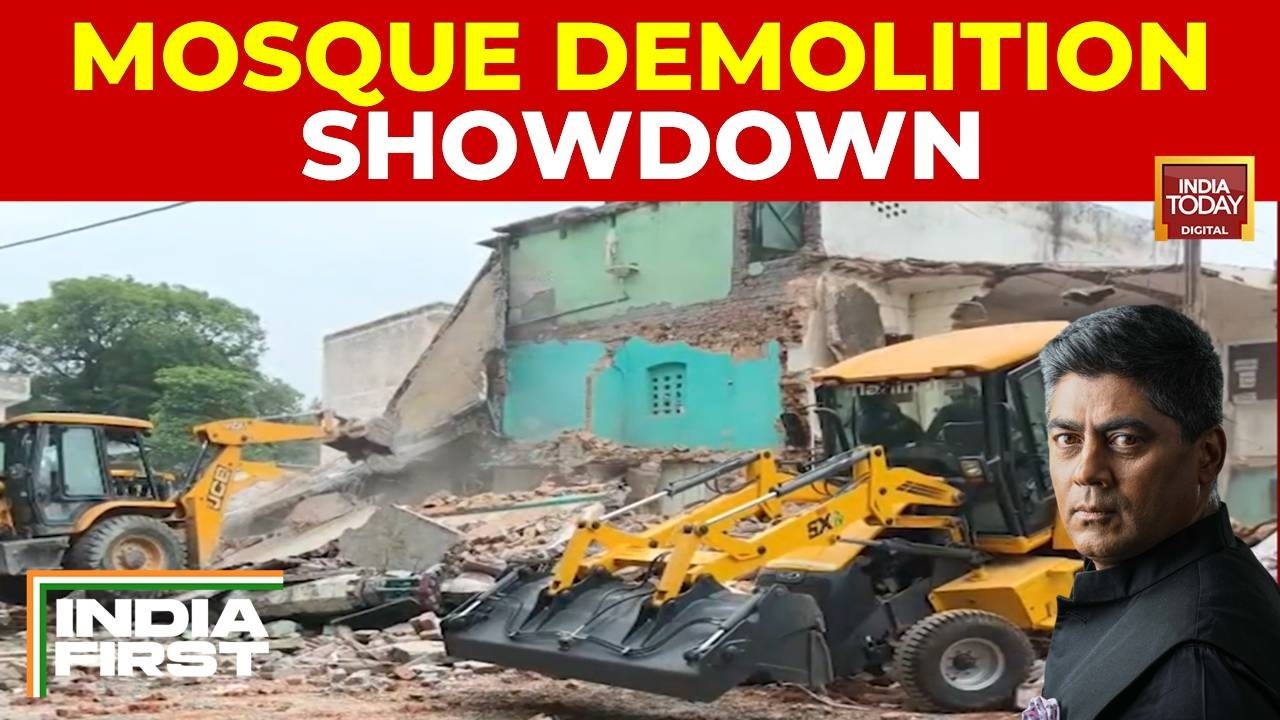
The legal battle over a mosque demolition has intensified after the case reached the High Court. The discovery of an ancient well at the site has added a new layer of complexity to the dispute, drawing sharp criticism from opposition parties.
- The dispute over the mosque demolition has officially moved to the High Court.
- The discovery of an ancient well beneath the site has sparked historical and legal debates.
- Opposition leaders have slammed the move, calling it a targeted political action.
The controversy surrounding the demolition of a mosque has reached a critical juncture as the matter is now being adjudicated by the High Court. Legal representatives for the aggrieved party have challenged the administrative decision, arguing that the demolition was carried out in violation of due process and without adequate notice.
Adding a startling twist to the narrative, workers discovered an ancient well beneath the demolition site. This discovery has transformed the case from a simple property dispute into a potential archaeological investigation. Experts suggest that the presence of such a structure could indicate that the site held significant historical importance long before the current structure was built.
Why This Matters
BozokMedia analysis shows that the intersection of archaeology and religious sites often creates a volatile environment. When physical evidence like an ancient well emerges, it challenges the official narrative provided by administrative bodies. This case highlights the fragility of communal harmony when administrative actions are perceived as biased or rushed.
"The discovery of subsurface structures in contested religious sites often shifts the legal burden of proof from administrative law to archaeological evidence."
The political opposition has been quick to condemn the demolition, describing it as a 'calculated move' to polarize the electorate. They argue that the administration ignored the sanctity of the site and failed to conduct a preliminary survey, which would have revealed the existence of the well and other historical remnants.
Historically, such disputes are often resolved through a combination of judicial oversight and scientific excavation. The role of the Archaeological Survey of India (ASI) or similar bodies becomes pivotal in determining the original nature of the site. The High Court's decision will likely depend on whether the demolition was a lawful exercise of power or an arbitrary act of destruction.
Frequently Asked Questions
Q1: What is the primary legal challenge in the High Court?
The primary challenge is whether the demolition followed the legal procedure and if the site's historical value was considered.
Q2: How does the discovery of the well impact the case?
It provides physical evidence that may support claims of the site's antiquity, potentially halting further action or mandating a restoration.