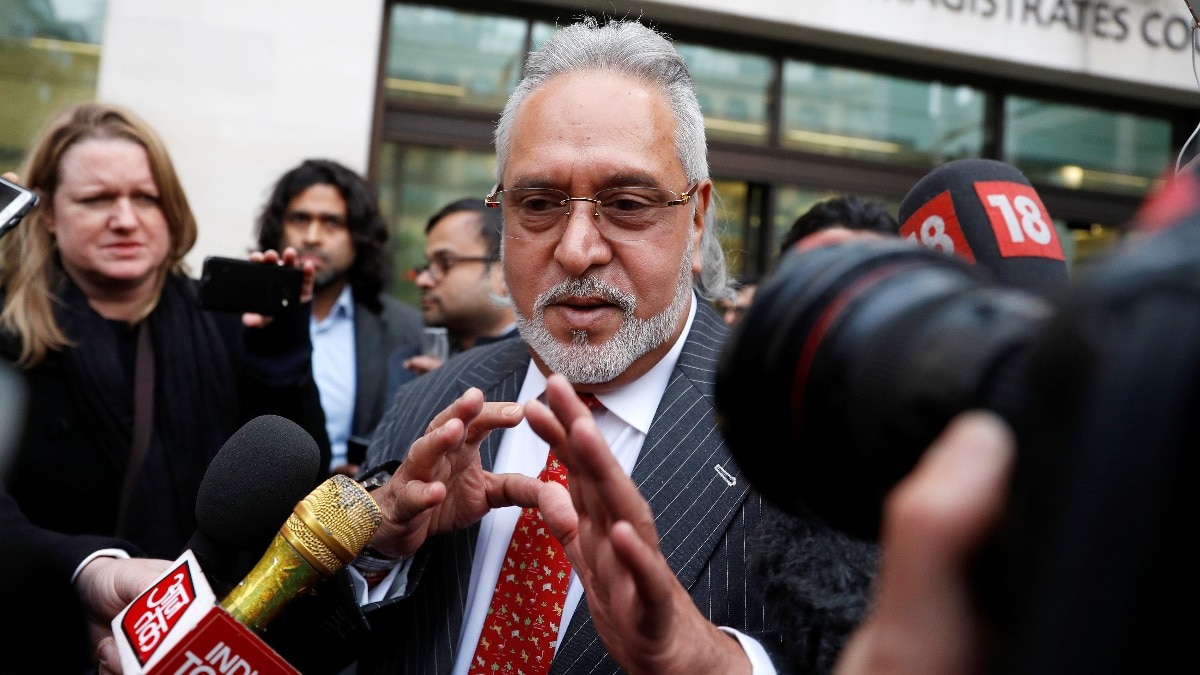
The Enforcement Directorate (ED) has informed the Bombay High Court that the recovery of bank dues does not absolve fugitive businessman Vijay Mallya from criminal proceedings under the Prevention of Money Laundering Act (PMLA).
- Recovery of ₹15,000 crore by banks does not render PMLA proceedings infructuous.
- ED distinguishes between civil liabilities (bank dues) and criminal offences (money laundering).
- Bombay High Court has given Mallya a final chance to clarify his intent to return to India.
The Enforcement Directorate (ED) has submitted a firm response to the Bombay High Court, stating that the recovery of substantial bank dues from fugitive businessman Vijay Mallya cannot, by itself, terminate the pending proceedings under the Prevention of Money Laundering Act (PMLA) or the ongoing criminal prosecution against him. The agency emphasized that civil recovery and criminal prosecution operate on two entirely different legal planes.
Filed through advocate Ashish Mehta, the agency's reply clarified that while the recovery of funds by the consortium of banks affects the calculation of outstanding civil debts, it does not determine whether the alleged scheduled offences or the act of money laundering have been established. The ED argued that the criminal nature of the charges remains regardless of the financial restitution made to the lenders.
Why This Matters
BozokMedia analysis shows that this stance by the ED is a strategic move to prevent high-profile economic offenders from using 'financial settlements' as a getaway card. By decoupling recovery from prosecution, the Indian state is asserting that economic crimes are not merely commercial disputes but attacks on the financial integrity of the nation. This sets a rigorous precedent for all future fugitive economic offender cases.
"The restoration of assets is a statutory mechanism for restitution, not a pardon for the underlying criminal act of money laundering."
Mallya's legal team had petitioned the court for the closure of the matter, claiming that the SBI-led consortium has already recovered approximately ₹15,000 crore, which far exceeds the original claim of ₹6,203 crore including interest. However, the ED rejected this characterization, stating that the attempt to link bank recovery with the continuation of criminal proceedings is fundamentally misconceived.
The agency further highlighted Mallya's continued absence from India and his refusal to submit to the jurisdiction of the competent criminal court. The ED noted that his conduct and evasion of the law remain critical factors in determining whether any relief should be granted to him.
Regarding the assets, the ED pointed out that properties worth approximately ₹14,131.60 crore were restored to the SBI consortium under Section 8(8) of the PMLA. The agency clarified that such restoration is a mechanism to return property to legitimate claimants and does not extinguish the criminal liability of the accused.
Historical Background: Vijay Mallya fled India in 2016 and was subsequently declared a Fugitive Economic Offender (FEO) in 2019. He continues to challenge the constitutional validity of the Fugitive Economic Offenders Act in Indian courts while residing in the UK.
| Feature | Bank Recovery (Civil) | PMLA Case (Criminal) |
|---|---|---|
| Objective | Recovering lost funds | Punishing the crime |
| Impact | Reduces financial debt | Imprisonment and Asset Seizure |
| Resolution | Settled via payment | Settled via Judicial Verdict |
Frequently Asked Questions
Q1: Does paying back the bank loan clear Mallya of all charges?
No, according to the ED, paying back the loan settles civil dues but does not erase the criminal charges of money laundering.
Q2: When was Vijay Mallya declared a Fugitive Economic Offender?
He was officially declared a Fugitive Economic Offender in 2019.