BJP Rajya Sabha MP Vikramjit Sahney emphasizes that BRICS must collaborate to create a safety net for essential goods, promote local currency trade, and develop alternative trade corridors to counter disruptions in West Asia.
- BRICS needs to ensure the uninterrupted flow of food, fertilizers, fuel, and foreign exchange.
- Strong advocacy for shifting trade from the US Dollar to local currencies to reduce economic vulnerability.
- Urgent need for alternative trade corridors due to instability in the Strait of Hormuz and Red Sea.
- BRICS is evolving into a critical platform for the Global South amid the failure of traditional multilateral institutions.
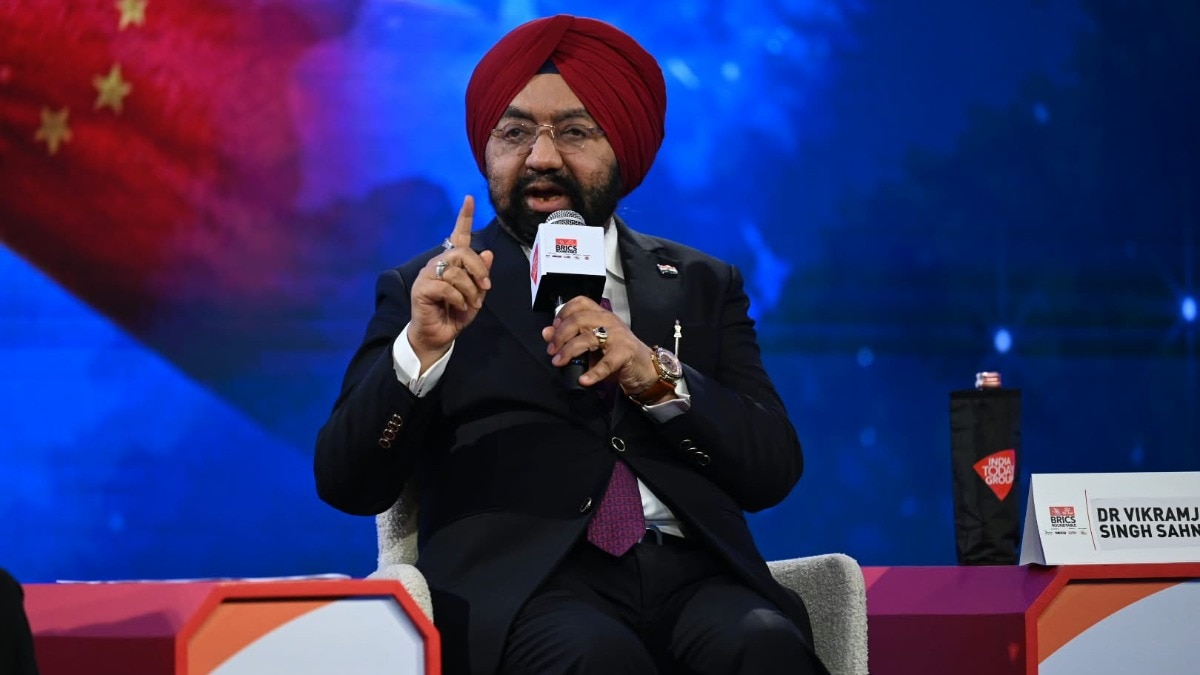
BJP Rajya Sabha MP Vikramjit Singh Sahney has highlighted the potential of the BRICS grouping to serve as a strategic safety net for global supply chains, which have been severely disrupted by the escalating crisis in West Asia. Speaking at the India Today BRICS Roundtable 2026, Sahney stressed the urgency of securing the movement of essential commodities including fuel, fertilizers, and food grains.
The MP pointed out the extreme vulnerability of current trade routes, specifically mentioning the Strait of Hormuz. He noted that the realization that ships could be blocked in such a critical artery was a wake-up call for the world. According to Sahney, there is currently "no light at the end of the tunnel," as the geopolitical instability in the region remains unpredictable.
Why This Matters
BozokMedia analysis shows that the strategic pivot toward BRICS represents a systemic shift in global governance. As Western-led agencies are perceived as "spineless" or biased during regional conflicts, the Global South is actively constructing a parallel architecture for economic survival. The integration of Saudi Arabia and Iran transforms BRICS from a political forum into a dominant energy and logistics bloc.
"BRICS must stand up and say we mean serious business; we don't want hostilities and we want a solution through dialogues."
Invoking India's philosophy of Vasudhaiva Kutumbakam (The World is One Family), Sahney argued that the grouping must move beyond mere economic cooperation to active conflict resolution. He emphasized that India's approach is rooted in peace and prosperity, mirroring the message India has consistently shared with SAARC nations.
A major point of contention discussed was the over-reliance on the US Dollar. Sahney urged member nations to accelerate the transition to local currency trade to insulate their economies from external pressures and currency fluctuations. He cited India's experience of sourcing fertilizers from China at half the market cost as a prime example of how intra-BRICS cooperation can diversify supply sources.
Regarding logistics, Sahney noted that the inclusion of Iran and Saudi Arabia provides a unique opportunity to develop alternative trade corridors. While the Red Sea remains a risky option due to Houthi threats, he suggested that collective investment in new routes could ensure the free flow of goods and services.
With BRICS nations representing over 49% of the global population and expanding its reach to nearly 25 participating nations, Sahney believes the grouping is now a vibrant and indispensable platform for shaping the future of the global economy.
Frequently Asked Questions
1. How can BRICS mitigate the impact of the West Asia crisis?
By creating collective investment plans for alternative trade corridors and diversifying supply sources for essential commodities like fuel and food.
2. Why is local currency trade being pushed within BRICS?
To reduce dependence on the US Dollar, thereby minimizing the impact of US-led sanctions and global currency volatility on member economies.