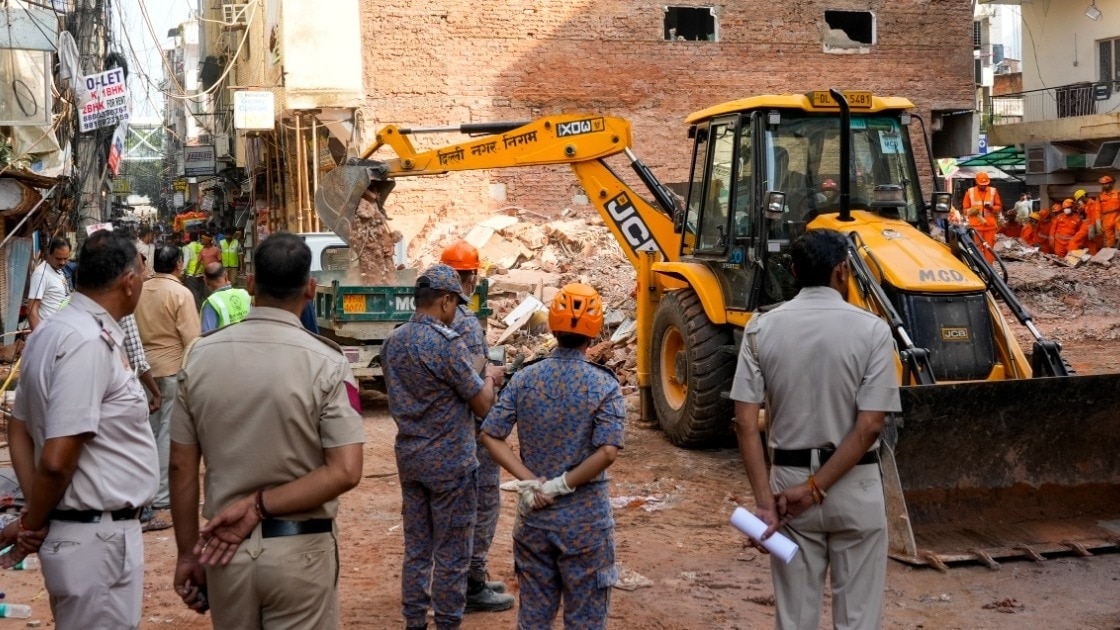
Following a tragic PG building collapse in Satya Niketan that claimed seven lives, the MCD has launched an intensive demolition drive across all 12 zones of Delhi to target unsafe and illegal structures.
- MCD intensifies enforcement across all 12 Delhi zones after the Satya Niketan tragedy.
- 1,252 PG accommodations surveyed for structural safety between Sept 7-9.
- Over 1,000 demolition actions and 491 sealings executed since June 1.
The Municipal Corporation of Delhi (MCD) has significantly ramped up its demolition and enforcement operations across the national capital. This aggressive move comes in the wake of the devastating building collapse in Satya Niketan on September 6, which resulted in seven fatalities and left five others injured. The civic body is now targeting dangerous buildings, unauthorized constructions, and blatant violations of building bylaws.
On Thursday, civic teams were seen executing demolition orders in densely populated areas including Laxmi Nagar, Jagatpuri, and Pandav Nagar. Beyond the initial site of the tragedy, the MCD has also begun the controlled demolition of an adjacent building in Satya Niketan, which was deemed structurally unsound. Officials stated that this calibrated approach is necessary to prevent further casualties and to send a strong signal to illegal builders.
Why This Matters
BozokMedia analysis shows that the proliferation of unregulated Paying Guest (PG) accommodations in student hubs like Satya Niketan and Mukherjee Nagar has created a systemic risk. To maximize rental yields, owners often add illegal floors without reinforcing the foundation. The current MCD crackdown suggests a shift toward zero-tolerance for structural negligence in residential-commercial hybrid zones.
"The tragedy at Satya Niketan is a wake-up call for urban governance; structural audits must become mandatory for all rental accommodations in Delhi."
The scope of the drive has extended to several other key neighborhoods. In recent days, MCD teams have conducted raids and enforcement actions in Vishwas Nagar, Mukherjee Nagar, Jamia Nagar, Shaheen Bagh, Tilak Nagar, Karam Pura, Karol Bagh, Ramesh Nagar, Mansarovar Garden, Chandni Chowk, and Nehru Vihar. The administration intends to continue these operations until all high-risk structures are identified.
Historical Background: Delhi has long struggled with 'unauthorized colonies' and illegal vertical expansions. Historically, demolition drives are often sporadic or reactive. However, the scale of the current operation—covering all 12 zones simultaneously—indicates a more coordinated effort to cleanse the city of hazardous constructions.
| Action Type | Count (June 1 - Sept 9) |
|---|---|
| Demolition Actions | 1,053 |
| Properties Sealed | 491 |
| Show-Cause Notices | 2,316 |
| Demolition Notices | 757 |
Frequently Asked Questions
Q1: What triggered the current MCD demolition drive?
The drive was intensified following the collapse of a PG building in Satya Niketan on September 6, which killed seven people.
Q2: How many PG buildings were audited recently?
Between September 7 and 9, the MCD conducted a safety assessment survey of 1,252 paying guest buildings across the city.