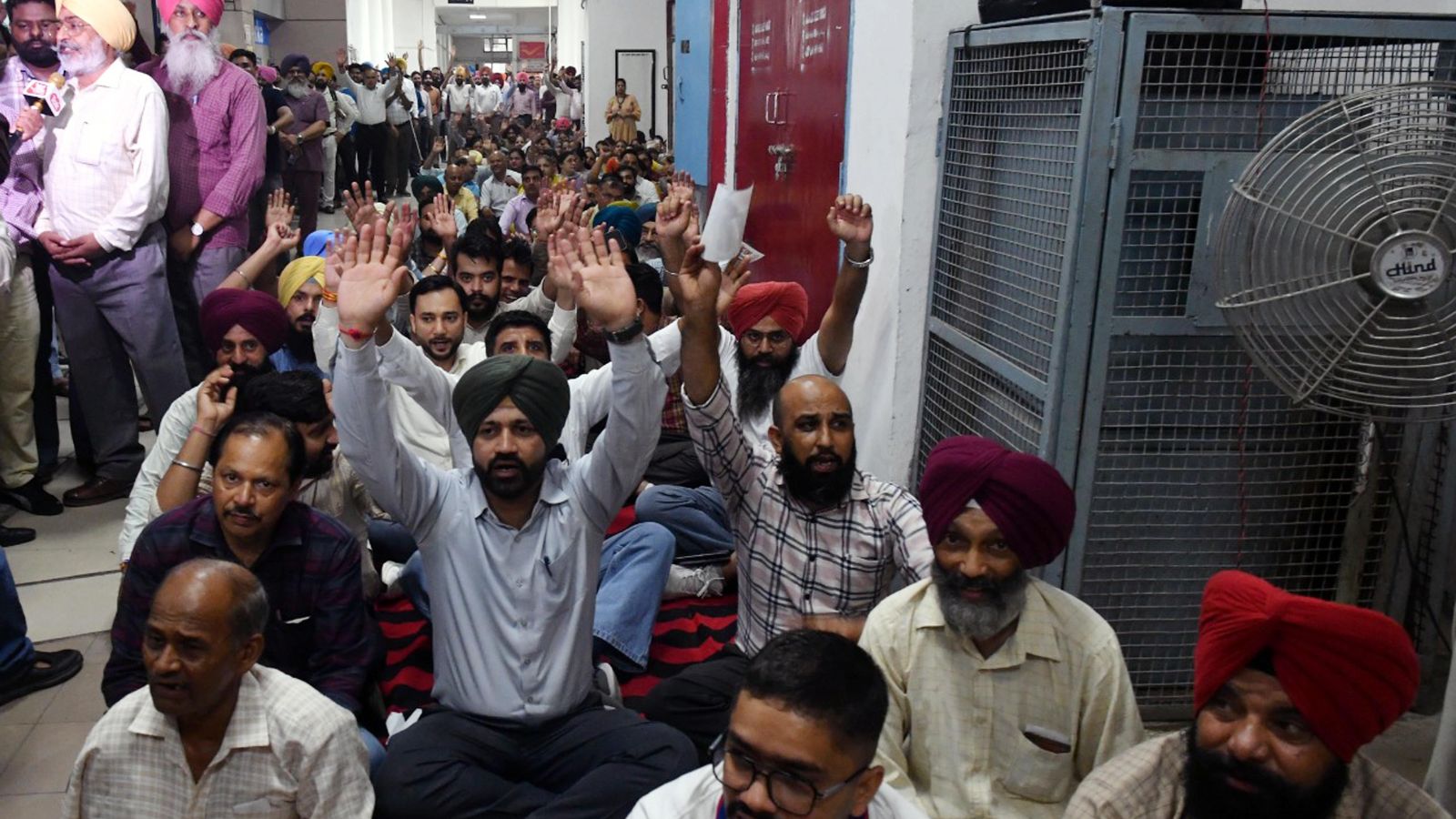
In a significant reversal, the Punjab government has dropped all disciplinary proceedings and show-cause notices against employees who participated in a mass leave protest over pending Dearness Allowance (DA) dues.
- Punjab Government formally withdraws show-cause notices issued on August 27.
- The controversial 'no work, no pay' directive has been scrapped.
- Decision followed a high-level meeting between Chief Secretary KAP Sinha and employee unions.
Chandigarh: The Punjab government has formally ordered the withdrawal of show-cause notices issued to employees and officials who remained absent from duty during a mass leave protest. The order, issued by the General Administration Department, brings an end to a tense standoff between the state administration and its workforce.
The conflict ignited when employees of the Punjab Secretariat and other departments intensified their agitation demanding the release of pending Dearness Allowance (DA) installments. On August 27, a large section of the workforce proceeded on mass leave as part of a 'Maha Bandh'. The government initially responded by marking these absences as 'unauthorised' and initiating disciplinary actions.
Why This Matters
BozokMedia analysis shows that the government's initial hardline stance—specifically the 'no work, no pay' policy—backfired, creating deeper resentment among the staff. By reversing these decisions, the administration is prioritizing the restoration of essential public services over punitive measures. This shift indicates a strategic move to stabilize the bureaucracy before further policy implementations.
"The withdrawal of disciplinary notices serves as a pragmatic admission that administrative efficiency cannot be achieved through coercion when financial grievances are legitimate."
The resolution came after a critical meeting on Wednesday between representatives of various employee bodies and Chief Secretary KAP Sinha. The government agreed to scrap the 'no work, no pay' diktat and assure the workforce that no adverse entries would be made in their service records regarding the protest.
Historically, the Punjab government has faced recurring challenges regarding salary arrears and allowance disbursements. This latest episode highlights the fragility of the relationship between the state and its employees, where financial delays often lead to systemic shutdowns of the secretariats.
Frequently Asked Questions
Q1: Why did the Punjab employees go on mass leave?
A: They were protesting against the government's failure to release pending installments of the Dearness Allowance (DA).
Q2: What was the 'no work, no pay' policy?
A: It was a directive stating that employees absent during the strike would not be paid for those days, which further fueled the protests.