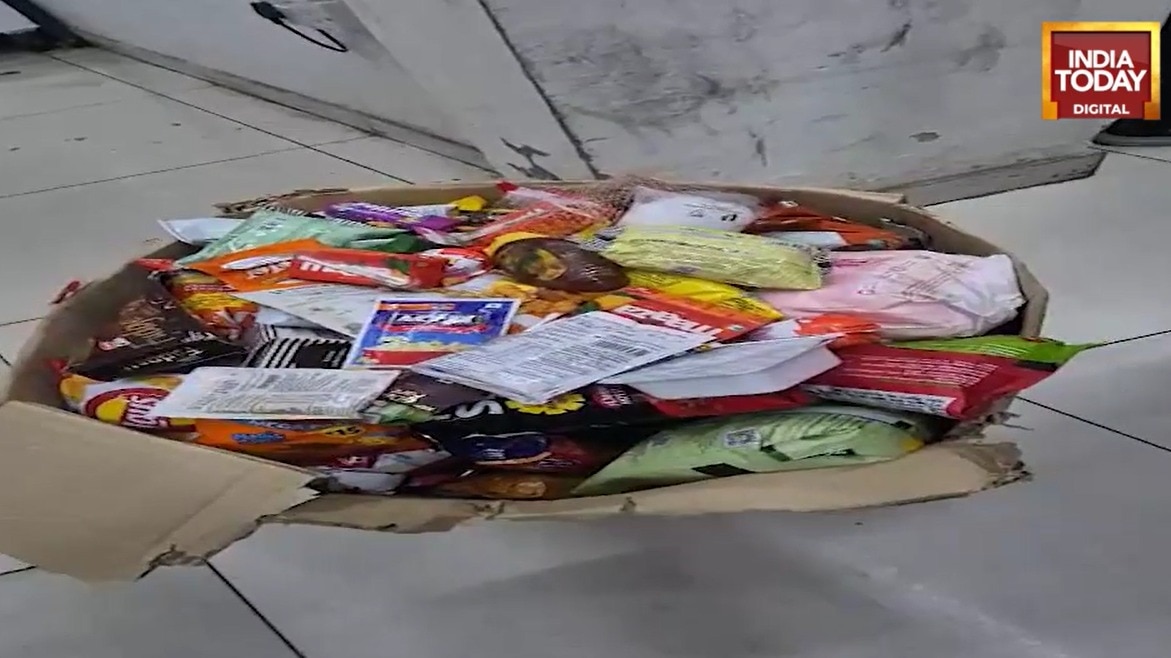
The Supreme Court of India has expressed strong dissatisfaction with the FSSAI's delay in implementing warning labels on packaged foods, emphasizing the critical need to protect public health, especially children, from excessive salt and sodium.
- Supreme Court reprimanded FSSAI for delays in labeling high-sodium and high-sugar foods.
- The Court emphasized the vulnerability of children to processed food health risks.
- The Central Government has agreed to implement prominent 'Red Warning Labels' on packaging.
- FSSAI must now provide detailed data on salt and sodium levels across packaged food categories.
The Supreme Court of India has taken a stern view of the Food Safety and Standards Authority of India (FSSAI) regarding the slow pace of implementing mandatory health warnings on packaged food products. During recent proceedings, the apex court highlighted that the lack of transparent, immediate warnings on the front of packages prevents consumers from making informed decisions about their health.
The core of the judicial concern lies in the rising consumption of processed foods containing dangerous levels of salt, sodium, and sugar. The Court noted that while technical guidelines may exist, the actual execution on the shelves—where consumers interact with the product—is severely lacking. The bench specifically pointed out that the health of the younger generation is at grave risk due to the pervasive nature of these additives.
Why This Matters
BozokMedia analysis shows that this judicial intervention marks a shift from 'voluntary disclosure' to 'mandatory alerting.' For years, nutritional information has been hidden in small print at the back of packs. By forcing a 'Red Warning Label' on the front, the court is effectively dismantling the marketing facade of many FMCG giants, prioritizing public health over corporate branding.
"The transition to front-of-pack labeling is not just a regulatory change, but a critical public health intervention to combat the non-communicable disease epidemic in India."
The Central Government has signaled its agreement with the court's direction, acknowledging that a visible warning system is the most effective way to curb the intake of harmful ingredients. The FSSAI has now been tasked with submitting comprehensive data on sodium and salt levels to determine the exact thresholds for these warnings.
Historical Background: India has long struggled with a 'double burden' of malnutrition—where undernutrition exists alongside rising obesity. The FSSAI has previously introduced 'traffic light' systems in pilot phases, but these were not made mandatory across all categories, leading to the current legal scrutiny.
Frequently Asked Questions
Q1: What is a 'Red Warning Label'?
It is a prominent visual alert placed on the front of the packaging to warn consumers that the product exceeds safe limits of salt, sugar, or saturated fats.
Q2: Why is the Supreme Court focusing on sodium?
Excessive sodium intake is directly linked to hypertension and cardiovascular diseases, which are seeing an increase in the Indian population.