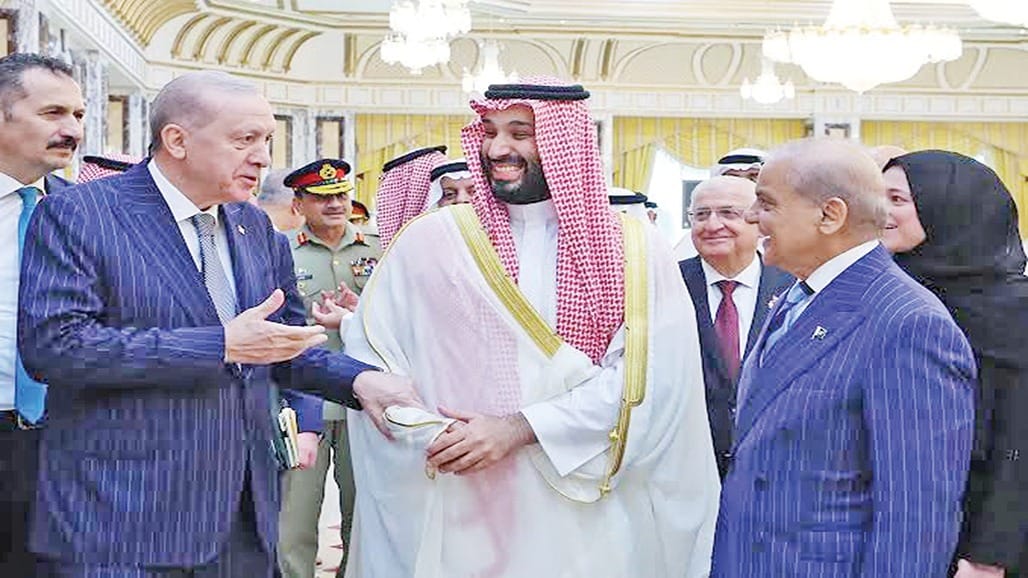
Saudi Arabia, Pakistan, and Turkey have signed the 'Mecca Pact,' a collective defense agreement stating that an attack on one is an attack on all. This strategic move could redefine security dynamics in West Asia and the broader Islamic world.
- Saudi Arabia, Pakistan, and Turkey have signed the Mecca Joint Defense Agreement (MJDA).
- The pact follows a collective defense principle similar to NATO's Article 5.
- Permanent headquarters will be in Saudi Arabia, with Pakistan leading the General Secretariat for the first 3 years.
- Bangladesh has already expressed interest in joining the alliance.
In a significant shift in West Asian geopolitics, Saudi Arabia, Pakistan, and Turkey have formalized a strategic military partnership known as the 'Mecca Pact.' Signed in the holy city of Mecca in early August, this agreement seeks to establish a collective security framework among Muslim-majority nations to counter rising regional instability and security threats.
The core of the agreement is its collective defense clause: an armed attack against any one member state will be considered an attack against all members. This language mirrors the North Atlantic Treaty Organization's (NATO) Article 5, suggesting that these nations are moving toward a structured, high-stakes military alliance rather than a loose cooperation agreement.
Why This Matters
BozokMedia analysis shows that this alliance creates a potent combination of financial power, conventional military hardware, and nuclear deterrence. Saudi Arabia brings immense capital and energy leverage; Turkey provides a sophisticated military-industrial complex and advanced UAV (drone) technology; and Pakistan contributes one of the world's largest armies and the strategic umbrella of being the only nuclear-armed state in the Islamic world.
The Mecca Pact represents a strategic pivot away from total reliance on Western security guarantees, signaling the rise of a multipolar security order in West Asia.
The motivations behind the pact are multifaceted. For Saudi Arabia, the goal is to diversify its security partnerships beyond the US, especially given the threats from Iran-backed proxies like the Houthis. For Turkish President Recep Tayyip Erdoğan, the pact serves his ambition to expand Turkey's influence across the Gulf and South Asia, promoting 'strategic autonomy' while remaining a NATO member.
From an Indian perspective, the pact introduces a new layer of complexity. The potential for Pakistan to leverage this collective defense shield during bilateral tensions with India is a point of concern. India will likely need to engage in high-level diplomacy with Riyadh and Ankara to ensure that the pact is not used to shield state-sponsored terrorism or interfere in South Asian stability.
| Country | Primary Contribution | Strategic Strength |
|---|---|---|
| Saudi Arabia | Financials / Oil Reserves | Economic Power & Religious Influence |
| Turkey | Conventional Army / Drones | Advanced Defense Industry |
| Pakistan | Nuclear Capability / Manpower | Nuclear Deterrence in the Muslim World |
The regional rivalry with Iran also looms large. With Turkey and Pakistan sharing borders with Iran, the Mecca Pact effectively creates a strategic containment ring. Despite US efforts to diminish Iranian influence, Tehran remains a potent force, and the MJDA provides Saudi Arabia with a more robust regional deterrent.
Frequently Asked Questions
1. Is the Mecca Pact intended to target a specific country?
Official statements from Turkey and Pakistan suggest the pact is focused on collective resistance against aggression and regional stability, rather than targeting a specific nation.
2. Where will the alliance be headquartered?
The member nations have decided to establish the permanent headquarters of the organization in Saudi Arabia.