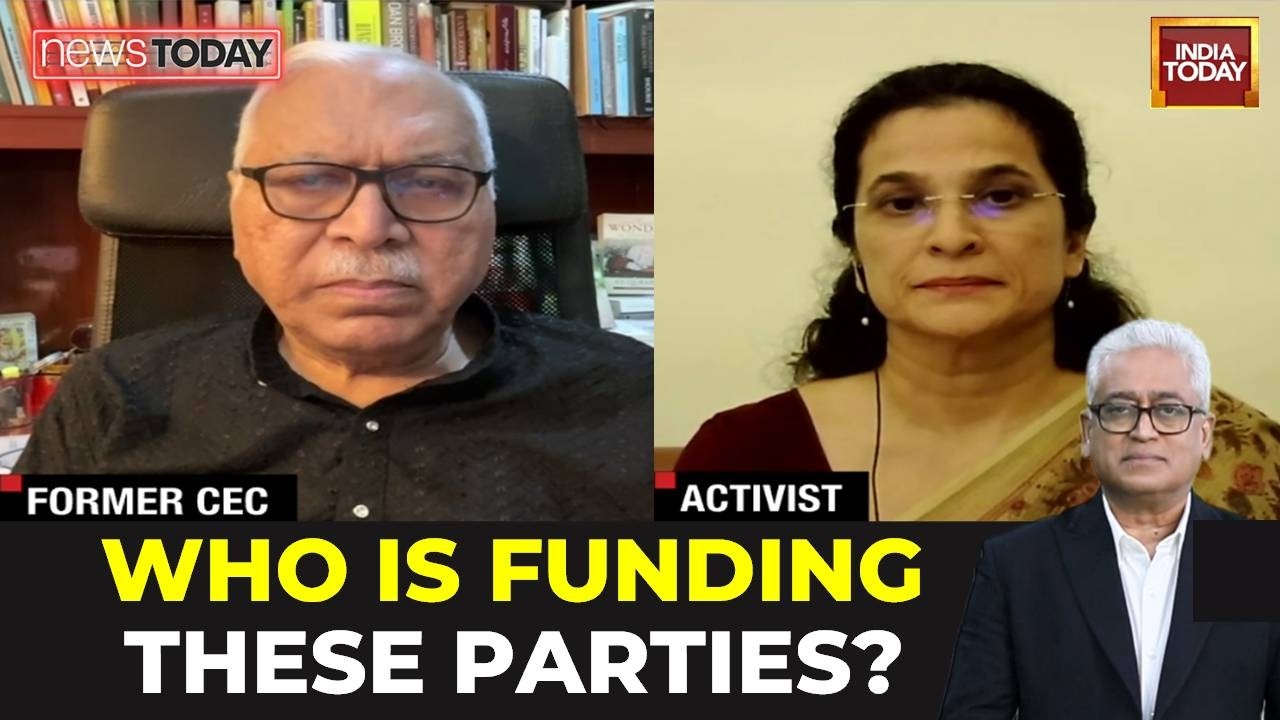
An investigation reveals that several unregistered political parties in Delhi, MP, and Bihar are collecting hundreds of crores in donations without having any physical offices or ground presence.
- Unrecognised parties in Delhi, MP, and Bihar collected hundreds of crores without operational presence.
- Rashtriya Vikas Party received ₹207.63 crore; its registered address is actually a dance school.
- Prabal Bharat Karti (Bihar) collected ₹103.84 crore despite having no physical office.
A massive loophole in India's electoral funding mechanism has been exposed. An investigation by India Today has uncovered a network of Registered Unrecognised Political Parties (RUPPs) across Delhi, Madhya Pradesh, and Bihar that exist only on paper but handle astronomical sums of money. These entities have collected hundreds of crores in donations, raising red flags regarding money laundering and systemic tax evasion.
The scale of the discrepancy is staggering. The Rashtriya Vikas Party reportedly received ₹207.63 crore over a five-year period. However, upon physical verification, the listed address in Delhi was found to be a dance school. The owner of the establishment denied any association or knowledge of the political outfit. Similarly, in Jabalpur and Delhi, residents at the addresses listed for the Bharatiya Jan Kranti Dal Democratic were completely unaware of the party's existence.
Why This Matters
BozokMedia analysis shows that these RUPPs are often utilized as conduits for 'round-tripping' funds. By exploiting the tax exemptions available to political parties, wealthy individuals and corporations can channel illicit funds into the political ecosystem, which then potentially flows back to them or into other opaque channels. This exposes a critical failure in the oversight powers of the Election Commission of India (ECI).
"The absence of physical infrastructure combined with massive financial inflows is a classic red flag for shell-company operations within the political sphere."
The investigation further highlighted Prabal Bharat Karti in Sitamarhi, Bihar, which gathered ₹103.84 crore in donations. Ground checks revealed a total absence of any physical party office or operational staff. This pattern suggests a coordinated effort to bypass financial regulations using the guise of political activism.
Historical Background
Historically, the Election Commission of India has focused on the registration and conduct of elections rather than the rigorous auditing of the physical existence of every registered party. With the proliferation of thousands of small, unrecognised parties, the administrative burden of verification has grown. This has created a 'blind spot' that opportunistic actors have exploited to create financial facades.
Frequently Asked Questions
Q1: What is a Registered Unrecognised Political Party (RUPP)?
A: These are parties registered with the ECI that have not yet met the specific criteria (like vote percentage or seat count) to be officially 'recognised'.
Q2: Why is this considered a money laundering risk?
A: Because these parties can be used to move large sums of unaccounted money under the veil of 'donations', which are often exempt from certain taxes.


