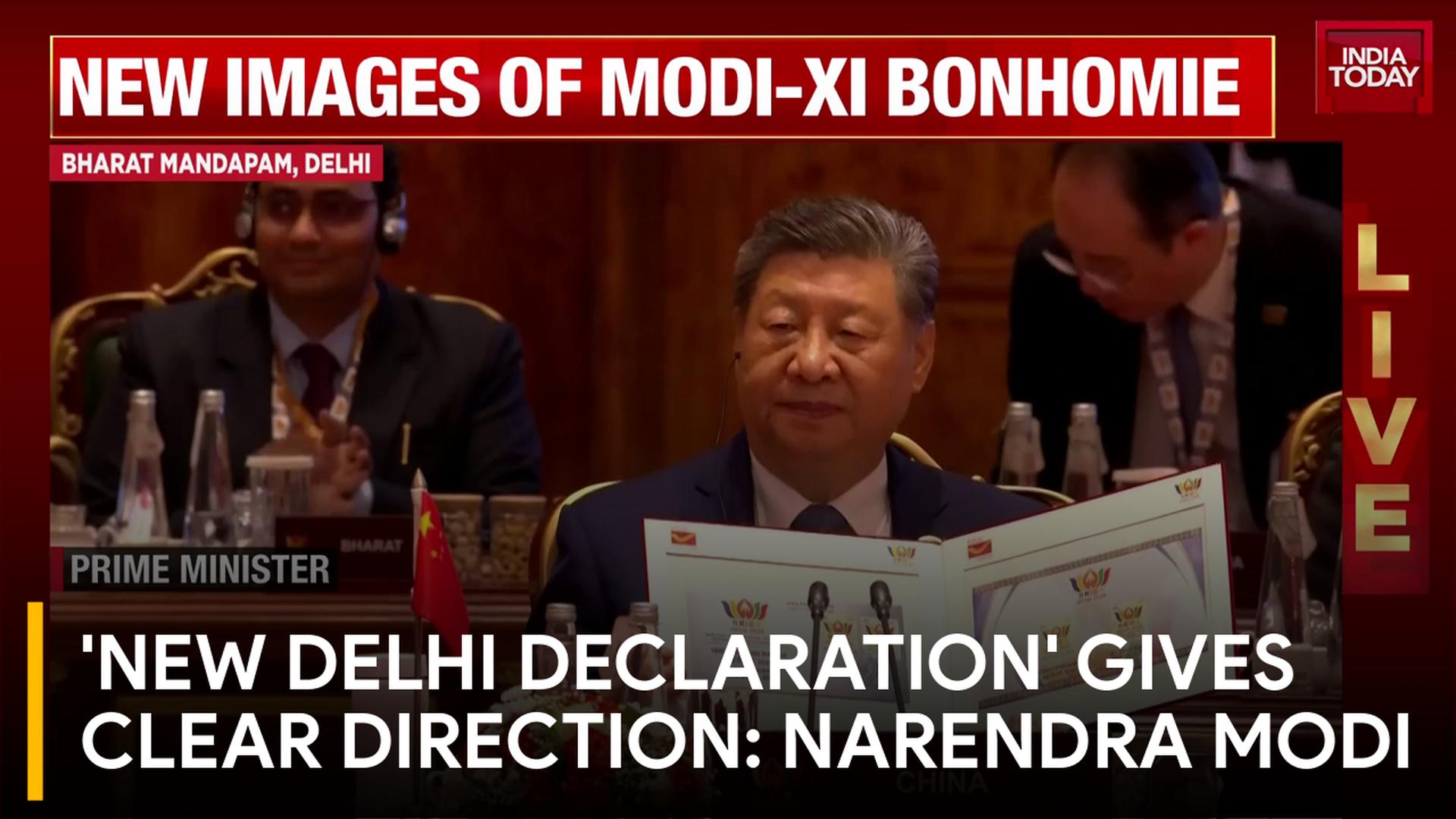
Prime Minister Narendra Modi has released two special India Post stamps to commemorate the 20th anniversary of BRICS, signaling India's pivotal role in the Global South.
- PM Modi launched two commemorative stamps marking two decades of BRICS.
- Former Ambassador Meera Shankar advocates for a 'Non-Western' rather than 'Anti-Western' BRICS.
- India seeks to amplify developing nations' voices while preventing Chinese hegemony.
Prime Minister Narendra Modi has officially launched two commemorative India Post stamps to mark the 20th anniversary of the BRICS alliance. This gesture underscores India's long-term commitment to the bloc and its desire to celebrate the collective growth of the emerging economies that comprise the group.
Providing a strategic critique of the summit's implications, former Indian Ambassador to the United States, Meera Shankar, emphasized that India's vision for BRICS is to remain a "non-Western group rather than an anti-Western group." This distinction is critical for India's strategic autonomy, allowing it to engage with the Global South without alienating its strategic partners in the West.
Why This Matters
BozokMedia analysis shows that India is playing a sophisticated game of geopolitical hedging. By promoting local currency trade settlements over the wholesale adoption of the Chinese Yuan, India is protecting its economic sovereignty while simultaneously challenging the absolute hegemony of the US dollar. This approach ensures that BRICS remains a pluralistic forum.
"India must maintain a strategic balance to provide developing nations a stronger voice in global governance without enabling Chinese dominance."
Regarding the fragile state of India-China relations, Shankar noted that upcoming bilateral talks between PM Modi and President Xi Jinping are essential. However, she warned that stability will remain elusive unless there is substantive progress on unresolved border disputes and a correction of the critical trade imbalance between the two Asian giants.
Historical Background
Founded as an acronym for Brazil, Russia, India, and China, BRICS later expanded to include South Africa. Over the last 20 years, the bloc has evolved from a mere economic concept into a formidable political entity that challenges the traditional G7-led world order, advocating for a multipolar world.
Frequently Asked Questions
1. What is the difference between a 'Non-Western' and 'Anti-Western' group?
A 'Non-Western' group focuses on its own identity and interests without necessarily opposing the West, whereas an 'Anti-Western' group defines itself by its opposition to Western values and policies.
2. Why is the trade imbalance with China a concern?
The massive trade deficit indicates a dependency on Chinese imports, which India seeks to reduce to bolster its own domestic manufacturing (Atmanirbhar Bharat).


