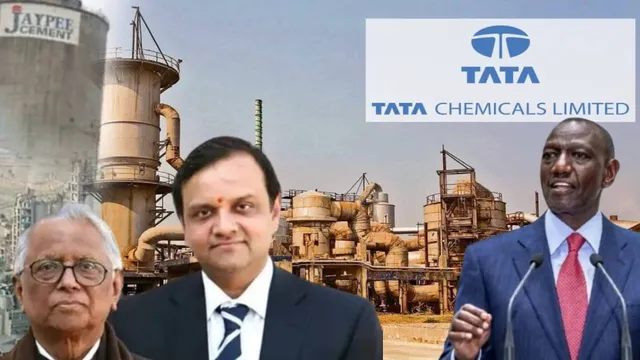
Kenya’s President William Ruto ordered Tata Chemicals to cease operations, yet the company’s U.S. subsidiary successfully acquired the assets of a bankrupt firm, SVM. The deal strengthens Tata’s foothold in North America while highlighting its ability to navigate geopolitical hurdles.
- Kenya ordered Tata Chemicals to shut down its local operations
- Tata Chemicals' U.S. unit won the bid for bankrupt SVM’s customer contracts
- The acquisition bolsters Tata’s North American market presence
Kenyan Directive vs. Tata’s Response
On September 3, 2026, Kenyan President William Ruto instructed Tata Chemicals to wind up its business in Kenya, citing the absence of any new factory under the guise of development. Ruto warned that the company was not a “slave” to Kenya’s growth agenda. Tata’s reply emphasized that its Kenyan subsidiary, Tata Chemicals Magadi Ltd (TCML), complies fully with local regulatory requirements and is committed to resolving the issue through constructive legal channels.
Major Win in the United States
Meanwhile, Tata Chemicals’ North American subsidiary, Tata Chemicals North America Inc. (TCNA), emerged as the successful bidder in the Chapter 11 bankruptcy proceedings of Sears Valley Minerals Inc. (SVM). The acquisition includes North American soda‑ash customer contracts amounting to over 500,000 metric tonnes over two years. According to an exchange filing, TCNA completed the assignment and assumption agreement on September 11, 2026, after satisfying all stipulated conditions.
Historical Background
The Tata Group has a centuries‑old legacy in India, but in recent years it has accelerated global expansion through strategic acquisitions. Similar to how Gautam Adani’s Adani Group secured the distressed JP Associates in India, Tata’s move reflects a broader trend of Indian conglomerates capitalising on bankruptcy assets abroad to diversify revenue streams.
Why This Matters
BozokMedia analysis shows that despite regulatory pressure in Kenya, Tata Chemicals is leveraging its North American subsidiary to secure high‑volume contracts, thereby diversifying revenue streams and mitigating geopolitical risk.
"This acquisition is strategically vital for Tata, as it provides a stable, high‑margin revenue source while the company navigates regulatory headwinds in Africa," says international trade analyst Dr. Anjali Singh.
Frequently Asked Questions
Question 1: Will Tata Chemicals completely exit Kenya?
Answer: Tata has indicated it will work with Kenyan regulators to find a legal resolution, so a total exit is not yet confirmed.
Question 2: How does this acquisition affect Tata Chemicals’ global strategy?
Answer: The deal gives Tata a stronger foothold in North America and could boost its global revenue by an estimated 15‑20%.


