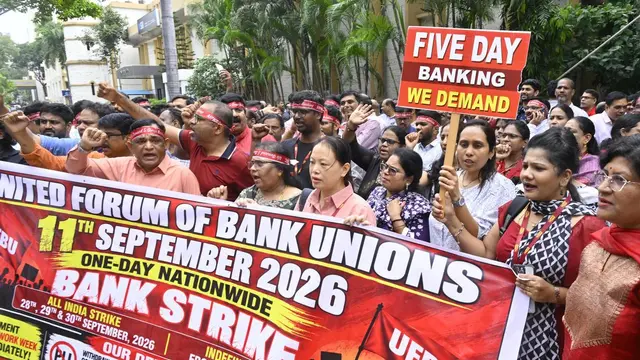
Millions of bank employees across India have launched a massive strike to protest against the privatization of public sector banks and the withdrawal of employee benefits. The movement aims to safeguard the banking system for the common man.
- Massive strike led by the United Forum of Bank Unions (UFBBU).
- Protests against privatization, mergers, and the 5-day work week model.
- Demands for pension reforms and restoration of Performance Linked Incentive (PLI).
- Concerns over the widening gap between corporate loan waivers and common man's debt recovery.
The Indian banking sector is witnessing a monumental wave of unrest as millions of employees and officers have joined a nationwide strike. Organized by the United Forum of Bank Unions (UFBBU), which represents nine major unions, the agitation is set to escalate from a three-day strike (September 28-30) to an indefinite strike starting October 26.
At the heart of this movement is a struggle against the systemic changes being pushed by the government, including the privatization of Public Sector Banks (PSBs) and large-scale mergers. While proponents argue that mergers create larger, more efficient entities, employees argue that this often leads to branch closures in rural areas and a decline in service quality due to staff shortages.
Why This Matters
BozokMedia analysis shows that this strike is not merely about wages or holidays; it is a fundamental debate over the soul of India's economy. Public sector banks act as the backbone for farmers, small traders, and students. If these institutions are handed over to corporate interests, the focus may shift from social welfare and financial inclusion to pure profit maximization, leaving the vulnerable segments of society behind.
The banking system must remain a tool for public service rather than a playground for corporate profit.
A significant point of contention raised by the strikers is the staggering disparity in loan treatment. Data reveals that between 2015-16 and 2023-24, approximately ₹12.3 lakh crore in loans were waived, with public sector banks accounting for ₹6.15 lakh crore of that amount. Protesters highlight the irony: while massive corporate debts are forgiven, ordinary citizens face harsh penalties and asset seizures for minor delays.
Furthermore, the trend of replacing permanent staff with contract, outsourcing, and fixed-term employees is raising alarms. Experts suggest that this erosion of job security will ultimately compromise the long-term stability and expertise within the banking workforce.
Frequently Asked Questions
1. How will the strike affect daily banking operations?
Customers may experience delays in check clearances and branch-level transactions during the strike periods.
2. What are the primary demands of the bank unions?
The unions are demanding an end to privatization, pension reforms, and the protection of employee benefits like the PLI scheme.