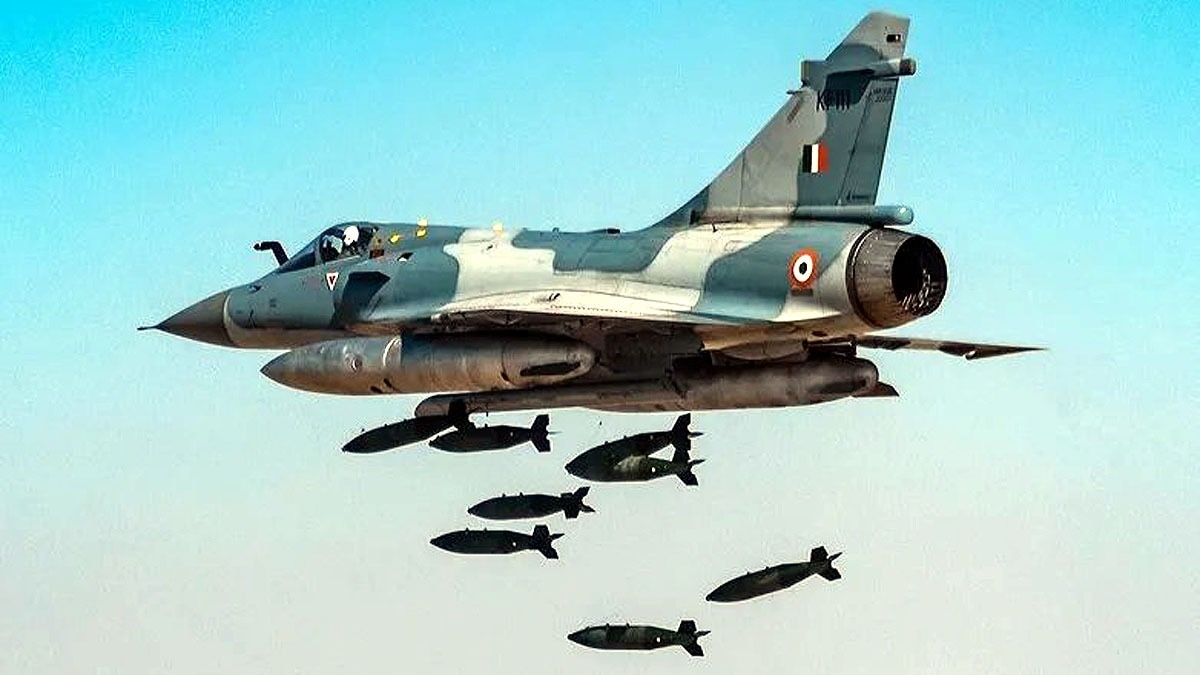
The Ministry of Defence's Annual Report 2025-26 details the high-stakes 'Operation Sindoor,' where the Indian Air Force neutralized terror infrastructure in Pakistan following the Pahalgam attack.
- Operation Sindoor was launched on May 6-7, 2025, in response to the Pahalgam terror attack.
- The IAF conducted precision strikes on terror camps in Muridke and Bahawalpur.
- Advanced systems like S-400 and Shaurya successfully neutralized Pakistani drones and aircraft.
- Key military assets, including F-16s and airbases in Sargodha, were heavily damaged.
The Ministry of Defence (MoD) Annual Report 2025-26 has provided a comprehensive breakdown of 'Operation Sindoor,' a critical military operation executed by the Indian Air Force (IAF). This operation was a direct consequence of the tragic terror attack in Pahalgam, Jammu & Kashmir, on April 22, 2025, where 26 innocent tourists were killed by 'The Resistance Front,' an affiliate of Lashkar-e-Taiba. Following Pakistan's refusal to take responsibility, India launched a decisive retaliatory strike on the night of May 6-7, 2025.
The primary objective of the mission was to dismantle terror infrastructure located within Pakistan and Pakistan-Occupied Kashmir (PoK). The IAF utilized long-range precision-guided munitions to strike nine identified terror hubs, including major facilities in Muridke and Bahawalpur. These sites served as vital centers for recruitment, training, and operational planning for terrorist organizations.
Why This Matters
BozokMedia analysis shows that Operation Sindoor marked a significant shift in India's strategic doctrine, moving from tactical deterrence to proactive neutralization. By targeting command centers and airfields with surgical precision, India demonstrated its ability to conduct high-intensity operations while strictly avoiding collateral damage to civilian infrastructure.
The IAF's integration of indigenous technology and advanced missile systems redefined air superiority in the region.
In response to the strikes, Pakistan attempted to escalate the conflict by launching drone and missile attacks against Indian military installations in Punjab, Rajasthan, and Jammu & Kashmir. However, India's Integrated Air Command and Control System (IACCS) proved impenetrable. The deployment of the S-400 missile system and the indigenous Shaurya platform allowed the IAF to intercept and destroy multiple Pakistani UAVs and aircraft, maintaining absolute air superiority.
The strategic impact on the Pakistan Air Force (PAF) was profound. On May 10, 2025, successful strikes on hangars in Yakobabad resulted in the destruction of several F-16 fighter jets and advanced Unmanned Combat Aerial Vehicles (UCAVs). Furthermore, runway strikes in Sargodha and Rahim Yar Khan severely crippled the PAF's operational readiness, echoing the tactical precision seen in historical conflicts.
Frequently Asked Questions
1. What was the catalyst for Operation Sindoor?
The operation was launched as a retaliatory measure against the terrorist attack in Pahalgam that claimed 26 lives.
2. Which air defense systems were used by India?
India utilized the S-400 missile system, the Shaurya platform, and the indigenous Akash missile system.