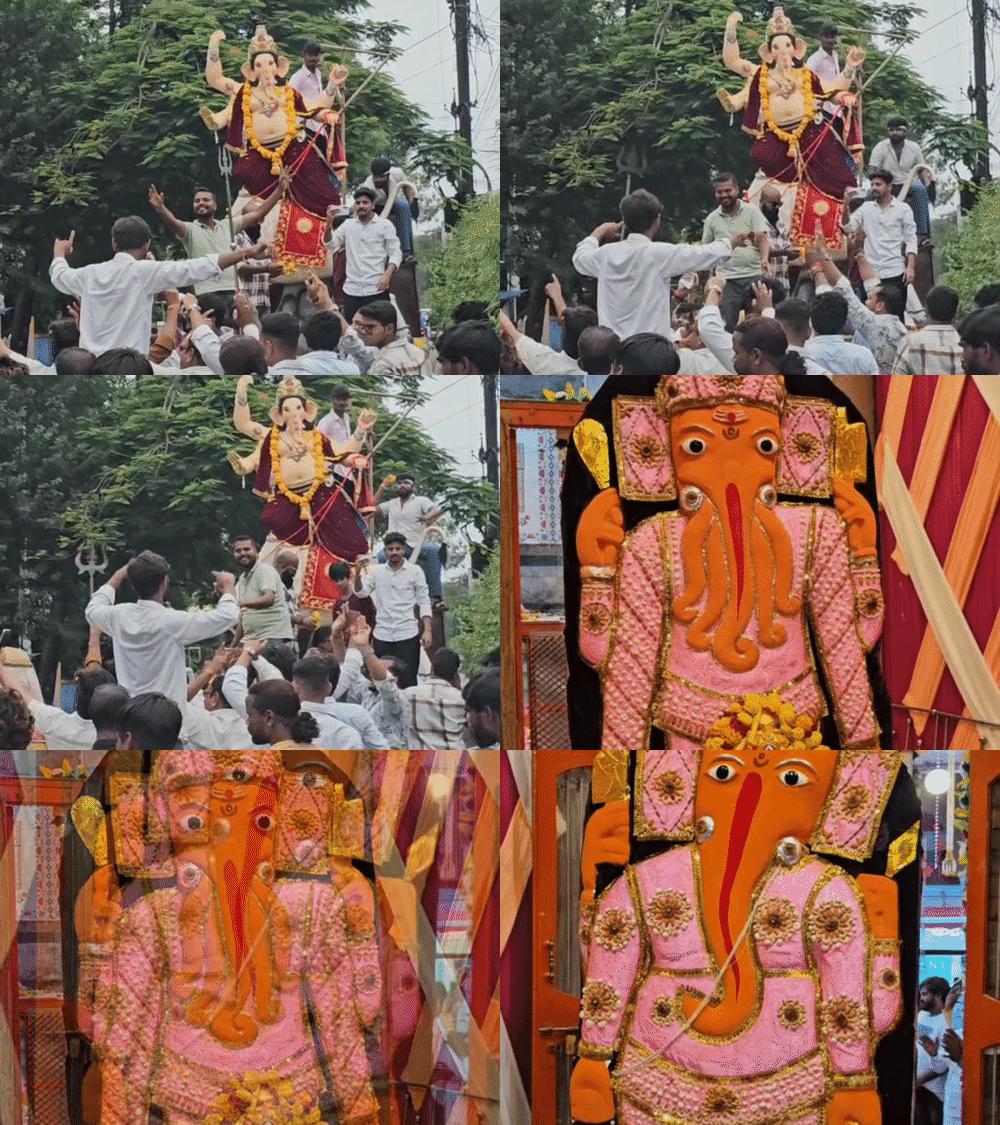
The Chintaharan Ganpati Temple in Mandsaur features a rare 8-foot dual-faced idol, showcasing the Panchmukhi form on one side and the traditional 'Seth' form on the other.
- The Chintaharan Ganpati Temple in Mandsaur houses a rare 8-foot dual-faced idol.
- One side features the Panchmukhi (five-faced) form, while the other depicts Ganesha as a 'Seth' wearing a traditional turban.
- The idol was discovered in a local pond in 1929.
- A 12-day celebration including grand Maha-Aarti is currently underway for Ganesh Chaturthi.
A profound spiritual phenomenon is unfolding in Mandsaur, Madhya Pradesh, as the city celebrates Ganesh Chaturthi. At the historic Ganpati Chowk, the Chintaharan Ganpati Temple has become the epicenter of devotion, drawing crowds to witness its extraordinary 8-foot-tall dual-faced idol.
The uniqueness of this idol lies in its dual manifestation carved from a single stone. According to Narendra Agrawal, Vice President of the Temple Trust, the deity is positioned according to the North-South axis. On the North side, devotees behold the Panchmukhi (five-faced) form of Lord Ganesha, characterized by five trunks and four arms. Conversely, the South side presents the deity in a regal 'Seth' (merchant) avatar, adorned with a traditional turban, earning it the name 'Seth Ganesh.'
Historical Background and Divine Intervention
The history of this idol is steeped in local legend and divine mystery. Records indicate that the statue was unearthed from a pond near the Nahar Sayyad Dargah in 1929. Legend has it that when devotees attempted to transport the idol to Narsinghpura via bullock cart, the vehicle mysteriously refused to move once it reached the current location at Ganpati Chowk. Interpreting this as a divine sign that the deity wished to reside there, the community established the temple at that very spot.
The dual-faced Ganesha of Mandsaur is not just a religious icon but a masterpiece of ancient stone craftsmanship that bridges mythology and reality.
Why This Matters: A Global Spiritual Hub
BozokMedia analysis shows that the rarity of this specific iconography—combining the Panchmukhi and Seth forms in a single monolith—is what elevates this temple from a local shrine to a site of international interest. The ability of the deity to embody both the powerful, multi-faceted cosmic protector and the benevolent, prosperous merchant makes it a unique destination for pilgrims seeking various blessings.
The influx of devotees is not limited to Madhya Pradesh; the temple has successfully attracted tourists and spiritual seekers from across India and even from abroad, all drawn by the aura of 'Chintaharan'—the remover of anxieties.
12 Days of Grand Festivities
To mark the auspicious occasion of Ganesh Chaturthi, the temple committee has organized a 12-day religious extravaganza. This includes daily Maha-Aarti at 8:00 PM, elaborate Havan (fire rituals), and special pujas. The atmosphere in Mandsaur remains electric as thousands gather to seek the blessings of the dual-faced Lord.
Frequently Asked Questions
1. What makes the Mandsaur Ganesha idol unique?
It is an 8-foot dual-faced idol where one side shows the Panchmukhi form and the other shows Ganesha in a traditional 'Seth' attire.
2. When was the idol discovered?
The idol was discovered in a pond in Mandsaur in the year 1929.