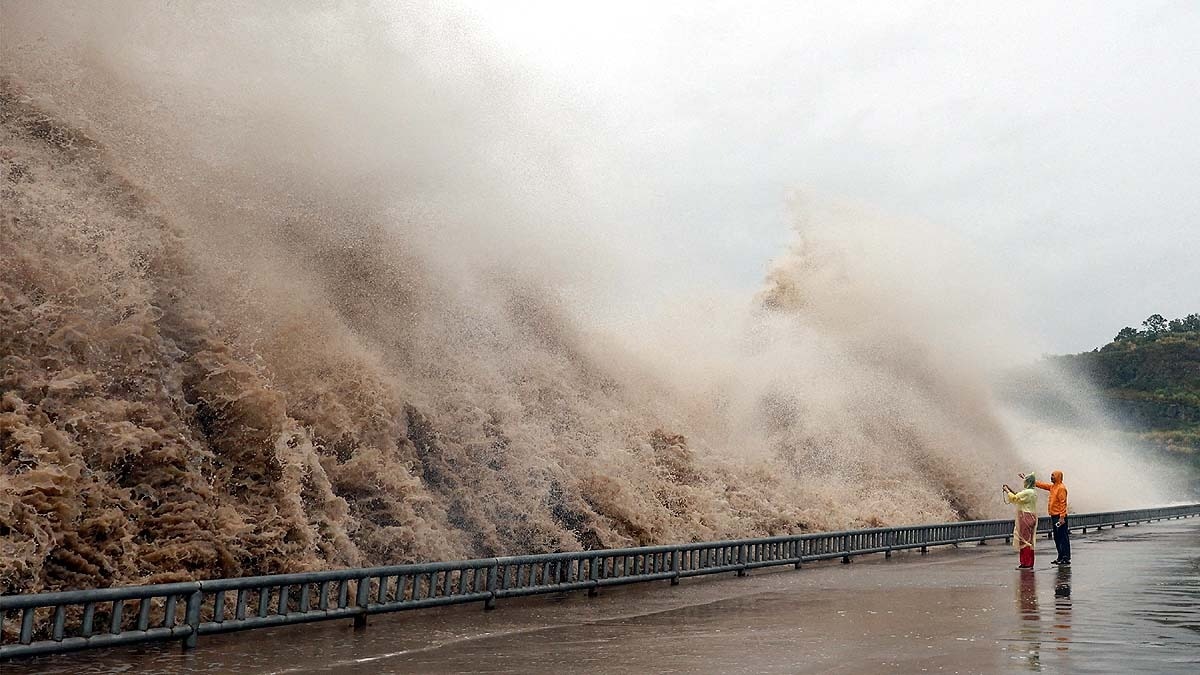
The 'Dolphin' cyclone approaching China's eastern coast has led to the cancellation of 1,300 flights in Shanghai and the relocation of more than 300,000 people to safe shelters. Winds reaching up to 162 km/h threaten widespread flooding and maritime hazards.
Key Takeaways
- 1,300 flights canceled
- Over 300,000 residents relocated
- Wind speeds up to 162 km/h
The 'Dolphin' cyclone swirling off the eastern coast of China has unleashed heavy rain and gale‑force winds across Zhejiang’s Hangzhou region. In response, Shanghai’s major airports have suspended roughly 1,300 flights, creating significant travel disruptions.
Authorities have launched large‑scale emergency measures. Market stalls in Hangzhou are removing awning roofs, unsecured items are being cleared, and about 390,000 people have been moved to temporary shelters in the Taizhou area. At sea, more than 500 vessels have been redirected to safe harbors from Shanghai’s Yangshan Port to avoid damage from high waves.
The meteorological bureau has issued alerts for up to 500 mm of rainfall in several districts of Zhejiang and Fujian. Such intense precipitation threatens flash flooding, water‑logging in low‑lying zones, and landslides in mountainous regions.
Why This Matters
BozokMedia analysis shows that the disruption of over a thousand flights and mass evacuation underscore the growing economic and humanitarian impact of climate‑intensified cyclones on China’s coastal megacities.
"Such high‑velocity cyclones are becoming more frequent, demanding robust infrastructure and early‑warning systems," says Dr. Li Wei, senior meteorologist at the Chinese Academy of Sciences.
Frequently Asked Questions
Q1: Which regions are most affected?
A: Zhejiang’s Hangzhou, Fujian’s coastal districts, and Shanghai’s airports have borne the brunt of the storm.
Q2: Are there new plans to mitigate future cyclones?
A: The government has announced upgrades to emergency response protocols and stricter maritime safety standards.