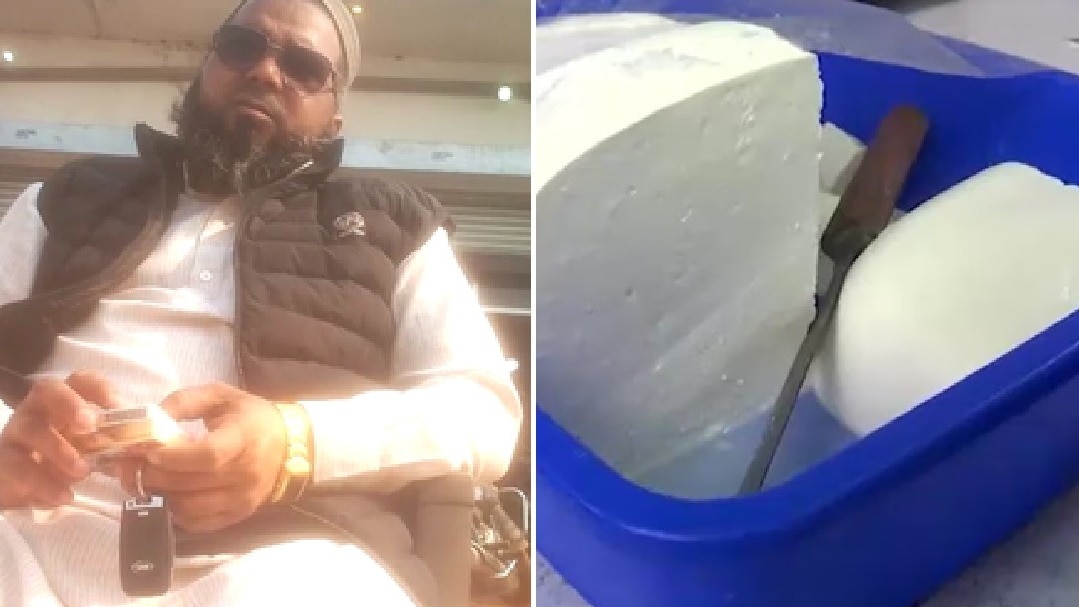
An exclusive sting operation by Aaj Tak has exposed a massive racket of 'Analog Paneer' being sold as dairy. Made from vegetable oils and chemicals, this fake cheese poses a severe health risk.
Key Takeaways
- 'Analog Paneer' is being sold extensively under the guise of real dairy paneer.
- It is manufactured using vegetable oils, starch, and dangerous chemicals.
- States like Maharashtra, Gujarat, and Chhattisgarh have banned Analog Paneer.
- Mewat, Shamli, and Baghpat have emerged as major hubs for food adulteration.
When you order a Paneer Butter Masala at a restaurant, are you consuming nutrition or slow-acting poison? An exclusive sting operation by Aaj Tak has unmasked a dark industry producing 'Analog Paneer.' This fraudulent product is designed to look identical to real dairy paneer, making it nearly impossible for an unsuspecting consumer to distinguish between the two.
Understanding the Three Types of Paneer
To protect your health, it is crucial to understand the distinction between the products currently flooding the market:
| Type of Paneer | Primary Ingredients | Health Impact |
|---|---|---|
| Dairy Paneer | Pure Milk | Nutritious & Healthy |
| Tofu | Soy Milk | Healthy Alternative |
| Analog Paneer | Oil, Starch, Chemicals | Highly Dangerous |
Analog Paneer is not a dairy product at all. It is a laboratory-engineered substitute made from a cocktail of vegetable oils, starch, emulsifiers, and stabilizers. While it mimics the texture of cheese, it lacks any nutritional value and contains substances that are harmful to human biology.
Why This Matters
BozokMedia analysis shows that the adulteration network is highly organized and deeply embedded in the supply chain. The sting revealed that Mewat in Haryana serves as a primary manufacturing hub, where 'Ragdu Paneer' is produced for as low as ₹80 per kg. Furthermore, Shamli and Baghpat in Uttar Pradesh are reportedly supplying fake milk made with soda and adulterated 'Khoya' made using soapstone (French chalk).
The consumption of analog proteins and chemically altered fats is a silent epidemic that targets the digestive and hepatic systems of the population.
While progressive states like Maharashtra, Chhattisgarh, and Gujarat have implemented strict bans on Analog Paneer, the lack of a uniform national ban by FSSAI allows this trade to persist across borders.
Historical Background
Food adulteration has been a recurring challenge in India, but the evolution from simple additives (like water or dyes) to complex 'Analog' products represents a dangerous technological shift in criminal manufacturing, aiming for maximum profit with minimum cost.
Frequently Asked Questions
1. What are the health risks of Analog Paneer?
The use of industrial-grade oils and stabilizers can lead to cardiovascular issues, digestive disorders, and long-term metabolic damage.
2. How can I check for purity at home?
Real paneer has a distinct milky aroma and a soft, slightly springy texture, whereas analog paneer may feel overly rubbery or have a waxy residue.