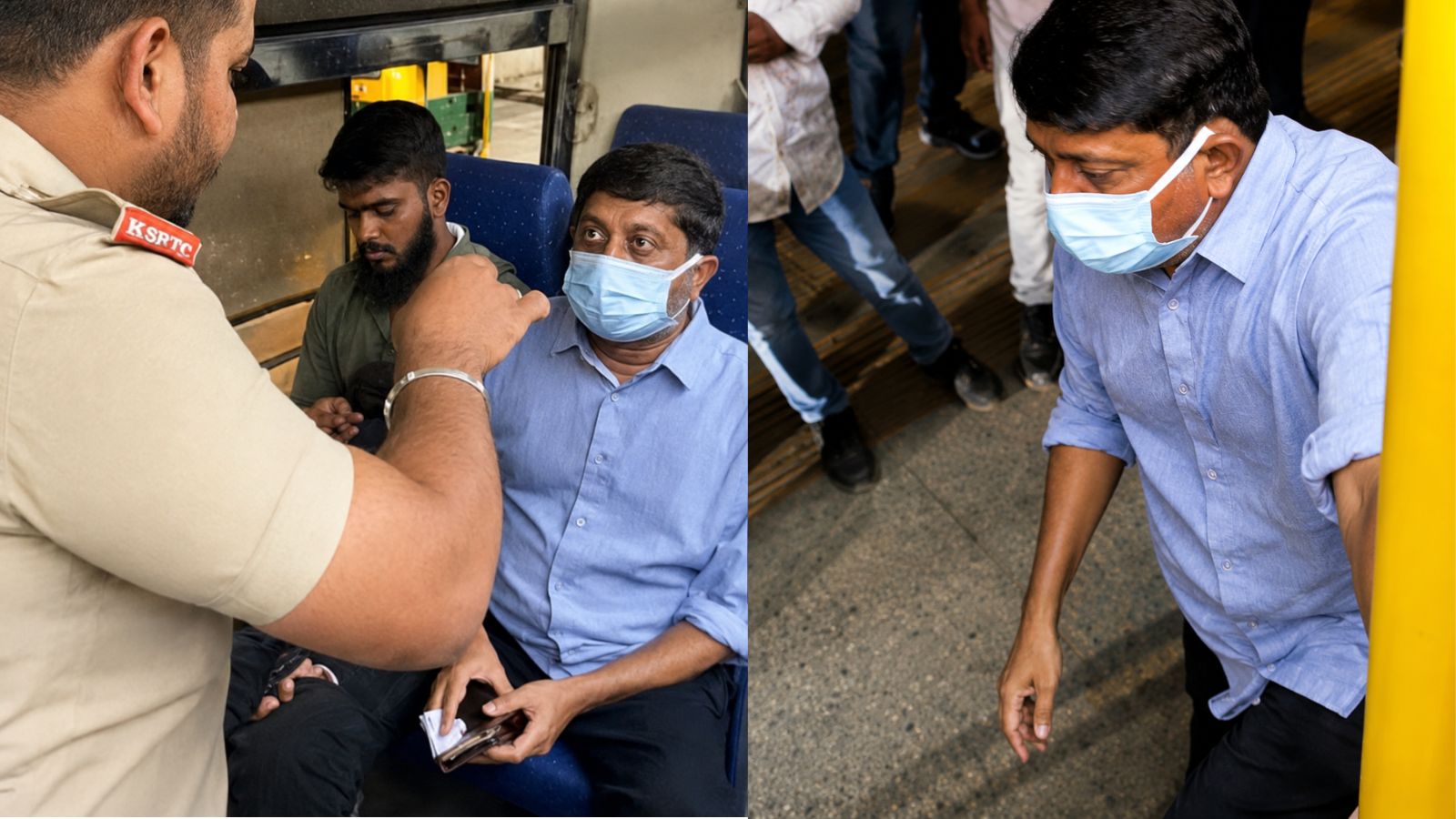
Newly appointed Karnataka Transport Minister Byrathi Suresh went undercover on a BMTC bus, only to be asked to get off when he couldn't provide exact change. The incident spotlights everyday commuter frustrations in Bengaluru’s public transport system.
Key Takeaways
- Minister Byrathi Suresh rode a BMTC bus incognito
- Conductor asked him to disembark for not having exact change
- Minister’s broader undercover sweep revealed further fare‑hiking and driver misconduct
Karnataka’s newly inducted Transport Minister Byrathi Suresh decided to experience the city’s commuter woes first‑hand by boarding a BMTC bus under a mask. On a Saturday night, he boarded a route from Hebbal to Nagashettihalli, bought two tickets and handed the conductor a Rs 100 note. The conductor demanded the exact fare of Rs 12, opened his cash pouch to prove he had no small change, and told the masked minister to step down at the next corner if he could not pay the precise amount.
Why the Stunt?
The minister’s covert ride was not a publicity stunt but a deliberate effort to gauge everyday grievances such as lack of exact change, over‑charging by auto‑rickshaws, and driver indiscipline. By masking his identity, Suresh ensured the conductor’s reaction was genuine, a tactic increasingly used by policymakers worldwide to bridge the gap between legislation and lived reality.
Extended Ground‑Level Inspection
According to BMTC officials, the incident formed part of a larger, unannounced weekend sweep. Between 7:10 pm and 9:10 pm, the minister traversed key Bengaluru zones—Jayamahal, TV Tower, RT Nagar, CBI Road, Hebbal, Manyata Tech Park, Nagawara, Hennur, Hennur Bande, Byrathi Bande, and Geddalahalli—scrutinising bus operations and crew behaviour. In one notable observation, he saw a driver speed past the Fun World stop, ignoring a flagging passenger. Suresh immediately ordered senior transport officials to suspend the driver, Mustaq, and conductor, Dayanand, for violating scheduled‑stop protocols.
Auto‑Rickshaw Overcharging Exposed
After being asked to alight, the minister took a brief auto‑rickshaw ride from Nagashettihalli. The meter displayed Rs 30, yet the driver demanded Rs 36, later claiming the meter needed recalibration. Suresh eventually paid Rs 40, underscoring a common commuter complaint of arbitrary fare hikes.
Implications for Policy
BMTC has launched an inquiry into the conductor’s conduct, while the driver‑conductor suspension is being contested on the grounds that the passenger’s location was not an authorized stop. The episode underscores the urgent need for systematic reforms—digital payment integration, regular meter calibration, and stricter driver training—to alleviate commuter friction. Minister Suresh’s undercover exercise may become a template for future policy audits, ensuring that ground‑level realities shape legislative action.
