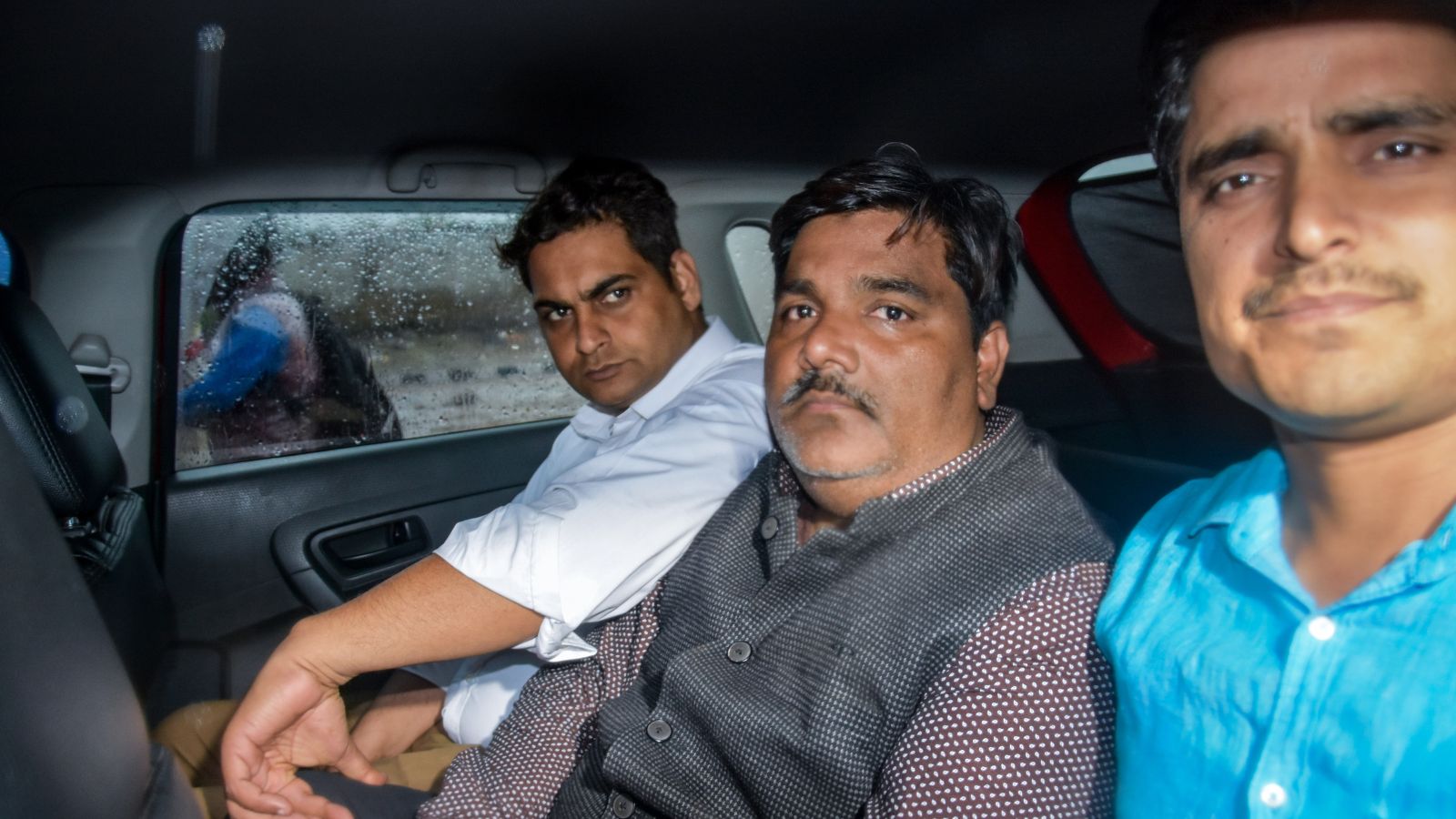
The trial court relied on prosecution witness Pradeep Verma’s testimony to convict four accused, including Tahir Hussain, while two others were acquitted due to insufficient corroboration. The ruling underscores the pivotal yet contested role of the witness in the 2020 riots case.
मुख्य बिंदु (Key Takeaways)
- Key witness Pradeep Verma’s testimony led to convictions of four accused
- Two defendants were acquitted because the testimony was deemed insufficient
- The court examined credibility, identification errors, and timing of arrests
On July 15, 2026, a Delhi trial court delivered a landmark judgment in the aftermath of the February 25, 2020 riots that claimed the life of IB officer Ankit Sharma. The court deemed prosecution witness Pradeep Verma—a parking‑lot operator from Khajuri Khas—as a “natural and truthful” witness, using his statements as the linchpin to convict four individuals, while dismissing the same testimony for two others.
Background and Witness Profile
Verma had already been listed as a prosecution witness in nine other riot‑related FIRs, yet the defence argued that his illegal parking‑lot business made him vulnerable to police pressure, casting doubt on his impartiality. Verma refuted these claims, insisting his testimony was given voluntarily. Initially, he denied seeing Tahir Hussain in the mob, but later testified that around 3 p.m. he felt Hussain was near Chand Bagh Pulia, though he did not directly observe him amidst the crowd.
Convictions Based on Verma’s Statements
The court examined seven prosecution eyewitnesses, discarding two police witnesses for lack of credibility. Verma’s identification of Nazim (carrying a knife) and Kasim as mob participants, despite a prior mis‑identification of another accused, Hassan, was deemed sufficient. Similarly, Javed was convicted after the court concluded that the earlier discharge of a case involving Verma did not undermine his credibility, as the law requires “two or more witnesses” for conviction.
Acquittals and Evidentiary Gaps
For Firoz, the court found Verma’s testimony “creates a serious doubt” because Firoz alleged personal motives behind the false accusation, and Verma’s earlier statement in a separate FIR contradicted his claim of not knowing Firoz. Consequently, the court ruled it unsafe to convict solely on Verma’s word. Muntazim alias Musa faced a similar fate; his identification came more than two years after the incident, and the delayed arrest eroded confidence, prompting an acquittal.
Legal Implications and Future Outlook
This judgment highlights the delicate balance Indian courts must strike between leveraging a single eyewitness and ensuring that identification is corroborated by independent evidence. While four defendants received sentences for rioting and murder, the acquittals signal a warning to prosecutors: reliance on one witness without additional corroboration may not survive rigorous judicial scrutiny. The decision may prompt future investigations to secure multiple, consistent testimonies before pursuing severe charges.