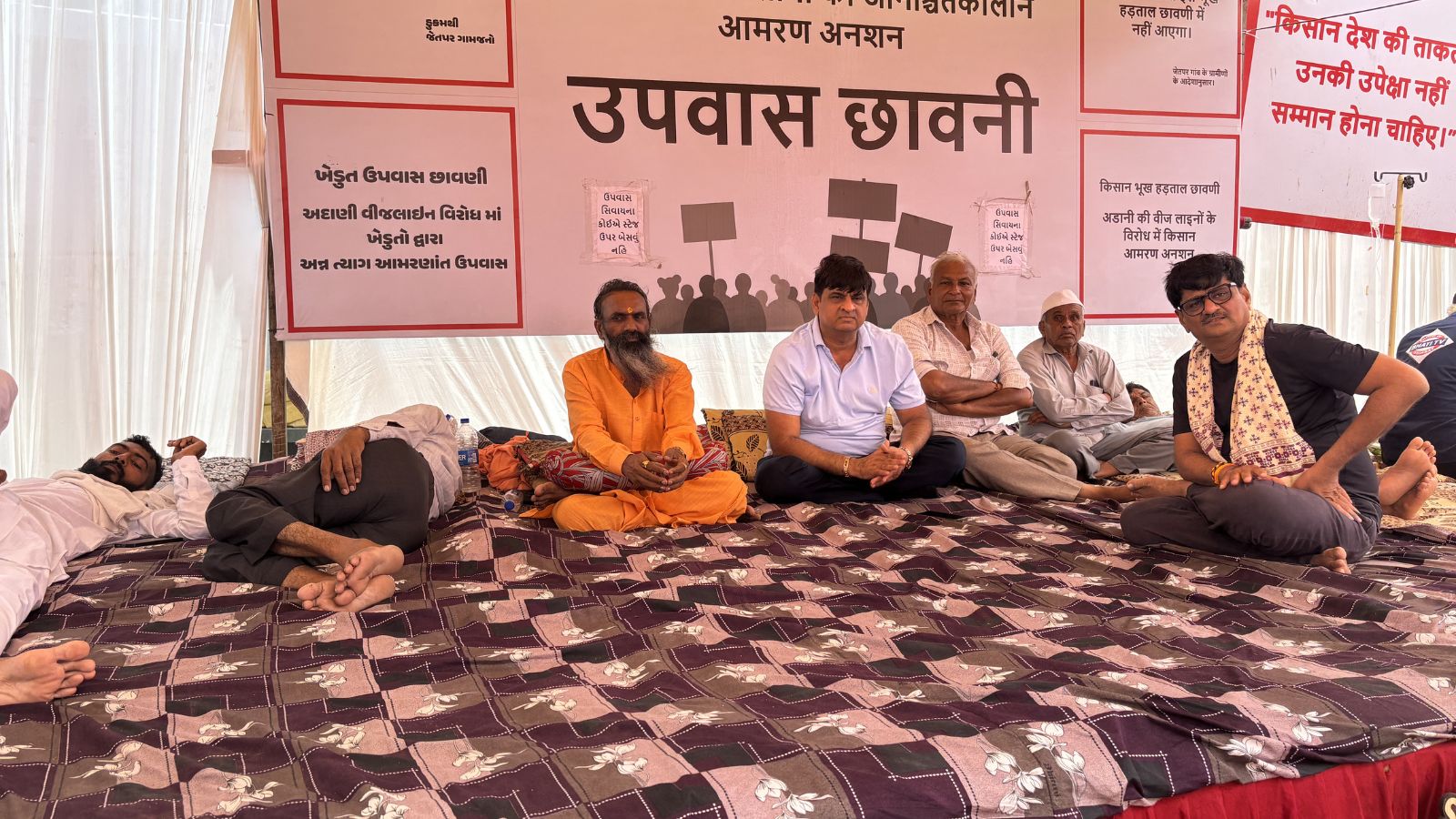
Farmers from over 300 villages in Gujarat’s Morbi district marched 3.5 km to the district collector’s office, demanding 400 % compensation or rent for land affected by a proposed 756 kV transmission line. The protest targets a project led by a special purpose vehicle of Adani Energy Solutions.
मुख्य बिंदु (Key Takeaways)
- Morbi farmers demand 400% compensation or rent
- Protest against a 756 kV transmission line in Jetpar
- July 4 government resolution declared invalid by protesters
On Tuesday, a massive foot march began in Morbi, Gujarat, with men and women from more than 300 villages walking a 3.5‑kilometre route from Mahendranagar Chokdi to the district collector’s office. The coordinated padayatra underscores a growing discontent among farmers over a proposed high‑voltage transmission line.
Core Demands and Legal Framework
The protesting farmers seek a 400 % compensation or monthly rent for the installation of a 756 kV double‑circuit line by Halvad Transmission Limited, a special purpose vehicle of Adani Energy Solutions Ltd. Citing Section 10(d) of the Telegraph Act, they argue for “minimum loss and full compensation” for land, crops and orchard trees affected by the project.
Government Resolution and Farmer Opposition
On July 4, the Gujarat Energy and Petrochemicals Department issued a Government Resolution (GR) offering double the current market price (200 %) for the laying of transmission towers and cables. Farmers denounced the circular as “invalid” and “unacceptable,” claiming it favours the company and ignores the real market value of agricultural land.
Protest Dynamics and Organizational Strategy
Earlier, the farmers in Jetpar had called off an indefinite hunger strike but later announced a “satyagrah” as the third phase of their protest. They plan to form committees at district, taluka and gram panchayat levels to sustain the agitation and to negotiate directly with the collector.
Potential Outcomes and Wider Implications
If the state government does not amend the resolution, the farmers have hinted at legal recourse, demanding that the transmission company bear all damage costs, obtain accident insurance, and remove the line after 25 years at its own expense. This standoff could set a precedent for future infrastructure projects across Gujarat, pushing for greater transparency and farmer‑friendly compensation mechanisms.