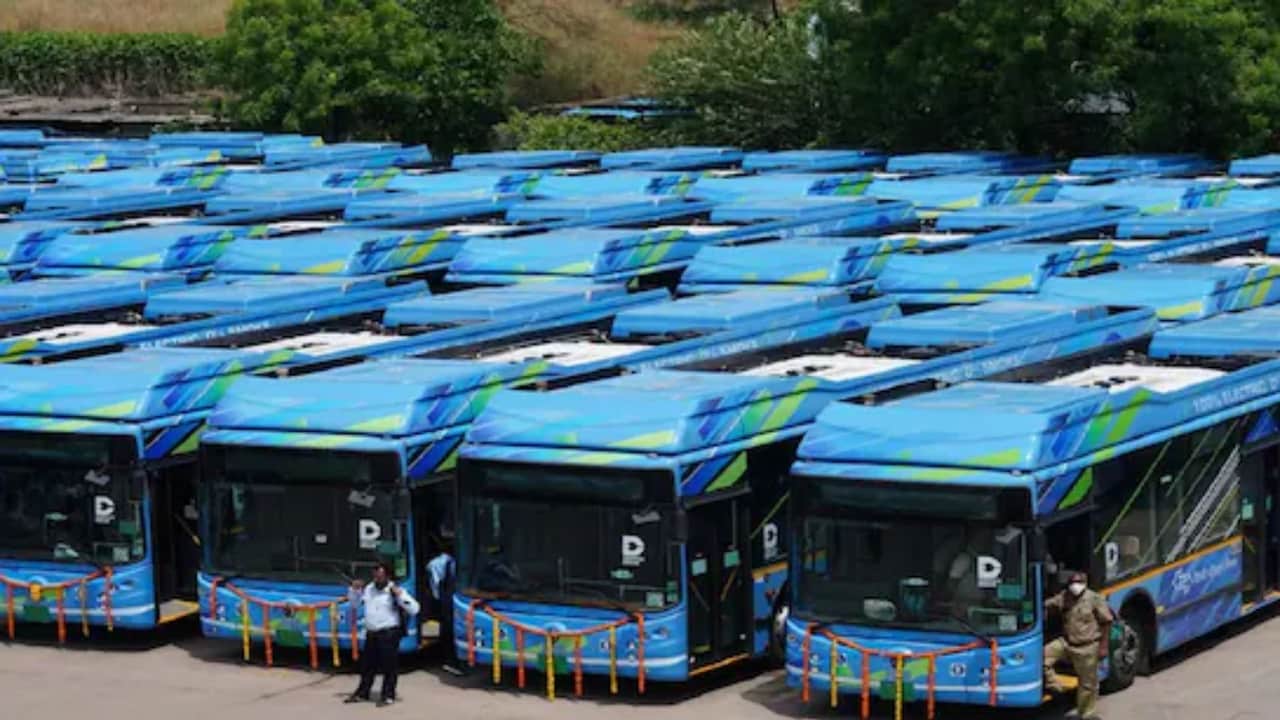
The Delhi government has unveiled a plan for 56 women‑only electric bus services, including the conversion of 30 existing Ladies Special routes to electric. The initiative aims to provide safe, eco‑friendly travel for women heading to offices and colleges.
Key Takeaways
- 56 dedicated women‑only e‑bus routes will be introduced in Delhi.
- 30 existing Ladies Special services are slated for electric conversion.
- Peak‑hour operations will ensure safe and clean travel for women.
Delhi’s municipal authorities have rolled out an ambitious scheme that blends women’s safety with environmental responsibility. Starting soon, 56 exclusive electric buses will ply during the morning and evening rush hours, ferrying women to workplaces and campuses with a heightened sense of security.
Background and Existing Challenges
For over a decade, Delhi’s women have voiced concerns over safety on public transport. The Ladies Special buses introduced in 2010 offered a gender‑segregated option, yet they ran on diesel engines that contributed to the city’s notorious air‑pollution woes. This dual challenge of safety and sustainability prompted the shift toward electric mobility.
Core Features of the New Scheme
The plan earmarks 56 dedicated routes, of which 30 are existing Ladies Special services slated for electric conversion. Buses will operate solely for women, with schedules from 6 a.m. to 10 a.m. and 5 p.m. to 9 p.m. Each vehicle will be equipped with real‑time GPS tracking, CCTV surveillance, and emergency call buttons, creating a comprehensive safety net.
Environmental and Social Impact
Transitioning to electric buses aligns with Delhi’s broader Clean Air Mission. Projections suggest an annual reduction of roughly 15,000 tons of CO₂ emissions, translating into measurable improvements in air quality. Socially, the dedicated service is expected to boost women’s confidence in using public spaces, thereby enhancing access to education and employment.
Implementation Hurdles and Potential Solutions
Key obstacles include the need for robust charging infrastructure, seamless integration with existing routes, and stringent enforcement of safety protocols. Experts recommend a public‑private partnership (PPP) model to accelerate the rollout of charging stations, alongside continuous feedback loops from female commuters to fine‑tune the service.
Overall, Delhi’s initiative sets a new benchmark for gender‑sensitive public transport, marrying safety, sustainability, and social inclusion in a single policy framework.