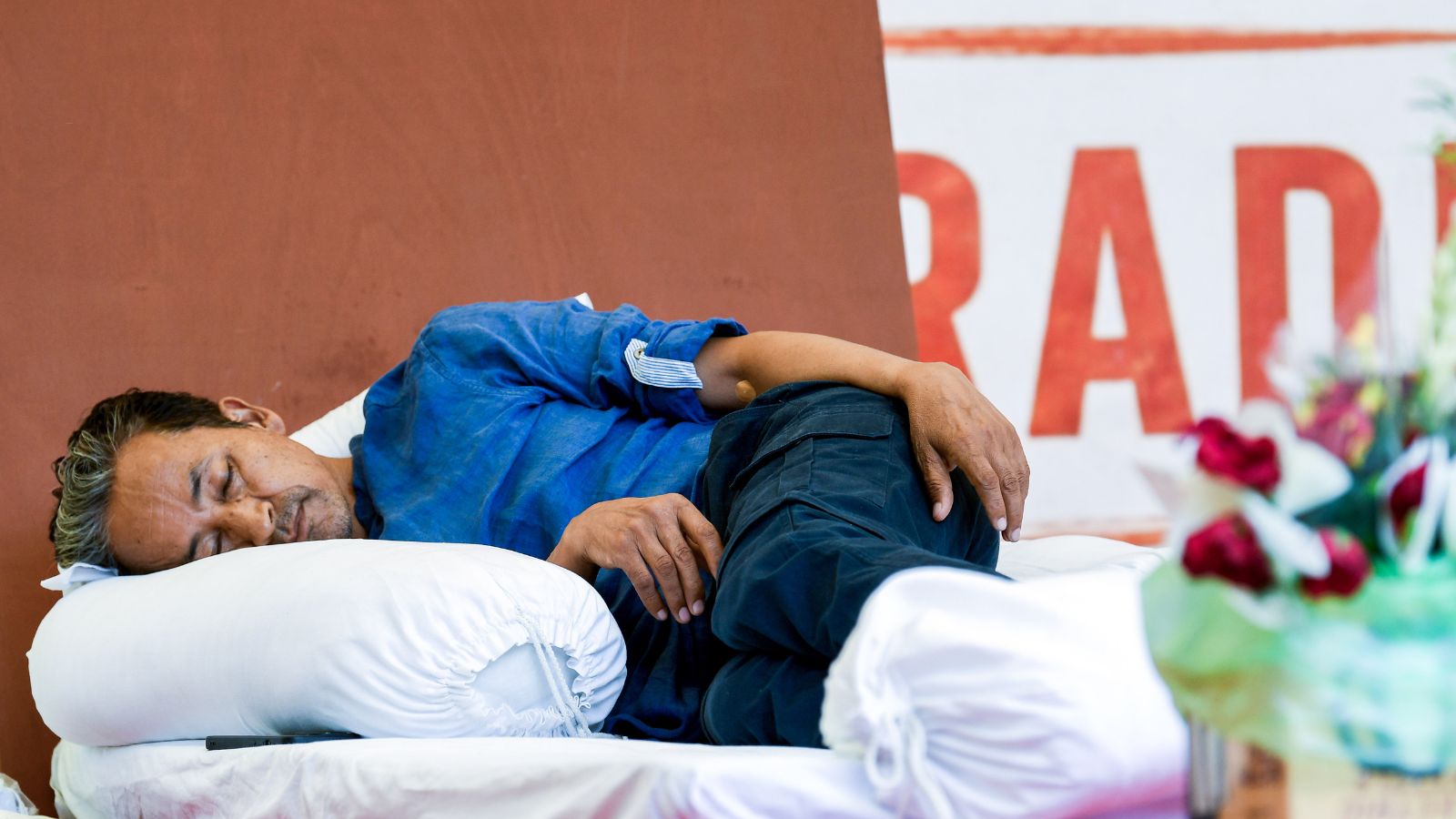
The Delhi High Court has intervened in the matter of Sonam Wangchuk's hunger strike, directing authorities to conduct daily medical monitoring of the activist. Emphasizing that 'life is precious,' the court mandated that all necessary medical interventions be provided immediately to safeguard his health.
Key Takeaways
- The Delhi High Court has prioritized the right to life over political deadlock.
- Authorities are mandated to monitor Sonam Wangchuk's health clinically on a daily basis.
- The court orders immediate medical intervention whenever required during the hunger strike.
In a significant development, the Delhi High Court on Wednesday stepped in to protect the well-being of noted innovator and activist Sonam Wangchuk, who has been on a prolonged hunger strike. The court's intervention comes amidst growing concerns over Wangchuk's deteriorating health as he protests for the rights of the Ladakh region. The bench, comprising senior judges, observed that the life of any citizen is precious and that all efforts must be made by government authorities to preserve it.
Court's Directives on Health Monitoring
The bench issued a strict directive to the administration, stating that Wangchuk's medical condition must be clinically monitored every day. "We direct that Wangchuk’s medical condition be clinically monitored on a daily basis and whatever medical intervention is required shall be taken," the order read. This judicial intervention highlights the tension between the democratic right to protest and the state's fundamental duty to protect the life of its citizens under Article 21 of the Constitution.
Context of the Protest
Sonam Wangchuk, the inspiration for the character 'Phunsukh Wangdu' in the blockbuster movie '3 Idiots,' has been spearheading a movement demanding Sixth Schedule status for Ladakh and full statehood. His protest, which has garnered national attention, is currently taking place in the harsh climates of the Himalayas. The court's order serves as a crucial reminder that while demands for regional development are valid, they cannot come at the cost of a human life. It places the onus on the executive branch to act responsibly and ensure that the situation does not escalate into a tragedy.
Implications of the Verdict
Legal experts view this order as a precedent where the judiciary has actively reminded the state machinery of its humanitarian obligations. By ordering daily check-ups, the court has ensured that the administration cannot claim ignorance regarding the activist's health. This move may also pave the way for renewed dialogue between the protestors and the government, as the legal pressure to save Wangchuk's health mounts. It reinforces the principle that in a civilized society, the preservation of life takes precedence over administrative or political procrastination.